• Quick Guide to Goal Setting That Works

    smart

    Since we were kids, we always had an aspiration or goal of some sort. Some of us wanted to become doctors, lawyers, or astronauts. Others were more specific, wanting to own the complete collection of The Simpsons by 20, owning a two-bedroom house by 25 or a having a $5000 a month job by 30. Goal setting has been with us since forever. But, really, is thinking up and dreaming about the goals we have set all there is to it? Of course, not.

    Goal setting is not simply about expressing what we want out of life, but also having the drive, the perseverance and the action to reach them and make them happen.

    There are several methods to effective goal setting. Here are five of the most basic:

    1. Write down the goals you have set.

    While our brains have the capacity to save information and remember what they absorb, our goals could get lost and forgotten somewhere between our favorite soap opera and the bills we have to pay. Goal setting works best if we write down the things and events we want to happen, so that we can frequently keep track and check if we are still on the right path. Get creative with your goal setting list. Place them were you see them often so you’ll never forget.

    2. Set a goal that satisfies what you truly want; not just something that would impress others.

    Be true to yourself. Goal setting does not work if what you’re aspiring for is for the pleasure and awe of others. Your goal should be something that would make you happy and benefit YOU. After all, you’re the one who is going to be working for it.

    3. Avoid setting contradicting goals. Be realistic.

    For a simpler example, you cannot write down “set aside $500 from salary this month” if you’re earning only $800 a month and have a $250 rent. How would you survive on a $50 monthly?

    While saving $500 seems like a very good idea and could lead to a fat savings account in no time, it is not realistic. Set your goals based on what you can truly work with.

    4. Try to be more detailed when goal setting.

    This will help you identify your next move more easily. For instance, “buy a $99 iPod shuffle in one month” is easier to work for than simply setting “buy an iPod”. Not only will the more specific goal be easier to achieve, it will also be more satisfying because there would be no confusion or what-ifs along the way.

    5. Stick to your goals. Avoid straying.

    If you’ve written down, “save $5 from daily expense allocation” then do so diligently. Don’t set aside $2 today and just keep a mental note to keep $8 the next day. Be consistent. Cheating on your goal setting list is like cheating on yourself. This is more effective for short-term goals, of course. If you had originally written “own a Honda Scooter by 30” yesterday, surely you can change that and aim higher for a Honda Civic if you find yourself earnings $8000 a month at 25.

    The keys to effective goal setting are consistency and discipline. In short, know exactly what you want, to be able get exactly what you want and more. Keep these goal setting tips in mind always and, who knows, your dreams could become reality in no time!


  • Passion: Fire In Your Soul

    tumblr_static_tumblr_static_9y3ytlod2s8c0c8owkccso0wg_640

    Many people try to hold a raging fire within themselves, but it restlessly and relentlessly gnaws at their core. Some have tried to cover it up with alcohol, numb it with drugs, hide it with shopping, kids, work, or religion, or fuel it with sex. The Baby Boomers looked for eternal youth and to change the world. They thought they would never grow up, but they did. They thought they would change the world and they did.

    The previous generation looked for the American Dream. Some found it. Many did not. The present generation seems to be seeking success. Yet, the gap between the “haves” and the “have nots” widens. Each generation and each individual, in turn, searches for something, but it often slips from their grasp.

    The fire carries both energy and discomfort. The key is to use the discomfort as a motivator and the energy as fuel.

    Redfield in the “Celestine Prophecy” talks of the need for a historical perspective. The first man or woman met his/her physical needs. Then he or she explored and conquered the world and put it to their collective service. Now we seek something and we don’t seem to know what it is.

    When we are connected to our roots and our souls, passion rises quickly and pushes us the next level of life or learning or love. It does not have to be love of a mate. It could be creative passion, fueling what we do for ourselves, work, community, or family. Anything where the totality of who you are is absorbed in the doing, requires passion. To loose it, is soul death, or at least deep sleep. It will cry to be heard when it sleeps.

    I’ve sometimes been afraid of my passion. It seems so fierce at times. I guess I fear it will consume me and nothing else will matter. I know that can happen. I’ve had a small taste of it when I work for hours into the night, so absorbed by my work that I forget time, sleeping, and eating. But, I also know that I must have time in my life to live the every day life of doing the mundane things that must be done. Balance is probably still the key, but you must not loose your passion all together. Your life will be too dry and dull without it.

    Remember your first love? Nothing else mattered. You felt as if you would walk to the ends of the earth for that love. Remember that? While that first passionate, all consuming love does not last, it gives us a taste of a force within ourselves that carries tremendous energy. Look for your passion and it will find you.

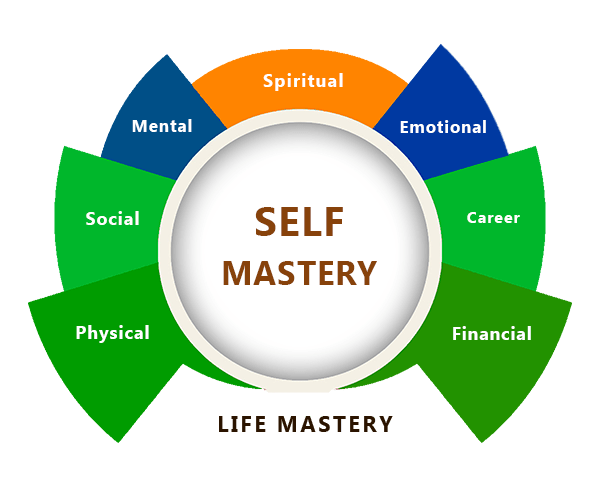
  • Feeling Down and Self Mastery

    self-mastery-life-mastery

    What Causes People to Feel Upset

    There is many things that can make people upset. When people get upset it is normally because someone has hurt their feeling. It doesn’t feel good when you are upset. Other reasons people feel upset is that they lack the skills they need to improve their life. Each day they may struggle to find answers, yet the answers seem out of their reach. They may wander through life asking other people what is wrong with them, when all they had to do in the first place is reach deep within where they would find the answers to resolve their problems. They lack self-mastery skills.

    Outline:

    Because most people’s emotions are sensitive, many things can cause a person to feel upset. People often feel sad, or hurt when someone calls them names, yet the names they are called is often not the root of the real problem.

    What are some things that might get someone upset?

    Just think about it when you hear someone talk to about you or even call you names that are not good ones. How does this make you feel? You may think that this person is not your friend. Truly, if the person calls you names, then they are not your friend, but if that person gives, you sound advice and you become angry…then you are not the friend. Therefore, what do you do when this happens all you can do is walk away or try to talk to them. May when you talk to them you will be able to find out why they are doing this to you. Often you have to let go of the negative and get with positive people to help you develop self-mastery skills.

    Another thing that might make you upset or feel blue would be if your child would call you out of your name this isn’t a good thing. We are there for our children though thick and thin. Then to have your child call you out of your name would just tear you up. Therefore, what should you do when this happens to you? I would think when something like this happens to you that you should sit down and have a talk to them. Maybe a good grounding is in order. It depends how bad they have hurt your feelings.

    What should you do if some one at work upsets you? If this should happen then you have some other choices that you are able to do. The first thing that you should do is talk to that person and finds out why they are making you upset. If this doesn’t help then going to your boss or Forman and asking to talk to them, you are going to want to explain why you are feeling up set and ask them to do something to help you. Maybe they will be able to talk to them and help to get the answers your want to get.

    What are you going to do if you’re not able to pay your bills? When you are not able to pay your bills, you’re going to feel inadequate. You have to pay your bills in order to be able to live so what do you do when this happens. When this happens to you then you might want to see about making some kind of payment plans this works a lot of times, if your not able to do this then maybe a close friend or even a family member can help you though times like this is want friends and family is all about help when in need.

    When you get up set, you’re going to have to remember that you will need to stay calm. If you’re not able to do this then you might want to stay away from that person that get you all upset, just until your able to talk to them to explain how you are feeling

  • Do you need reasons to cheer up a bit?

    198f1d348b8448532c7a0ea2642a486f

    Are you a recent expatriate? Have you just arrived in your new location only to find out that you have by no means escaped certain annoyances that occurred on a daily basis back home? I mean issues such as: paying the bills, standing in lines, car repairs, meeting deadlines, endless meetings at work, and so on. Yes, this is life no matter where you live, where go and where you are right now.

    However, to be very understanding, these issues can be especially tough when you are a newly arrived expatriate. Not only do you have to deal with all the daily events and routine, but you also have to manage a range of other expatriate-related realities namely; language barriers, visa problems, getting lost every other day, having to pass a driver’s test again, driving on the “wrong” side of the road, getting used to the food, not being able to get a decent cup of coffee and the list continues …

    However, there is good news. Although the going may be tough, there are many upsides to being at this point of your life right now and there are reasons to be bright and cheerful. Let’s consider a few:

    * Strangers appreciate you for trying to speak their language. In fact they make you feel special for doing so.
    * How about those friends you met at the local tennis club? They help you with cultural information, make phone calls for you and are available for any Q & A.
    * People you barely know help you get the Internet hooked up.
    * Colleagues take the time to show you how subway system works.
    * Neighbors advise you on which grocery store to shop at and which markets offers great deals.
    * New friends share their best-kept secrets of favorite locals and drag you off for fun nights on the town.
    * The gym manager gives you a special membership discount as a way to welcome you into town.
    * Teachers at the Dutch, French or Spanish language classes have more patience than you ever thought possible for any human being.
    * People passing by on the street help you find your way around this new city.
    * Colleagues support you in meetings and help you understand the company policies and rules.

    And so, before you know it, you are beginning to enjoy your daily life and you begin to feel that you are a real and integral part of the community. Actually, at the end of the day, it all comes down to getting out what you put in. If you really want to give your term in this new land a fair go and be happy while living abroad, you may just need to go out on a limb, take some risks, put some effort into your experience and live your life with positive expectation.

    Give your host country a chance and open your eyes for all it and its people have to offer. Be prepared to live outside of your comfort zone and don’t compare everything to how it is done back home. You are in a different place now and if you make this place home and treat it like home and I can almost say with confidence, your new home will treat you back in more ways than you ever thought possible. You may not ever want to leave …
    Quote of the week

    “Wondrous is the strength of cheerfulness and its power of endurance – the cheerful man will do more in the same time, will do it better, will preserve it longer, than the sad or the sullen.” Thomas Carlyle

    CHEERY HAPPENINGS IN MY WEEK:

    * Free fruit.
    * Translation help.
    * A local public holiday.
    * A new friend.
    * Phone calls from home.

    How was your week…?

  • Choosing Happiness

    choose-happiness

    Ever heard someone say, “…so-in-so is great, but I’m just not happy?” Or have you ever wondered why you just couldn’t seem to find happiness? Read on to learn how you can choose to be happy.

    Happiness is something you have to “choose” to be. A person could have all the money in the world, and still be unable to acquire what it is they really want, and ultimately remain unhappy. A person could be surrounded by all their friends and loved ones, and still be lonely. And, a person could have to eat bugs to survive, in a cold, wet prison cell, and still be happy to eat those bugs, and happy to be alive. This person has gratefully accepted their surroundings, and has found some good or greater meaning in it, making the experience more pleasurable. This person chose to be happy with what they had, by being mindful of the moment, recognizing the potential it may have.

    Getting into the habit of being happy is easy. The first step is learning to appreciate your blessings, seeing the good or greater meaning of things. This requires that you become more aware of your five senses. How else could the smell of freshly baked cookies cheer up your woefully dreary day? How else could the faint sound of your sleeping child’s breathing ease you into your own peaceful resting state? We need to use our senses to become more aware of our surroundings, and accept them. It’s then that we can change our surroundings to become more pleasing to us. This could include some small, but significant changes, like placing candles by the bathtub, or buying a special lamp for your reading area.

    Scientific research suggests that colors play an important role in one’s moods. Light green and orange seem to make people feel happier, whereas red makes them feel hungry. Many people have been hiring interior decorators as part of their strategy for feeling better, as interior decorators have studied colors, patterns, layouts, etc., and they use these factors to create a comfortable living area, tailor-fit to your needs. Just remember to research your interior designer, and be frugal. The positive effect that redesign brings, needn’t be boggled down by guilt from over-doing it. The idea is to do things that make you feel good. It won’t make you feel good if you overspend, or overindulge. But it will make you feel good if you shopped around, and you got the best deal, completely fitting all your needs.

    Again, awareness is the key to happiness. After you have become aware of yourself and surroundings, you can choose to be appreciative and happy.

    If you would like even more self-improvement information, please visit my site listed below.

  • Be Happy! Why Worry?

    be20happy

    Worry is a silent killer.  It is like a slow poison.  It is a chronic illness.  In fact, it is an illness which is many fold dreadful than the physical illnesses.  Worry not only affects our body but our mind too.Worry is a silent killer.  It is like a slow poison.  It is a chronic illness.  In fact, it is an illness which is many fold dreadful than the physical illnesses.  Worry not only affects our body but our mind too.

    If you think seriously, you would find that it is really no use worrying about anything.  It is really foolish to worry about past or future.  Nobody can change the past.  Whatever has happened has happened.  Why worry?  How can something that has yet not come to pass affect us?  How are we so certain that the future is so bleak?  Things may turn out well.  Why worry then?  Worrying just tires us and diminishes our capacity of clear thinking and planning.  It promotes negative thinking.  Instead of worrying we should use positive affirmations and resolutions.

    If worry could solve the problem, everybody would worry as much as possible.  Problem solving requires clear thinking and planning.  But worry makes us incapable of clear thinking and planning.  Many things, if they are going to happen, will happen regardless of our worry.   If it is going to rain, it will.

    We worry for small things.  The worst-case scenario may not even be bad enough to worry.  You have made your boss angry.  You worry that he may fire you.  What of it?  That is not the end of the world.  You are still alive.  Perhaps you would get a better job.  You dread to go to the office next day.  You think of sending in your resignation letter.  Worrying you reach office.  The boss calls you.  He apologizes.  It was his mistake!

    Not only we should not worry about little things, but we should also not worry about seemingly big things. The things that seem today very big and important will seem trifle tomorrow.  In your student life you must have worried for days about the wrong answer you gave, even though you knew the right answer, to an objective type of question carrying just half mark.  How much you worried about a dress on a special occasion, meeting a boy or girl whom you fancied, or the change of residence of a friend’s family?  Do these matter a bit today?  Why worry about spilled milk, or a broken glass, or a missed bus?

    Of course, no body worries for the sake of worrying.  Worry just comes into mind and then never leaves.  But many people never worry.  It seems that worrying is a sort of bad habit.   As all bad habits the habit of worrying is also difficult to get rid of.  So, in the first instance, never make worrying a habit.  Secondly, try to divert your mind.  Think of positive things.  Get busy with some physical activity.  Keep yourself away from people who are habitually worrying type and who always see the negative side of a thing.
    Instead of useless worrying, one should take positive action— BE HAPPY!

  • Are You Chasing the Elusive Butterfly of Happiness?

    blindspot

    For many people happiness is an elusive butterfly in the garden of life. Imagine a young child in the garden on a summer day. The child sees a beautiful butterfly flitting from flower to flower. With eyes of wonder the child wants to see it close up, touch it, and hold it in their hands. The child goes towards the flower that the butterfly is resting on, with arms out stretched, only to find as he just gets in reach, the butterfly moves to another flower. Undeterred the child follows the butterfly to the next flower, and then the next, but the butterfly always stays just out of reach.

    As adults, happiness can seem just like that butterfly, always just out of reach. It becomes almost an obsession and the words “if only…” become an increasingly large part of our thoughts and vocabulary. If only I had more money I would be happy, if only I was in a great relationship I would be happy, if only I could have a different job……….and the list goes on. Even if we achieve one of our “if only “desires, the happiness we seek is still just out of our reach. The truth of the saying “The grass is always greener on the other side of the fence” becomes our focus and perception. If this becomes our focus, we find that dissatisfaction and unhappiness increasingly keep growing in our life and experience.

    The unhappiness within us can not be completely satisfied by external events or circumstances. To find happiness in life we must first be at peace with ourselves internally. External events and circumstances can bring us happiness in the moment, but they do not have a lasting effect on our inner self. Life experience brings a mixture of good and bad circumstances to everyone. To rely on life’s experiences for our source of happiness would mean living life in a constant emotional roller coaster ride.

    Happiness comes from within. The inner contentment that survives the roller coaster ride of life has its roots deep within our being. The source of happiness comes from finding and embracing who we are as a person, and living a life of purpose. We need to find peace in every aspect of our life- the physical, mental, emotional and spiritual. To discover acceptance, purpose and peace in all of these areas will give a sense of completion in life. If we neglect any one of these areas, we experience a sense of emptiness and feel something is missing. There is not a solid foundation for building happiness within, but we then, typically start to try to fill this incompleteness by looking for outside solutions. That is the point when we can fall into the ‘elusive butterfly’ syndrome, and experience such frustration.

    Is happiness an elusive butterfly for you? Spend some time in quiet reflection. Are you neglecting one of the four important parts of who you are and experiencing a sense of emptiness within? The more you discover, embrace and accept your uniqueness and purpose, the more you will experience the butterfly of happiness alighting on your shoulder.

  • A Century of Hope

    hhtr-hope-1080x675

    What would one initially think about someone who dropped out of school at the age of 16? Would there be any hope for this person? This person is Bob Hope. Comedian Bob Hope starred in over 50 movies and lived past the age of 100 years old.

    Hope was born in England and his family moved to the United States when he was four. What can we say about our past? Have we let things from our past get in the way of achieving what we want and living a life we love? Where you came from is out of our control. Where you’re going is up to you.

    1. Bob Hope held many odds jobs before becoming a comedian

    Long before Hope became a successful comedian, he held many odd jobs selling newspapers, was a delivery boy, worked in a soda shop, a shoe salesman. Newspaper reporter and was an amateur boxer.

    Many of us have had to work at odd jobs in order to make money. Working at odd jobs gives us opportunities to discover what we want and don’t want to do as a career. The skills you obtain through your experiences of working at odd jobs may prove to be valuable in your future career. For example, any job that can strengthen your communication skills is invaluable.

    2. Hope took dancing lessons

    Hope received on-the-job training while appearing in vaudeville. To hone his skills, he took dance lessons. Hope was such a good dancer, that he took over some dance classes to help his teachers.

    Do you have a passion that you would like to expand? Do you like to write or draw, but don’t know where to start? Do you like to play a particular sport or instrument, and want to get better? There numerous classes that are offered to help those who desire to improve oneself in a particular field and topic.

    3. Bob Hope was versatile

    Bob Hope was a successful dancer, singer and actor and comedian. Bob Hope was an enormously successful comedian. His ability to dance, sing and act very well made him a much better comedian because his options broadened on how he could entertain people.

    Many of us are good at what we do in our careers. Becoming versatile could only make us better.

    4. Hope entertained Military Troops from World War II to Operation Desert Storm

    Hope did a major service to increase morale among military personnel. For almost sixty years, Hope toured many countries to show his appreciation for the men and women of the armed services.

    Is there something that you have been considering to give back to your community? Is there a charity in which you would like to raise money for them? Would you like to encourage youngsters to explore a particular career? Bob Hope was a great example of giving back to his community. Bob Hope was a great example of not settling to be great in only one area. He was a success at so many areas in entertainment. Bob Hope did not let his past dictate what he could do in his future.

  • How Good Habits Can Turn into Bad Habits

    bad-habits

    It is not uncommon for good habits to morph into bad habits. This often happens when good habits are taken to an extreme. This is why people should be aware of their behavior, even when it might seem positive.

    People who want things to be the very best can seem to be very upbeat people. At least that is true until they go too far. When their leadership becomes nit-picking perfectionism, their good habits have turned into bad habits. Once it has reached such a point, it is hard to salvage the situation.

    Sometimes people make their neatness into bad habits. They start out nice enough. They just want to keep things tidy and clean. They are perfectly willing to do some work to keep it that way. Then, they go overboard. They begin stressing over every tiny smudge or speck of dust. Besides this, they expect you to be as obsessive as they are.

    There are two of these situations that are fairly similar. People turn good savings practices into bad habits. The first is when a person starts saving money for emergencies or for the future. They start a savings account, or an investment account. Then they begin to put money into it.

    If they develop bad habits, they can get carried away with their savings and become a miser. They can be that person who will not buy their children new school clothes because the money has to go into savings. They can be the one who will drive a car that breaks down every week. They cannot bear spending money that could go to savings.

    A similar situation happens when people start buying in bulk. At first they tell themselves they are just stocking up. However, the stocking up may not stop at a reasonable level. If it has become a bad habit, their entire basement, garage, attic, and all their closets may be filled with extra food and cleaning supplies. They have so much that it will go bad before they can possibly eat it all.

    You may wonder how being concerned about others can possibly lead to bad habits. A person who is this thoughtful is generous in spirit and cares only for the well-being of those around her. The bad habit may come in when the person puts others’ needs too far above her own. This can lead to all sorts of psychological problems for her.

    Perhaps you have heard that there is never a dumb question. People are generally encouraged to ask questions at school and at work. However, it becomes a bad habit when people ask questions aimlessly to no purpose. They will sometimes ask so many questions that no work can be accomplished at all. Sometimes it is better to try to figure something out on your own.

    This just goes to show that extremes are usually bad habits waiting to happen. Be a considerate person, yes, but do not do it at the expense of your own well-being. Indeed, you should maintain a savings account. Just make sure your family has what it needs. Do not let your good habits turn into bad habits and make your life difficult.

  • Dangerous Bad Habits

    1182016115001_shutterstock_98848643

    Some bad habits are just annoying, but others are actually dangerous. It is these dangerous bad habits that can really get you in trouble. Some people like to take risks. Others do not think about how their bad habits could affect them.

    Bad habits can be nothing more than not paying attention to your physical condition. If you are taking sedating drugs, it would be a bad habit if you continually worked in this condition. If you work two jobs, it can be a dangerous habit to work when you are sleepy. You would need to find a safe way to get enough sleep to work.

    Many people have bad habits around electricity. They may use frayed extension cords without thinking. This is a bad habit that can lead to electrocution or fire. Using ladders, especially metal ladders, around power lines is another bad habit that is dangerous.

    Some people have dangerous bad habits that are just unnecessary by any stretch of the imagination. People, often younger people, like to stand on moving cars and “surf.” This is reckless behavior at the least. At the most, it can be deadly.

    Many bad habits have to do with driving a car. People often forget how potentially dangerous driving can be if it is not done with caution. They drive so often that they become accustomed to taking the wheel without thinking. This leads to a number of dangerous situations.

    Some people have bad habits of grooming themselves when driving. Women might put on make-up while driving. They believe that they can apply mascara and watch the road at the same time. It may work out for a long time, and then eventually there comes that time when they are not concentrating on the road enough and an accident happens.

    The same can happen when men shave while driving. Or, it can happen when men or women groom their hair. Other bad habits include the way people use their cell phones when they drive. Sometimes people are so keyed in on their cell phones that they do not see the car in front of them.

    Driving through high flood waters can be a very bad habit. People think they can get through the water and make it to the other side. If it happens often enough, they may get braver and braver. However, if they go too far, their vehicle could be swept away. It could lead to a very dangerous situation.

    Drinking and driving is the ultimate in bad habits. If you do this, you are not only putting yourself at risk. You do not even know who else you might be endangering. It could be an infant, an elderly person, or a single parent. It could be someone just like you. You could kill them or make their lives a lasting misery. This is not a bad habit that you can let stand.

    If you engage in dangerous bad habits, you have to ask yourself why you do it. There must be something you can do to curb your desire to put yourself and others at risk. Find out what that is, and do it.