• 5 Unusual Gifts For A Friend

    pexels-photo-360624.jpegIt is not always easy to come up with an unusual gift idea for a friend. Here a few of unusual gift available:

    1. Puzzle alarm clock

    It wakes you up by firing four puzzle pieces up in the air, and then it is your task to get the pieces and put them back in the alarm clock – it won’t turn off until then. Pretty annoying but could be a great gift for your friend.

    2. Tree adoption

    Give this gift to your friends especially who interested in tree or garden. Not only makes an unusual and timeless gift but also provides a great excuse for a holiday to the south of France.

    The tree will be planted on your behalf in a 20 square meter plot and any truffles found under your tree or trees will be harvested, sold, and the profits sent straight back to you at the end of the season, unless of course you decide to keep the truffle in which case Truffle Tree will post them to you.

    3. Purchasing land in the moon

    Buy your friend some acres of land on the Moon from THE LUNAR EMBASSY. They has been selling land on the Moon for the past 22 years. They claim to be the first and the only company that possess a legal basis and copyright for the sale of lunar. Not only moon, they also serve other extraterestrial property in our solar system. Unusual indeed.

    4. Taketombo – Dragonflies

    This gift is best for someone who plays a lot. Taketombo are Japan’s hand-made toys made from bamboo that able fly like mini-helicopters on their one propeller. Rub the stick with your hands and rotate it. The wing will fly off it with great force. The package comes with a complete English instructions on how to make you own Taketombo. Its easy and simple. Practice often then by the time we could improve the Taketombo design to gain more heights and speeds.

    5. Classic Atari Games

    Remember the old time? Take a step back in time to the early days of video arcades with Atari’s 80 Classic Games, a compilation of unforgettable and authentic Atari titles. Each one is faithfully reproduced with all the great sights, sounds and fast action that made them so popular. Whether you played these games in their original arcade cabinets or on an Atari 2600 console, you’re sure to find a favorite. Great unusual gift for your friends.

  • Irritating Bad Habits

    shutterstock_98848643Some bad habits can irritate the people around you. These habits can grate on peoples’ nerves until they feel like physically stopping you themselves. Some of them are nervous habits and others are thoughtless behaviors.

    Some bad habits have to do with shopping. You can really irritate someone if you have the bad habit of following their car to a parking space and waiting with your car close behind. This makes them feel rushed, and it may make it hard for them to get out. By the time the leave they will be very irritated.

    You might display bad habits when you get in line to check out at the store. If you cut in line, everyone behind you will be annoyed with you. You make them later, and you give the impression that you are more important than they are.

    Sometimes people have bad habits when it comes to what line they choose. They may get in the express line where you are only supposed to have 15 items. They may get in that line with 30. Some people will get in the express line with a whole cartful. It irritates people who want to use the express line for just one or two items and have to wait for you.

    There are many nervous bad habits that irritate. Some people crack their knuckles. This sound can in turn get on other peoples’ nerves. It is worse for the one listening because they do not know when the next crack of the knuckles will happen.

    Rhythmic behaviors are also bad habits to get into if they are not related to the arts. These are behaviors such as tapping a pencil, tapping your feet, or drumming your fingers on a desk. These behaviors often occur when a person is in a stressful situation.

    They can be detrimental to you or others. If you tap your pencil when taking a test, it can distract others and keep them from doing well on the exam. If you drum your fingers on your boss’s desk, it will make you look bad. You might lose yourself a promotion.

    People can irritate with other noise-producing bad habits. Grinding your teeth can irritate others. Clicking your teeth can do it also. Smacking your lips can annoy. Any extraneous noise that you make repetitively with your body can be an irritating bad habit.

    Other sound-related bad habits annoy, too. Popping your chewing gum can drive other people to nearly mad with exasperation. If you regularly leave your faucets dripping it is an irritation that they must take care of themselves if you will not. They may find themselves following you around, shutting off faucets. They will not be happy.

    Another bad habit is letting your dogs bark at the top of their lungs all night long every night. Sometimes there is a reason and it cannot be helped. However, there is usually a solution to this problem that will be better for the dogs. At the same time, it will make the neighbors’ nights more restful.

    It is usually hard to break irritating habits. Often, people are not even quite aware that they are doing these behaviors. Yet, if they try, they can make themselves alert to their irritating bad habits. They can do wonders for the nerves of those around them if they can stop.

  • 5 Tips For Balancing Work And Home

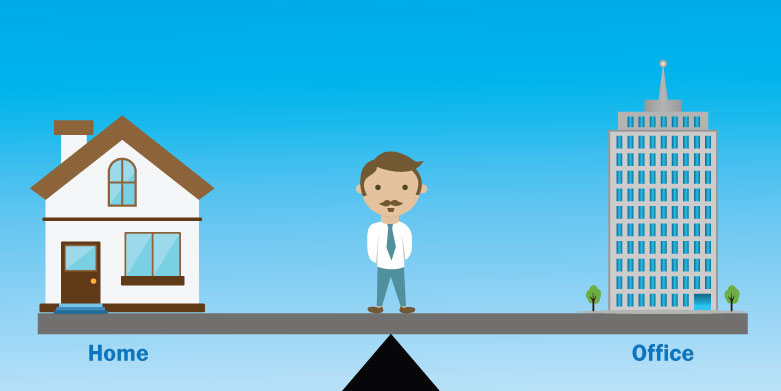
    work-life-balance-habiliss-virtual-assistantMost people understand how difficult it can be to balance their work and home lives once they get married and have children. Somehow it seems that work life or home life is always encroaching on the other and causing problems at work, at home, and many times both. However the following five tips are great options to help with balancing work and home.

    Make a Schedule

    The best thing to do when trying to balance work and home is to make a schedule. Know how much time you have and schedule your work time and your home time. Then, you will know when you need to schedule work and home events. This will make your life significantly easier and you will know which activities fit into which time frame. Just make sure you stick to your schedule.

    Share Responsibilities

    Many times work and home responsibilities can become overwhelming because one spouse is handling more of the responsibilities than the other. So, learn to share responsibilities at home and each spouse can be responsible for their work. Also, older children should have some home responsibilities as well to help parents balance work and home.

    Leave Work at Work

    Balancing home and work can be difficult because it is so easy to take work home. If you really want to balance work and home then you will always leave work at work and keep home a sacred place for family and home activities.

    Dedicate Weekends to Home Activities

    A great way to keep home and work separate is to always focus on home activities during weekends, or at least on days off from work if you happen to work on weekends. When certain days are home days and other days are work days then it makes balancing work and home considerably easier.

    Plan

    The best way to balance work and home is to always make a plan. There are tons of tips that will help you, but there is nothing like making a plan and then following the plan to really balance work and home. It might be difficult, but if you have it planned out and follow the plan you will be surprised how easy you can find a balance.

  • Innovation Is A State Of Mind

    man-person-legs-grass.jpgYou probably know the myth of innovation as a sudden flash of insight that comes from nowhere. We read about that “aha” moment, or that light bulb turning on in the mind of some inventor or innovator, and this is true to an extent. Einstein really did get flashes of insight while shaving in the morning. However, he was of course working on the particular problems he had insight into, and he didn’t suddenly have ideas for new kitchen gadgets or movie plots.

    Einsteins innovations, in other words, no matter how “sudden” the original ideas were, came from past and present mental work. It is like a singer who works at his craft for ten years and then becomes an “overnight success.” Innovative people only have “sudden” new ideas because they have habitually worked and thought in certain ways for some time. If you want to become an innovative thinker, then, why not start cultivating those mental habits?

    Mental Habits Lead To Innovation

    Problems can be opportunities. “Problem” may have a negative connotations, such as being a hassle or stressful, but any problem can lead to an innovation that improves our lives. Not knowing the time lead to clocks small enough to put on our wrists. Nasty diseases lead to sanitary sewer systems. Start looking for opportunity in every problem. Even a mundane problem like not having enough storage space could lead to a new innovation. You may just build a plywood floor in the attic, but you could invent a new type of outdoor storage unit.

    Innovation begins with understanding the key elements. Metal, wood or glass are not key elements of a door to an innovator. A way to get in, a way to keep others out – these are key elements. Begin with these, and soon you’re imagining new ways to make a door. You could design a door that is opened by your voice (nice when your hands are full), or one that shuts and locks itself when anyone else approaches. Think of the key elements in things.

    Attitude helps innovation. The creative problem-solving technique of concept-combination involves combining two ideas to see what new idea or product results. The crucial point is that you assume there will be a useful new idea. Starting with that assumption, your mind will work overtime to produce something. A shoe and a CD have nothing to do with each other, but it took just a minute to imagine a CD player with headphones that only plays the music correctly if a jogger maintains his ideal pace. When you assume there is something there you’ll often find something.

    Playfulness helps innovation. A playful mind is a creative mind, and while high IQ doesn’t correlate with creativity, put it together with playfulness, and you have an Einstein. Remember, he imagined himself riding on a beam of light in order to arrive at his theory of relativity. Why not start playing with ideas and things, in your mind and in your surroundings. Innovation should be fun.

  • A Bench that serves its Purpose

    pexels-photo-247620.jpegA bench doesn’t serve its purpose until it’s a storage box at the same time. Hundreds, even thousands of years ago, chairs were saved for the more important members of society (or ‘chairmen’); leaving the inferior sharing chest-like benches. Eventually, these benches developed four legs, arms and a back and became a more desirable place to sit, especially for children and couples (hence the name ‘love seat’).

    The first benches to hold storage were most likely Piano benches, designed so that one or more people can sit and play the instrument at one time, in comfort. Storage is built into piano stools to allow the owner to keep all their sheets of music in easily accessible one place.

    To have any furniture that has more than one use is always an advantage and considering people started out sitting on chests, it made sense that those chests were filled. Storage benches open via the seat, which acts as a lid usually spanning the whole length of the bench or two separate lids. Sometimes the lid comes off completely; otherwise it will open just at one side using hinges. Some storage boxes feature lids with prop-ups so that the lid can be opened and will stay there while you use both hands to retrieve what’s inside, without having to hold it open. Storage benches do not have legs, and are supported by the box underneath the seat. Once opened, the storage compartment usually stretches the height of the box, with a base and can hold almost anything. Storage chests can often be seen attached to a wall, underneath a windowsill as a ‘window seat’ and are likely to be upholstered either fully or just on the seat in satin, normal cotton or leather.

    However, benches are not confined to being indoors. In fact, a common use nowadays is as a outdoor storage bench, placed outdoors to hold children’s toys, firewood, hay and garden tools amongst other things. Such outdoor benches are very successful as storage boxes, providing the wood they are made out of is treated and varnishes appropriately to avoid rotting, or that they are made from a material that isn’t subject to harsh weather such as plastic.

    Also, many decorated storage benches are commonly found in children’s nurseries and bedrooms and are a perfect and attractive place to hold toys or baby blankets. Single-seated storage boxes are sometimes fitted with casters on the bottom to allow the child to sit down and pull up to a desk or scoot around the room. Casters on larger models of storage bench provide a great deal of flexibility and allow for a room to be rearranged as often as necessary or even to transport the contents to a more suitable place.

    In general, storage benches provide a place for clutter to be hidden, organised and to be stored in a place that is easily accessed. Their double usage as a seat only makes this piece of furniture more appealing and they are especially useful in houses or gardens with limited space available for extra storage.

  • 8 Ways to Create a Happy Family

    pexels-photo-302083.jpegYou might disagree and say, “What are you writing now?” But hear me out on this.

    I believe finding happiness and success are more than just money.

    If you are not finding happiness in your family, this is to remind you that you have the power to improve your life within your family.

    Here are 8 ways to create (or re-create) a happy family:

    1) Start with yourself. Finding happiness starts by deciding that you will create the loving spirit that can create a happy family. Develop an energy and personality where simply your spirit and presence will heal others and rejuvenate your family.

    2) Look at yourself. Ask yourself this question and give yourself a true answer: “Am I contributing to family happiness or unhappiness?”

    3) Heal within any feelings of mistrust or anger. This can seem to be an impossible task. But it is achievable and vital to finding happiness and success.

    People make mistakes. Some make them only once. Others repeat their mistakes over and over. Each person is doing the best they can at the emotional intelligence level they have achieved.

    If someone is being hurtful, blameful, angry or attacking, they are living at a very low emotional intelligence level. That doesn’t mean you need to live in this painful place with them.

    Practice treating everyone in the family with love. You may not be able to be around them because of their chosen personality or behaviors. You can pray, intend or send loving energy to them. They will receive it and the power of love will heal them in remarkable ways, often better than we could have dreamed.

    4) Choose to live in the upper six levels of your Life Guidance System. You have 21 emotional levels. Fifteen create what you don’t want and six emotional levels create what you do want. People ask me, “How can I live in the emotional levels that create more of what I want and result in finding happiness?”

    Don’t be a part of family problems. Heal yourself and become a cure. Don’t tell your family you have chosen to do this. Just do it. They will notice the difference. Your newly chosen emotional levels will create positive results. With your lead and example, your family members can learn to love and respect each other.

    5) Encourage high regard for each other. Teach, by example, that each family member accepts all others and lets each be who they are.

    With some wisdom and insight, it is easy to see how people’s personalities have developed. Even if you are repulsed by someone, it is possible to see why they act as they do.

    When the development process and history of their personalities is respected, even the most difficult people lighten up. When people feel understood, they no longer feel the need to defend. Love and acceptance of each person’s history will create the feeling of goodwill and real understanding.

    6) Have no certain expectations chiseled in stone. Rather, expect the best and be open to what that manifests as. When we expect something certain we are often limiting the outcome by our own limited thinking.

    Do not expect everyone to change at once or that it will come easily. For some the change seems immediate, for others it can take time. For some healing will seem effortless, others will need to hit rock-bottom before they begin. For some letting go of harmful beliefs, hurtful thinking and destructive prejudices happens gradually, sometimes only after personal pain or disasters.

    This is sometimes a challenge because we want things right now. Many times I say to myself, “Why can’t these other people do the right things?”

    Pray their healing will be a safe, loving and wonderful experience. The most important element is that someone must start the healing. It will pick up for others from there.

    7) Believe in assistance from a Higher Power. This is a non-religious, non-denominational, spiritual step. Miracles can and will happen for those who ask for help from a Source of 100% pure light and love. Choose actions and options that are 100% pure light and love.

    8) Intend only the best for each family member. One person using their power of intention by sending energy of 100% pure light and love to other family members, though he or she may do it without others knowing, will in time see others are motivated to improve their lives.

    When the intention of 100% pure light and love becomes a family practice, members will grow deeper in spiritual connection and have an easier time finding happiness.

    So here is what I believe. Ultimately, you can change even the toughest family situation for the better. You can help family member experience success and help yourself in the process of finding happiness.


  • 99 Places Where You Need To Watch Out For Germs

    veloblog-germs-hangoutThey’re lying in wait for you at the ATM machine and on your computer keyboard at work. Secretly, they attach themselves to your hands when you push a shopping cart at the store. The little pests will even attach themselves to your children’s hands when they romp on playground equipment.


    They’re germs, and they’re lurking in more places than most people think, just waiting to be touched so they can hitch a ride on people’s hands.

    “Most people think they have a good idea of where germs are, but I think they would be surprised to learn of the places or things where they can pick up germs that may make them sick,” said Dr. Charles Gerba, Environmental Microbiology professor at the University of Arizona.

    Where the Germs Lurk

    According to Dr. Gerba, many people know there are germs in bathrooms, but may not realize that the computer keyboard at work or the sponge in the kitchen can be even filthier than a toilet seat. From the workplace, the home and school to cars, trains and planes, germs are everywhere. Even during activities such as exercising, playing, shopping, going to the movies, attending sports events and commuting, people are coming in contact with germs and may not realize it.

    A Simple Solution

    Since many germs are spread by hand contact, practicing good hygiene every day is a solution to the problem. When soap and water aren’t available, using an instant hand sanitizer like Purell will do the job. This alcohol-based hand sanitizer kills 99.99% of the most common germs that may cause illness.

    A list of “99 Places Where Germs are Likely to Lurk” includes:

    At work-elevator buttons, phones, shared ink pens

    At the gym-exercise machine handles, mats

    When traveling-subway poles and handles, gas pump nozzles

    At school-shared toys and books, cafeteria trays, playground equipment

    At home-pet toys, light switches, thermostats

    When shopping-escalator handrails, shopping basket handles.

    Knowing where germs are and practicing good hand hygiene can help keep families healthy.

  • 8 Energy Saving Tips

    pexels-photo-132340.jpegOur environment is suffering and our resources are depleting because we use too much of everything. Did you know that taking small steps to save our environment can also help you save money? If you follow one or all of the tips below, you can actually see real savings on your energy bill. You don’t need to do everything but you can do something.

    In a typical U.S. home, appliances and electronics make up about 20% of energy use. The first step is to look for Energy Star labels when buying appliances and products. Energy Star labels are strict guidelines created by the U.S. Department of Energy and Environmental Protection Agency for energy efficiency. Follow some of these tips to help make the environment better for our future generations and save money at the same time.

    Light bulbs: Use energy saving CFLs (Compact Fluorescent Light bulbs) instead of the conventional incandescent light bulbs. Although CFLs cost 3-5 times as much as the incandescent light bulb, CFLs only use one-quarter of the electricity and lasts years longer. Each CFL bulb contains 5mg of mercury so you will have an extra item to sort in the recycling bin.

    Dishes: Never load your dishes in a dishwasher unless they are a full load. Air-dry dishes instead of using a dryer.

    Laundry: Wash clothes with warm or cold water instead of hot water when you can. Instead of using a dryer, air-dry or hang your clothes on a clothes line. Don’t use the dryer unless it houses a full load.

    Refrigerators: Think of what you want to take out before you open the refrigerator. Leaving the door open will waste extra energy.

    Take Showers, less Baths: Taking showers instead of baths will reduce water usage and also lower your heating bill.

    Turn Off all Appliances Not in Use: Turn off all lights, computers, and electronics when they are not in use. Plug all your electronics such as computers, TVs, and DVDs into power strips. Using a power strip can reduce electricity used to power home appliances. Even when your appliances are turned off, energy is still being consumed from the outlet. To avoid extra energy costs, unplug the appliance or use a power strip. The power strip has an off button to cut all the power from the appliance.

    Weather-Strip Windows and Doors: Check windows and doors for air leaks. Air leaks can be sealed by caulking or weather-stripping. By securing the leaks in your home, hot and cool air will be kept in your home longer. Less heating and cooling will help you save on energy costs.

    Look for Energy Star label: Energy Star labels are only given when appliances and products meet strict guidelines of energy efficiency from U.S. Department of Energy and Environmental Protection Agency.

  • 5 Tips For Choosing Gifts

    gift-brown-shopping-market.jpgWe all love to receive gifts, whether it’s at Christmas or birthdays, or even a special anniversary. But in order to keep getting gifts, we have to give them to others too. And happily we like that part of the bargain almost as much as the receiving bit. Here are a few tips that may help you choose the right gift for the right person.


    1. To help make up your mind you can easily read reviews of gifts you are considering buying at places like Amazon.com, Buy.com, Epinions.com, BizRate.com, etc. And of course, you can even purchase from there too.

    2. Price comparison for gifts is easy if you’re switching between sites like Shopping.com, PriceGrabber.com and Cnet.com. The lowest gift price is out there. All you have to do is find it.

    3. One problem with gifts that are wearable is getting the right size. You can overcome this by getting gift accessories, such as scarves, belts, hats, etc.

    4. It’s obvious, but keeping an up to date list of the birthday, anniversary, etc, dates of your friends and relatives will mean that you’ll always know when it’s time to buy a gift. That way, you’ll probably receive more gifts too when it’s your turn.

    5. Always think about the recipient of the gift. Your maiden aunt is unlikely to appreciate a year’s subscription to a risqué glamour magazine, and your young nephew probably doesn’t really want a pair of socks.

    Gifts should not be just for Christmas and birthdays. There’s no reason why you can’t give a special gift to someone special just because you want to at any time of the year. It does wonders for a person’s self esteem, and it does wonders for you too: we all really love to give. I hope you can find the time to give to someone today.

  • 5 Steps to a Balanced Monday Morning

    pexels-photo-271818.jpegIt’s Monday morning (again). You glance at the kitchen clock and gulp down a cup of coffee while attempting to put on your clothes at the same time and realize that you only have 5 minutes to get your 5 year old dressed and ready for school, not to mention you still need to pack her lunch. Not soon enough do you remember that you were warned the previous Thursday by your easy-going boss (not!) for being late the third day in a row.

    Sound all-too familiar? Hey, no one said being a working mom would be easy, but here are 5 steps to help you achieve that delicate Monday morning balance:

    • First and foremost, be prepared. If need be, pack your child’s lunch the night before. Give your child a bath the night before as well. Do your washing and ironing on the weekend so that all clothes are hung and ready to go; prepare at least 5 outfits for each member of the family over the weekend and have your husband and children assist you in the process.
    • Set your alarm clock 10-15 minutes earlier to allow yourself more time in the morning. If need be, go to bed 10-15 minutes earlier to make up for the time difference. Wake up before your kids to shower and dress.
    • Keep breakfast simple and healthy. If you feel that you just don’t have the time for breakfast, try keeping bananas (and other easy to eat fruit) and vitamin fortified cereal bars handy and ready to grab and go.
    • Set a routine for you and your family and stick with it. Our bodies crave routine and that’s a fact. Go to bed at the same time every night and wake up at the same time every morning. Sticking with a schedule will make it easier to effectively manage that Monday morning balancing act.
    • Divide your morning into phases. For example, phase 1: Eat Breakfast, phase 2: Get Dressed, etc. Set the phases in 15-30 minute time increments (phasing increments can vary, depending on the overall time you give yourself). Attempting to accomplish everything at once will only lead to chaos and confusion. Help your family stay within the proper phase and ask them to also pitch in and help. Encourage your family to stick to the morning phases to keep things running smoothly.

    The key to achieving any balance, especially that Monday morning balance, is being prepared. Try a more organized approach to your Monday mornings and you will find that they turn out to be a lot smoother and less stressful for everyone.