
• “All of a Sudden…” Performance Problems resolved with Performance Coaching

    hires

    How many times have you heard someone say the words, “It happened all of a sudden?” In my career I can’t begin to count the number of times people have complained that something happened “all of a sudden.” Do things really happen suddenly, or do they usually begin slowly over time, gathering momentum. For example, consider performance problems with employees—do they begin “all of a sudden” or do they usually start gradually as small disturbances and gain seriousness and complexity over time? If you’ve been a manager for even a few months I’m sure you’ll agree that few problems actually happen “all of a sudden.” Most escalate over time gaining not only complexity, but also seriousness.

    So why then do so many managers claim that performance problems happen “all of sudden?” In my experience it happens because of three reasons. The first is that some managers are literally unaware of their employees’ problems. Perhaps they have distanced themselves too much from their employees to be aware of what is going on, or they have turned a “blind-eye” to what is really going on in the work place. In any event, a manager must be close enough to his or her employees to know what is going on. Without that closeness, there is little chance of preventing small problems from festering into large ones.

    The second reason is managers who believe that problems can fix themselves if they left alone. This is called problem self-resolution. Now think about it, how many times in the day-to-day managing of people can you turn your back on a problem and expect it to go away? Granted, in some rare situations some problems may fix themselves, but in most situations what happens to the problem? Doesn’t it begin to grow? Doesn’t it get more complex? Doesn’t it begin to involve more people and more processes? The truth is that problem self-resolution is a cancer that can be the downfall of a manager. It’s necessary and important to delegate the appropriate tools and responsibilities to your employees. You cannot sit back and merely hope that the problem will somehow magically fix itself. That rarely ever happens in business today.

    The third reason is managers whose temperament is non-confrontational, thus they are fearful of having conflict with employees. So as a result they tend to avoid situations where they need to discuss performance problems with employees. These situations avoided over time can cause minor problems to grow into major problems. Confronting a small issue with an employee is much easier and far more effective than procrastinating then having to confront that same employee with a large issue at a later time. Part of being a manager is having the courage to confront issues when it’s timely, necessary and appropriate.

    So what does this mean? And how does this relate to you? It’s far easier to deal with and resolve small problems than it is big problems. Small problems typically involve a few people and one or two processes. Large problems involve many people and a lot of processes. Many times a small problem can be resolved in a few minutes through performance coaching, but a big problem can be so complex that it can literally take weeks, months and even years to resolve. Then, consider of the cost of resolution. Waiting, for whatever reason, can be very expensive.

    From my experience with retails stores, I’ve observed how front-end bag expense can begin as a small problem as baggers and checkers fail to pay close attention to the number of bags used for each order. If items per bag decrease over a four-month period from an average of 6.5 items per bag to 5.5 items per bag, the front-end manager has a small problem. But if he or she ignores the problem for any of the three reasons described above the problem could grow to a larger problem in succeeding months. If the problem did grow to an average of 4.5 items per bag, then the front-end manager would have a substantially larger problem to solve, which would take a longer time to fix.

    If the front-end manager was monitoring items per bag on a regular basis and were aware of the decline from 6.5 to 6.0, then he or she could begin an intervention to identify the causes of the performance problem and solve it early, rather than waiting until the problem was much larger. Waiting several months while even more people form bad habits would make the solution much more difficult as compared to jumping in early and resolving the problem while it was in its infancy. Stated in another way: early can be simple, quick and cheap; later is often complex, difficult and expensive.

    It’s been my experience that, “There ain’t no such thing as all of a sudden.” Very few performance problems begin as large problems. Most begin as manageable issues solved by simple performance coaching. I liked the statement so much that I’ve quoted it many times in the years since that class. The statement is right: “There ain’t no such thing as all of a sudden.” In management, problems tend to begin as small manageable issues. Then, if left alone, and unsolved they grow into major problems that drive managers nuts. As managers, it’s our responsibility to identify those problems while they are small and in their infancy and then deal with them quickly and decisively. That’s what makes good managers great.
  • Mind Power Through Mindfulness

    image-2

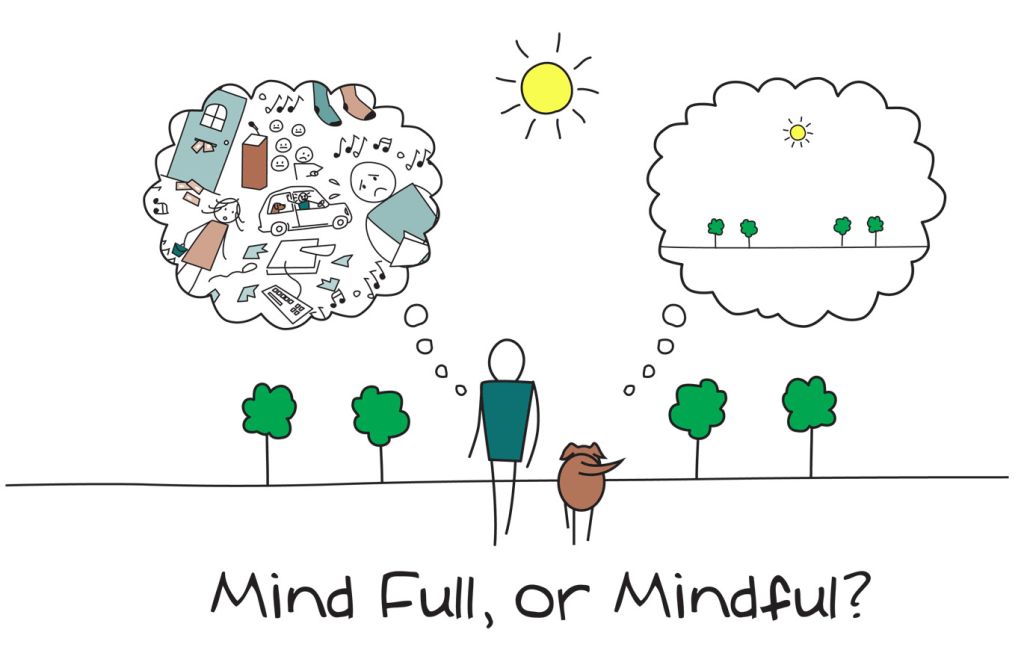
    Basic mindfulness exercises put you in a state of awareness where distractions are let go, and your mind power is able to function more effectively. They help you think more clearly and concentrate better. They are also easy exercises to do.

    More Mind Power in Minutes

    A basic mindfulness exercise starts with sitting down, relaxing and breathing deeply through your nose. Close your eyes and be aware of your breath going in and out. After a minute, move your attention to your body, one part at a time, noting sensations of cold, hot, tight, sore and anything else you identify. In a few minutes, start listening to sounds in the room, without thinking about them. Just listen.

    When it feels right, open your eyes and look around as if you are seeing for the first time. Rest your eyes on an object for half a minute, examining it without talking about it in your mind. Then move to another object, and another, while still maintaining an awareness of your body, your breathing, and any sounds. Stay in this state of mindfulness until you are ready to get up.

    Being aware of your body, breath and immediate environment, puts you more fully “in the moment.” Your mind is in a very receptive state, with fewer mental distractions that prevent clear thinking. Doing a mindfulness exercise before important mental tasks will give you greater mind power, specifically more focus and concentration.

    An Even Easier Mindfulness Trick

    Try this one today: When you feel stressed, stop, and carefully watch yourself to identify what’s bothering you. Maybe you’re expecting something bad to happen, or an argument is going on just below the surface of your consciousness, or you’re worried about something, or in pain in some way. Make a note of everything you find.

    Then deal with these mind-irritants. Make a phone call that’s on your mind, take an aspirin, apologize to whomever you were fighting with. Write things on tomorrow’s list, to get them off your mind. If there’s nothing you can do right now, tell yourself that. Do this exercise, and you’ll feel less stressed, and more able to concentrate on the tasks at hand. You’ll have more mind power today.

  • Looking Back to Move Forward

    looking-back-looking-forward

    Another year is over. Take a moment to reflect on the past years.Start with an honest evaluation of your accomplishments, successes and failures.

    Welcome the new year with a celebration of the past. Whatever challenges you faced last year, you are here to face another year. You are inspired and ready to tackle new endeavours, explore new horizons and reach for the stars.

    Looking back helps to evaluate what worked and what didn’t. Some issues seem to be replayed over and over. How many years has it been that you’ve promised to be more vigilant about your diet and exercise? What about the overuse of your credit card? How do you manage your time? What is it going to be this year? What are your priorities?

    It’s all a matter of perspective. Somewhere in the past, you stumbled and for a while, you were spinning your wheels. Take heart, that is past. There is a deep
    well of strength and courage within you. And you moved on.

    No one passes through this life without knowing pain and heartache. Add to this regret over lost opportunities, wrong choices and wrong decisions. These do not define your life. It is the lessons learned from these , and the determination to do better. Reap the nuggets of precious insights from the muddle and move on.

    How well do you take care of your mental, physical and spiritual self? If you believe in taking care of your mental and spiritual well-being, your physical
    health will definitely reap the benefits. Do you allow yourself time alone to enjoy peace and quiet? Have you learned to say NO. Do you take time to appreciate the beauty , the bounty and the blessings of the universe?

    Stress is the scourge of living in the fast lane and getting caught up in the pursuit of material success. Consider seriously the level of your stress over the past years and how it affects your health. Think about this- your stress level impacts on your relationships, your career, your family and your whole life.

    Some pursue elusive dreams. How long has it been? Ask yourself. Perhaps it’s time to re-assess that dream. Times change. There are other avenues to pursue. Don’t get stuck chasing after something that loses its value, its luster as time moves on. Don’t let life pass you by.

    Look back honestly, but kindly. And move on.

  • What Innovation Can Do to Your Life

    innov-e1437662248426

    It’s a talent that everyone has, yet they think they don’t. The power of innovation. If you’ve ever marvelled at somebody’s creative prowess, guess what, you can create and innovate too. It just takes time. Everyone is born creative. The box of crayons in kindergarten were not limited to those who possessed potential; because the truth is, everybody has potential.

    You know how long it took to learn to ride a bike or drive or to never commit the same mistake again? It’s the same with innovation. It takes a bit of practice and a lot of time before this mind function comes easily when called. This article will teach you a few tips on how to bring innovation into your life.

    Don’t listen to what other people say. Follow the beat of your own drum. Allowing for the input of other people will only bring cacophony to the music you are trying to make. If you have an original idea, don’t waste your time and effort trying to make people understand. They won’t. And the help you will probably get comes in the form of negative feedback. If all those geniuses listened to their peers, we would probably still be living in the middle ages.

    Spend time on it. I cannot stress that enough, although, please do not mistake this tip to tell you to quit your day job entirely. Do not. This involves some tricky time management but with a little discipline you’ll be able to squeeze both in.

    Exercise. Take a walk. Run a mile or two. Send all those endorphins coursing through your veins. Exercising certainly clears and relaxes your mind and allows for anything to pop up.

    Record your dreams. Aren’t some of them just the craziest things that your conscious mind would never have thought of? If you’ve had these dreams before, and I’m sure have, this only shows you the untapped innovative power you have lying within. So jot down those notes. Those dreams may just create an innovative spark in you.

    Find your own style. You can always tell a Van Gogh from a Matisse. You’ll know Hemingway wrote something by the choice of words on the paper. So it is the same with you. People will appreciate your innovation more because it is uniquely yours and that no one else would have thought of what you were thinking. That will let people see how valuable an asset you are.

    Don’t hide behind nifty gadgets or tools. You don’t need the most expensive set of paints to produce a masterpiece. The same way with writing. You don’t need some expensive fountain pen and really smooth paper for a bestseller. In fact, J.K. Rowling wrote the first book of the Harry Potter Series on bits of tissue. So what if you’ve got an expensive SLR camera if you’re a crappy photographer? Who cares if you’ve got a blinging laptop if you can’t write at all? The artist actually reduces the number of tools he has as he gets better at his craft: he knows what works and what doesn’t.

    Nothing will work without passion. What wakes you up in the mornings? What keeps the flame burning? What is the one thing that you’ll die if you don’t do? Sometimes people with talent are overtaken by the people who want it more. Think the hare and the tortoise. Ellen Degeneres once said that if you’re not doing something that you want to do, then you don’t really want to do it. And that’s true. Sometimes you just want something so bad you become a virtual unstoppable. And that is passion. Passion will keep you going.

    Don’t worry about inspiration. You can’t force it; inspiration hits when you least expect it to, for those unpredictable yet inevitable moments you should prepare. An idea could strike you on the subway, yet alas, you poor unfortunate soul; you have no sheet of paper to scribble down a thought that could change the world. Avoid these disasters. Have a pen and paper within your arm’s reach at all times.

    I hope this article has helped you bring more innovation into your life. Keep in mind that you’re doing these things for your own satisfaction and not anybody else’s. But soon enough they will notice, and everything should snowball from there.

  • Start Today

    start-today-hand-lettering

    Below are several things you can do today to start getting organized. A few simple things and you will immediately feel more in control of your environment.

    Everything in your home or office should have a home — a regular and suitable place where that article is usually kept. Some items that you use every day, can be on display and/or readily accessible for everyday use. Other stuff like holiday decorations or out of season garments, can be stored in an out-of-the-way area in anticipation of being required. When an object strays from its ‘home,’ it can easily be lost, therefore causing stress and frustration. Clutter build-up as you would expect occurs when items are not kept and/or returned to their homes.

    You do not have to say yes to every single demand for your aid. Schedule a set quantity of time every week for chance requests. Once that time window is full, do not take any more requests for your time that week.

    Do not bring your mail over to your writing desk or table where it is bound to stack up and take hours to go through later. Open it right over the recycling bin, and get rid of all uncalled for mail and inserts without more ado.

    Stop wasting morning time frenetically running around like a crazy person trying to get things completed in order to get to work on time. Do whatever you can to get ready the night before. Set the breakfast table. Set out your clothing, and your kids’ clothing. Have the coffeepot launch automatically by using the timer.

    Stuff that is out-of-date, washed out, out of order or otherwise unusable can frequently be discarded. If you do not want it, and you do not know anyone else who wants it, chuck it at the moment. You will be freeing your space–and your mind!

  • Five ways to get More Done

    how-to-get-more-done

    1. Avoid interruption: If possible, leave your phone on voice mail during times you have scheduled to work on projects. If you have a private office, close your door. You might even place a sign saying something like “Hard at Work: Please Come Back Later.” If you are interrupted, help keep the interruption short by remaining task-oriented.

    2. Schedule time to make phone calls and return e-mail. When you leave a phone message, list times that you will be available by phone. Ask the other party to do the same – it will save you both a lot of time that would otherwise be spent on everyone’s favorite game, phone tag. Also, avoid checking your voice mail and e-mail frequently. Instead, review them at scheduled intervals during the day.

    3. Plan stress breaks throughout the day. Make sure you give yourself a break! Working to the point of total brain fatigue and muscle tension will never do you any good. Stretch, take some deep breaths, and go out to get your lunch, call your kids – do something to give yourself a little break. If you’d like, you can schedule these breaks as a reward for when you’ve finished a particular chore.

    4. Appreciate your own approach. Just as we are all different in other ways, we all have diverse organizational styles. Keep in mind that you have gotten where you are today because of whom you are and what you have accomplished. Employ improved organizational skills to enhance your personal style, not change it. Getting organized should make you feel good, not burdened.

    5. Stick to your plan. The best-laid plans often fall victim to their makers. While spontaneity is important, there is a fine line between it and plain procrastination. Once you’ve come up with a good plan for tackling a task, stay with it. Only you can prevent yourself from wavering.

  • Finding Balance

    rocks-balancing-on-driftwood-sea-in-background-153081592-591bbc3f5f9b58f4c0b7bb16

    Finding the balance between work and for play isn’t easy at times. We exist in a world where anyone, at almost any time, can get a hold of us. Not to mention the reality that information is coming at us from everywhere. Newspapers, TV, radio, websites, …the list can go on and on.

    Finding the time to work on your relationships with others, at home or at work, is an essential part of whether life seems controllable, pleasurable and balanced. However a lot of us feel so fragmented and overwhelmed because we aren’t achieving that sense of balance.

    Like most people, we never appear to have sufficient hours in the day to get everything completed. Taking the time to make creative changes in your life can really mean the difference between simply making a living and having a LIFE.

    Take control of your physical environment. You can find roughly 333 more hours (Eight 40-hour weeks) in any given year by getting and staying organized. The less time you spend running around searching for things, the more time you will have for what is significant to you.

    Prioritize what is in fact needed and important to you. Be “ruthless” about what you keep. You have a finite amount of space-use the “real estate” for those things you need and treasure.

    Eliminate what you don’t need. Not everything has to go the way of the dumpster. Donate to a charity or sell the items and allow yourself the freedom from feeling guilty or wasteful. If you aren’t using it, chances are someone else can.

    Contain things properly. Consider about where you would look for items reasonably and what type of like bits and pieces can be contained right along with them.

    Schedule time to maintain your new found organized self and surroundings.

  • Image result for hypnosis and goals

    Many people think of life as an obstacle course full of hurdles and ditches that need to be navigated successfully in order to be happy. In many ways they are right.

    If you are a very goal-orientated person then it is inevitable that you will encounter obstacles on your way to achievement and success. The bigger the goal the more set-backs there seem to be. These obstacles and set-backs can act as tests. They test your character and your resolve. Each barrier that is overcome and each challenge that is met head on develops your character, belief in yourself and strengthens your resolve to succeed not matter what.

    However, when the same obstacles keep showing up over and over again and failure seems to be a common occurrence it’s time to re-evaluate your approach to your goals. These recurring problems are an indication of your inability to learn from the temporary failures you are experiencing. The conscious mind is obviously having trouble analysing the reasons behind the failures and keeps making the same mistakes.

    At this point some outside help is needed. Obviously you are unable to consciously work through the trouble you are having and it must be a subconscious block that is preventing you from learning your lesson and moving forward. In such situations hypnosis and self hypnosis can be of immense vale. Either Hypnosis or Self Hypnosis can most definitely be used successfully and effectively to get to the root of the problem and eliminate it forever.

    One extremely powerful benefit of using hypnosis is the ability to train your mind to stay focused on the successful attainment of your goal. You can program a specific outcome and retain the ability to consciously divert your attention to it in a positive, success-affirming manner. You can also eliminate self-sabotage and remove the negative feelings and thoughts that are blocking your path to success.

    Here are some tips for using hypnosis as a goal achievement tool.

    1. Visualize. Program yourself with your desired outcome. While under the influence of self hypnosis visually imagine that your goal is already accomplished and your objective has been reached. See it as real. See it through your own eyes and experience all the wonderful feelings associated with that goal attainment.

    2. Persistence. Get down into your subconscious mind and change your inner character traits to match those people who NEVER give up. Program your subconscious mind to be persistent regardless of what is going on in any given situation. Post hypnotic suggestions to develop an iron will and persistent approach to your goals will be invaluable in times of stress and disillusionment.

    3. Think Positive. Learn to think positively. The subconscious mind has a tendency to replay past memories and throw them back into consciousness in the form of doubts and fears. Through the use of self hypnosis you can totally eliminate them. Program your subconscious mind to think positively and expect positive results.

    4. Program out the Problem. Enevitably some problem will arise when you pursue worthwhile goals. Through hypnosis you can solve these problems fairly rapidly. While in trance see yourself successfully traversing the obstacle. You don’t have to see how you did it, just see yourself at the other side, relieved, happy and proud that you “figured it out” and reached the other side. If this, in itself, is a probelm for you, or you find it hard to do then seek the advice of a qualified hypnotherapist. A competent hypnotherapist will find the root of your problem probably in the fits consultation!

    5. Pre-pave your path. Imagine yourself meeting the right people and being in the right place at the right time. Program your mind like this, through the power of hypnosis, and your subconscious mind will pick up on non-verbal clues, process the millions of bits of information you receive every second and guide you to the right course of action.

    6. Develop faith. Use hypnosis to convince the subconscious mind that your goal is already a reality. “Fake it till you make it”. Fool your subconscious mind into believing the “real” world is actually exactly like the world you have been visualizing. In the deeply relaxed state that hypnosis offers you can get fully involved in your mental image. Really feel how great it is to have already accomplished all those things you wanted for so long. Enjoy the fact that you are enjoying the benefits of having reached that goal.

    Follow these six steps and use them with the power of hypnosis and you will be catapulted towards your goal faster than you can imagine.

  • Kids and Bad Habits

    Image result for bad habits kids

    Kids go through periods of having bad habits. Some of their bad habits are worrisome and some are just really annoying. Parents agonize over what to do about their children’s unacceptable behaviors. There are a few things they should know.

    1. What you see as bad habits may actually be natural stages of child development. If your very young child is examining the lint between his toes regularly, you might think it is a bad habit. It might be, though, that the child simply finds toe lint interesting. The child will outgrow the fascination and the bad habit will disappear.

    2. So-called bad habits may be ways for the child to soothe themselves. At times when they would ordinarily feel like screaming and crying, they may suck on their clothes instead. This makes them feel calm and secure.

    3. Children may use bad habits to feel a sense of control over their environment. If they are dropped off at a daycare center for the first time, they may start having odd behaviors. This could be, for instance, rubbing the material of their clothing. As time goes by, if the daycare center continues to feel threatening to them, rubbing the clothing material could become a bad habit.

    4. Kids sometimes do things adults see as bad habits that they do not understand. Sometimes, the kids are simply solving a problem. If their hands are cold, they may put them between their legs to warm them up. Adults often misinterpret this and overreact. If they knew the problem was cold hands, they might have a different solution to offer.

    5. Shaming and punishment are the worst things you can do. If a child is doing the bad habits in an effort to soothe herself, making her feel bad is counterproductive. It will give her more to self-soothe about. This is why parents often become frustrated when trying to deal with a child’s bad habits.

    6. Substituting more pleasant behaviors for the annoying or destructive bad habits can work better. You can teach your child to be aware of when they are doing a bad habit. Then, you can teach them another behavior to do instead. When they do, reward them.

    7. Incentives work to help some older children get over bad habits. This is especially true if they are old enough to think in the long term of at least a few weeks. You can offer them a reward every day that they do not do their bad habits. By the time they have quit, they will have a large reward waiting.

    8. Usually, the best thing you can do is to wait for the bad habits to go away all on their own. As long as you do not reinforce the bad habits by doing them yourself, the kids should grow out of them. Once they get older, their school mates will make it more attractive to them to stop doing their bad habits. Kids like to fit in.

    The most important thing to remember about your child’s bad habits is that you should not be too alarmed. Only when they are destructive or dangerous is it essential for you to stop them immediately. Otherwise, be understanding and gentle when dealing with your kid’s bad habits.

  • Anger and Hurt; another lonely place!

    Image result for anger

    Being human can really be challenging, to say the least. We feel emotions with every breath we take, every move we make. Some emotions are so sweet that we never want to lose that feeling. Other emotions cause us so much anger and hurt that we are paralyzed with pain.

    Our minds use anger as a memory of a hurt that we have experienced. The memory is usually due to the fact that we neglected to express our hurt at the time for one reason or another. We tend to not show our anger or hurt because we do not want to cause a conflict or hurt another’s feelings or ever admit those feelings. We also hang onto it because once we actually show we are angered, we are showing we are not perfect and that in fact we are human and can feel pain.

    But if we continue to push away our feelings to protect our perfect selves, we become less real and less connected to people in our lives, without even realizing how far we are pushing them away.

    Protecting another person from our hurts or anger is only imprisoning ourselves, so that they will never be able to reach us. If we do this long enough we cannot find happiness anywhere. When we are questioned why we are upset, we can not even find the beginning to the hurt we have hidden. The longer we hide our hurts and anger the more confusing they become. Things get all tangled up and if we dare try to explain, we are totally speaking another language.

    Have you ever been hurt by someone and then they make it impossible for you to explain why you are angered? Those people can do a lot of damage, they are controllers. When you can identify that type of person, only then can you fight back and tell them, “please just shut up and listen”. If you want to be unhappy then keep hanging onto that hurt. It will definitely drag your self-esteem to the bottom.

    Hurt is a pain of the moment and it is happening right now. Its reason is right there in front of you. You must deal with it or you will only hide it and end up alone in your prison of loneliness. The longer you hold back, the more angry you become with you, for not acting out. That’s when guilt moves right on in and takes over, making you want to get even with that person. Your negative thoughts are seeded now and nothing feels good. Is this a good thing? NOT!!!

    It is definitely not easy to risk being called oversensitive, or told that you are just causing a fight, or they just laugh you off like you are a child. You may even find that this person doesn`t really care about you. Better to find that out asap, don`t you think?

    These FEELINGS of hurt and anger have a way of taking over our lives. Is it not better to let it out now than to live in an unhappy life of silence? Tell someone how you feel, when you feel it, or you will only lock those FEELINGS up inside you and trust me, you will lose yourself.

    You may even hurt the one you love, but honesty is the best way. I believe that with a true love you should be able to tell that person anything and yes even if you feel hurt or angered by them.

    Love conquers anger and hurt. It battles jealousy and helps lift you to a higher self-esteem!

    To be truly happy and not endure the prisons of negative emotions, we need to be heard. We need to be understood. We need to be forgiven. We also need to be loved and cared for.

    And my sweet readers, on that note, I will leave you with another tip to strengthen

    your courage to keep climbing that mountain to a better you!

    Take responsibility for your life.

    You have the power to make things better.

    And most importantly, you have a choice!