
 Sometimes it seems as if life is a series of losses—the loss of a spouse, the loss of a job, the loss of a brother. You may realize that you need to take time to grieve all of these losses. But what you may not realize is that such losses can also lead to stress—a great deal of it. In order to remain emotionally healthy, you must learn to deal effectively with stress induced by traumatic life events.
Interestingly enough, stress can actually be quantified. The Holmes-Rahe Social Readjustment Scale assigns point values to the various stressors we can experience in life. For example, the most stressful event we can encounter is the death of a spouse, which ranks a 100 on the scale. That’s followed by divorce (73), marital separation (65), jail term (63), death of a close family member (63), and personal injury or illness (53). Even happy events, such as marriage, can rank high on the stress scale.
Most of us do not go through life measuring our stress level. However, referring to the scale can be quite instructive. For instance, after consulting the scale, you might decide to delay a major decision such as the purchase of a new home until you’ve successfully battled the stress from your divorce. Or you may decide to wait before taking a new job until you’ve dealt with the stress from your wedding. This self-awareness can enable you to reduce your stress level and to maintain your equilibrium amidst great life struggles.
Therefore, one of the healthiest things you can do is to draw up a list of stress-causing life events and post it in a place where your entire family can see it. That way, you’ll have a constant reminder of just what you’re up against. This can also serve to encourage your family at a time of great heartache. Family members will be able to see that the event is a normal part of life—one that many other families face. As a result, they’ll be able to put the event in perspective.
Another important thing to do is to verbalize your feelings about a stressful event. Talk to your mate, your parents, a friend, or your pastor. If you feel as if there’s simply no one to confide in, ask your family physician for a referral for a good therapist. Talking about your feelings is an important part of the healing process, and will enable you to deal with the stress much more efficiently. Another good option is to commit your feelings to writing. Keep a journal and use it to express your innermost thoughts. You might be surprised by how therapeutic this can be. Use the journal for some problem-solving. Think of ways that you can effectively deal with the stressor in your life. It may be as simple as taking a hot bath to calm your nerves, or as challenging as reorganizing your personal files. Such problem-solving techniques can help you to realize that you can overcome the challenge in your life—that your life will not end, just because you’ve encountered a major setback.
Now that you’re aware of the stress scale, you might also consider taking a pro-active approach. For instance, if your marriage counseling doesn’t seem to be working, try to prepare yourself mentally for the day your marriage will end. Also, if your mother is in ill health, think of what you want to do for her before she passes from this life. In essence, what you are doing is engaging in disaster preparedness. While it can be troubling to think of such tragedies, it can also help you to better cope with the curve balls that life sends your way.
Another important strategy is to simply “take it slow.” Don’t hurry when making major life decisions, particularly when you are faced with a crisis. Recognize that most things in life do not require instantaneous decisions. You have the luxury of time, so use it to your full advantage. In the end, you’ll be happy that you’ve taken the time to think things through, rather than making rash decisions. If you’re in a “calm mode,” you’ll also be better able to handle the stress of difficult situations.

 You may have first learned to pray at your mother’s knee. You decided that, in times of trouble, prayer could open up a pathway to enlightenment and peace. You might have said a prayer before a big test, before showing your parents your report card, or before the final football game of the season.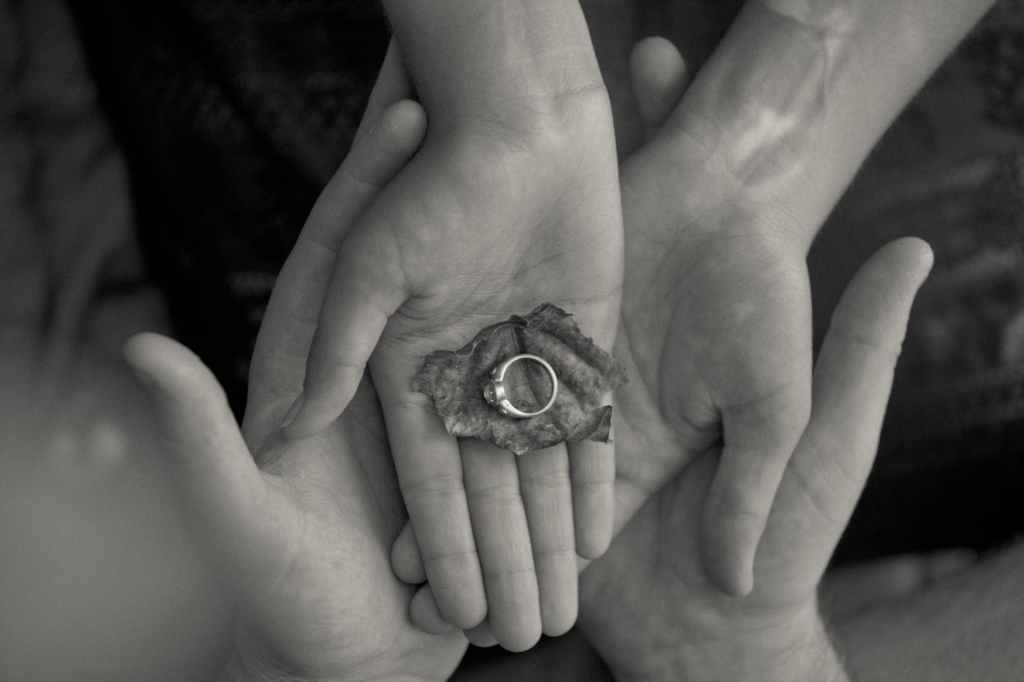
 When you got married, you said the words of commitment we all know so well about for better or worse, for richer or for poorer and so on. Those words are wonderfully inspiring, but real life sometimes make those vows seem as if they are mocking couples after they’ve been married for several years. The vows aren’t the problem because they are simply defining true commitment. What becomes difficult is keeping the love and romance alive in a marriage.
 Every successful concern is the result of a One-Man Power. Cooperation, technically, is an iridescent dream. Things cooperate because the man makes them. He cements them by his will.
 If you listen to experienced speakers, it’s easy to see some real differences in how they step through their presentation than maybe how you go about giving a talk when you are called upon to speak in public. But it is a good exercise to use every opportunity to listen to different public speakers and learn from them. From speakers who are not effective, study why they are and learn how to correct those problems in your presentation. For speakers who are very good, learn what they do that works and copy their methods without shame. It’s all part of learning from each other.
 Searching for employment is one of the stressful times in anyone’s life. The process of preparing a resume, finding the perfect job, and completing an interview may send even the soundest individual into a panic attack. Whereas a resume presents your abilities and experiences on paper, an interview represents you in the first person. The pressure to present yourself in the best light possible in a short, controlled environment is exceptional, so it is key to keep an air of self confidence during this time. Although there is a fine line between self confidence and arrogance, a prospective employee that enters an interview poised and put together already has an edge on the competition.
 Low self esteem can be devastating to an individual’s personal, work, and scholastic life. The constant feeling of inadequacy and unworthiness can undermine attempts to succeed at even the smallest things. If you find yourself plagued with such feelings, you may need to ask “Do I have low self esteem?” Self esteem is your own view of yourself, your capabilities, and your attributes. It is impossible to succeed in life if you are constantly second guessing and berating yourself over the tiniest detail. Many individuals suffer from low self esteem, so you are certainly not alone. Some individuals have recently begun to question their self esteem while others have been doing so their entire lives. Whatever your situation, honestly answering these questions will give you a great deal of insight into how you view yourself.
 We all want to change something about ourselves. There is always something that we want to change in our life. Dealing with something that we want to make different is not always easy but we have to figure out the best method to make it happen. Many people are trying to change the way that they look and their weight. This is going to be a very challenging idea and something that takes a lot of will power.
 How well your presentation goes the next time you step up to a podium depends on several factors. But one factor you can control completely is your script. The way you organize your content and how you present the material to that crowd can either totally captivate them and drive them step by step to conclusion or it can bore them to sleep. Its all in how you construct your presentation and how you present what you want them to know throughout the talk.
 Today, why not make a personal commitment to be happy, in spite of what life hands over to you. You have to admit that there are too many things over which you have no control. The only thing you can do is to stop allowing them to make dents in your spirit.
 Manhardeep Singh