

• Stress on the Job

    pexels-photo-52608.jpeg

    Perhaps it’s due to a boss who seems to be making unreasonable demands. Or it’s the result of a co-worker who seems to routinely pass her work onto you. Or maybe you’re in a profession where tension is great, such as medicine or law. While a little bit of stress on the job can be healthy, too much can be a killer—literally. It’s been shown that there appears to be a direct correlation between stress and heart disease.

    As a result of this, it is important that you learn to deal effectively with stress on the job. This can be difficult, because a number of stress-inducing factors may be out of your control. For instance, you have no say in who your boss is or who your customers are. You may not be able to determine when you start your day, or how much time you have for lunch. However, it is important for you to recognize that job stress is a serious health problem.

    The statistics tell the story. A study conducted in 1999 discovered that we are working longer hours. In fact, the average number of hours on the job have increased eight percent in just one generation—to 47 hours a week. One out of five of us works as much as 49 hours a week. We are a nation of workaholics. This can cause a great deal of stress, not only on the job, but on the homefront as well. A number of divorces are attributed each year to the workaholic syndrome. To put things in perspective, consider this: the average American works three months more each year than workers in Germany. The U.S. leads the industrialized world in the number of hours worked. The workplace has become so competitive in the U.S. that some employees compare it to the reality TV program known as “Survivor.”

    In order to help reduce your stress on the job, you need to make a realistic assessment of your hours. Is it possible for you to cut back and still perform your duties? Are you wasting time on the job that would be better spent at home? Can you delegate some of your duties to someone else in the office? If you design a more workable work schedule, you might find your job-related stress decreasing significantly.

    It is entirely possible that you will actually become ill working those extra hours. Over a four-year period, from 1996 to 2000, the proportion of employees taking sick time due to stress rose by three fold. Each day, as many as a million American workers have called in sick because they are under too much stress. This absenteeism is costing American companies money—and making workplaces less productive.

    Americans are also feeling stressed out because they no longer think their jobs are secure. Over a ten year period, the number of employees who were afraid they would become unemployed doubled. And a survey conducted in the year 2000 discovered that half of all workers worried that they could lose their jobs. The dot.com burst, corporate bankruptcies, and massive layoffs have scared the American workforce. With little job security, workers live in fear of being tossed onto the unemployment line. A number of people have come to realize that they cannot expect to retire from the company for which they are now working. Therefore, they may have little allegiance to their companies, resulting in stress for both bosses and employees.

    It would be wonderful if the economy could be changed so that long-term employment at a single company was still possible, but that may be wishful thinking. As a result, workers need to try to lessen their stress—knowing that they may be in a volatile position. For many workers, this might mean making sure that they contribute to a 401-K plan so that they have money socked away for retirement. For others, it might mean starting their own businesses so that they do not have to rely on someone else for their employment. If you try to be proactive, chances are you will lessen your stress level. You have to realize that you are ultimately responsible for your own fate. If you are in the driver’s seat, you will feel a sense of control which could lessen your stress level considerably.
  • How to Communicate Confidently

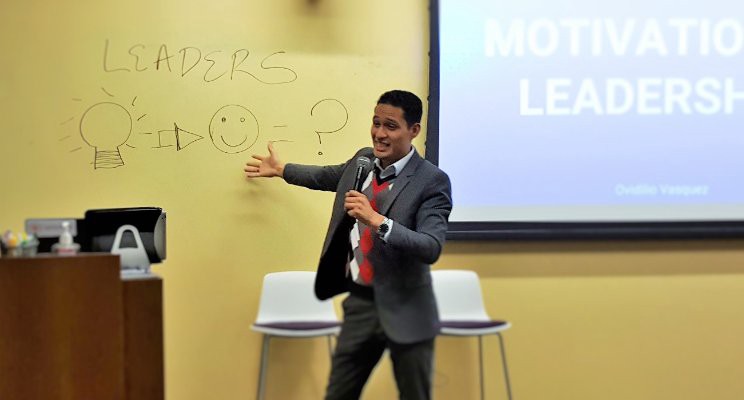
    3-keys-to-be-a-confident-public-speaker-in-2017-even-if-you-have-an-accent-like-meOne thing common to all great communicators is that when they speak, everybody listens. However, communicating to people is one of the greatest fears for most of the human beings, and especially when it comes to public speaking. Most people dread public speaking more than death! Do you ever wonder why you don’t seem to get listened to by others even though you too have many ideas to share?

    Confident communication however, is more than what you speak. It takes into account your body language as well.

     What’s inside the mind of a Successful Communicator?

    Confident communicators aren’t a know all

    Of course, you need to have good knowledge about the subject you are talking about, but what actually matters is not what you say, but how you say it. Successful people don’t do different things, they do things differently. The first step is to believe in what you say. You must be fully convinced in the idea and only then will there be conviction in the tone of your voice. Your voice now is equipped with the power to hold people’s attention. Once you have conviction in your voice, and what you speak is useful for the other people and it actually helps them or gives some credible information, you get appreciation. This certainly peps up your self-confidence!

    Confident communicators don’t let people make them nervous

    Most people suffer from fearing catastrophes that never happen. Most people tend to make a very high imaginary impression of other people in their minds.

    So much so that their mind starts believing that other people are perfect. This creates an unfair comparison between their own personality and the imaginary personality of other people that they create. This thinking breeds a fear of meeting and talking to other people. It lowers their confidence and they fear what it will be to meet and talk to these “perfect” people. However, in real life nobody is perfect and you must realize this. Everybody has their own set of faults and weaknesses. It’s important for you to realize that every human being is essentially imperfect. This will give you greater confidence to go out and face people.

    Take it or leave it. You snooze, you lose

    Ideally you must be the best of your moods and carry a pleasant demeanor when you go out and meet people. However, it might not always be possible and it may so happen that you are not fully prepared to communicate, or you are a little tense over some other matter. A confident communicator, though, develops an ability to keep control of his emotions. This quality helps the communicator to keep control of the situation. You may still not be in a good mood but you must make sure that you keep indecisiveness at bay. Your indecision will fritter away your focus and energy and you fail to make any impact. If you decide to communicate. Be yourself, have faith in yourself and go ahead.

    Mind your body language

    Your gesture, postures and eye contact probably talk louder than your words. Body language cuts across all barriers of communication such as language, time, place, knowledge and so on. Your body language starts getting interpreted unconsciously by everyone around. People start forming impressions about you the moment you make an eye contact and body language certainly contributes a considerably large part of the impression you make.

    A few facts you must know

    • You may have a sad expression on your face because of some other matter, but the person you are talking to may feel that you don’t approve what he says, leading to misunderstanding.
    • A steady gaze may convey intensity, anger, aggression or strong interest. Little eye contact may imply lack of confidence or shyness.
    • Open hands may convey honesty and openness; however, making a lot of hand gestures might mean that you are being nervous.

    Confident communication, including words and gestures, is something that you do not perfect in a day. You must grab every opportunity to communicate. Try to check your communication skills, your strong points and the mistakes you make along with the overall effect on the other person. Try to learn from your experiences and there is no reason why you can’t make it. Get going. Good luck!

  • Dealing with failure to care for yourself

    hug-yourselfThere are a lot of people who fail with simple things like taking care of themselves. It’s hard to walk away from someone who you care a lot about, and that is why so many people have an enabler feeding their addictions and their negative habits. You need to learn to let go of all the destruction and try to think of ways that you can make yourself happy. The first way for you to learn from your mistakes is to never repeat. If you are serious about change then you need to make sure that you’ll take this as a learning lesson and avoid relapse.


    The first thing that you’ll need to do is accept the fact that you can’t take on yourself and use other people to help you and guide you to get back on your feet. Your friends and close family are just waiting for you to come to them and ask them to help you. You’ll want to consider that there are many people who really do care about you. You’ll need to just take a step back. The next time that you feel the need to use or to drink, take a step back. You need to understand why it is that you do the drugs and drink the alcohol. You may want to consider the fact that it’s childhood reasons. You may also find that it is stress. You may also think that it’s just you in general. You’ll want to consider talking to a therapist.

    Once you have taken the step back and you have left the scene that triggers your usage. You’ll want to consider that there are a few ways for you to increase your health, but it’s not always as easy as you think. Quitting a lifestyle that you’ve had all your life is extremely hard. You can’t just walk away from something that has defined your life. This is the time where you need to check yourself into a rehab center and try to work through the detox to get help. You’ll also want to begin regular therapy sessions between you and all of your loved ones. This way you will be able to feel the support of friends and family that love you. The support will help you to look forward to life, and also you’ll be able to see a difference in the way that you see like.

    Instead of hurting yourself, you are also hurting your loved ones. Admitting that you have a problem is the first step, but it’s not the last step. Of course, you have heard about the twelve-step problem, but honestly, you just need to take it easy. If you feel for a second that relapse is possible, then you will need to keep in mind that there are plenty of people who got your back, you just need to lean on them sometimes. There is so much that you can do for yourself, but you have to want to change. Wanting to change is one of the most important ways that you can overcome some of the demons. You’ll need to keep in mind that there are going to be times of weakness, however, if you have people to rely on you’ll be able to keep up with all the hard work and stay clean.

  • Reading:  The Pleasurable Escape

    pexels-photo-256546.jpegIt can take us to exotic lands, with powdery white beaches and clear azure skies.  It can take us back in time—even to prehistoric days—or forward to the Big Brother world of the 25th century.  It can fill our eyes with tears or make us laugh aloud.  Reading opens a window to the world, giving us a vision of things we never dreamed possible. But, though you might not realize it, reading can also reduce your stress level.

    For one thing, reading can help with problem-solving, which, in and of itself, can relieve stress. Say you are overweight, and that is contributing to your stress. It seems that the more weight you gain, the more stressed out you become, and the more you eat.  By reading books about good nutrition, you can learn to plan meals that are low-cal and low-fat.  As a result, your weight problem might disappear—and your stress level will be greatly improved.

    Reading can also be relaxing. When you curl up with a good book, you put the rest of the world at bay. You take time out to travel to distant worlds, to learn about different time periods, and to expose yourself to out-of-this-world philosophies. You are essentially taking a vacation of the mind—but one that can be relatively cost-free, especially if you live near a library.

    Reading can be a source of great hope, which can also help to relieve your stress.  Through biographies, you can read about famous people and learn how they overcame their struggles.  These stories of triumph might inspire you to seek ways to overcome the challenges in your own life.  Inspirational books can send your spirit soaring, enabling you to accomplish things you never dreamed possible.

    Of course, there are instances when reading can raise your stress level.  For instance, if you are studying for a test, or reading about tragedies in your local newspaper, you might find your stress level skyrocketing.  That is why it is important to be choosy when it comes to your reading material.  If you’re feeling stressed, pick up a book that will relax you—perhaps a travel book, a cookbook, or a book of poetry.  Resist the urge to read something that could simply make you feel more troubled.

    Self-help books are particularly effective in helping to reduce stress.  They allow you to explore your feelings and the triggers that lead to stress. And they recommend such techniques as listening to soothing music, playing a musical instrument, playing cards, or engaging in deep breathing in order to deal with stressful situations.

    Or you might buy a book to learn about a hobby that can further reduce your stress. Perhaps it’s needlepoint, woodworking, or crochet.  It may be origami, calligraphy, or stenciling.  You can learn how to refinish furniture, paint, renovate your kitchen, or redecorate your bathroom. You can either build upon a skill you already have, or learn a new one from scratch.

    It has been shown that reading novels can relieve depression, so it should come as no surprise that such an activity can also reduce your stress.  When you read a novel, you travel to a distant place, metaphorically speaking.  This allows you to use your imagination freely as you try to picture characters and settings. It’s a wonderful escape from the pressures of everyday living, and can allow you to return to your life feeling more refreshed.

    Reading also forces you to concentrate—concentration which might be otherwise lost due to stress.  As a result, you learn to exercise your mind—an exercise that can bear much fruit. Thanks to your reading, you may notice you find it easier to remember things which can, in turn, reduce your stress level.

    If you find that you don’t like to read, you might start with graphic novels. These comic book-like creations might appeal to you because of their interesting pictures. Or you might simply start with glossy magazines. In the long run, it doesn’t matter so much what you read as how much you read.  Read in the grocery line, at the bank, or while pedaling your stationary bike. You’ll quickly find that the more you read, the more you will want to read, and the less stress you will feel.

  • Mark Your “New” Beginnings By Making Memories

    pexels-photo-613321.jpegAs you and your partner begin exploring your romantic sides and you are both providing new and creative ways in which to express your love for one another, you may find that you want to do what you can to hold on to as many of these memories as possible.  Consider starting a ‘memory’ chest or box with your spouse where you can place all of the important and considerate items that will remind you how romantic your experiences have been.

    If you and your spouse have started to enjoy spending nights out on the town together, you can begin by saving what you collect while you are out and about. Keep all of your theater ticket stubs, movie theater stubs, concert ticket stubs and even restaurant receipts if you choose.  If you eat somewhere that offers matchbooks or something comparable, you might want to begin picking one up and putting it in a special box when you arrive at home.  For a more organized version of this, those who love scrapbooking can create a scrapbook around these items or you can simply place them in photo albums so that you and your spouse can go back to see all that you have experienced together.

    Some couples love to go on vacation together and romance can play a huge role in most of them.  Tropical or mild vacation destinations are quite popular and can provide a number of romantic items that can return home at little or no cost.  You can collect shells or fill a small bottle of sand marked with the beach it came from to keep at home.  I know one family that collected seashells and surrounded the base of their swimming pool with them!  For couples that prefer to take both tropical and wintry vacations, the colder climates provide similarly beautiful trinkets for couples to collect like pinecones and even melted snow!

    If you and your spouse enjoy wine and/or champagne, start saving the labels and corks from the bottles.  You can save them in plastic bags marked with the occasion and any other notable information from when the beverage was used.  For couples who enjoy road trips, keep maps from all of the journeys you’ve taken together or keep a large map on the wall at home so that you can mark where you’ve been with pushpins.

    Make your own special memories just by staying at home. Challenge each other romantically by trying to agree on the most romantic kiss that has even been in a movie.  Buy that movie and try to recreate that kiss with each other!  Place the movie in your memory box and revisit it frequently.  If you can’t agree on just one kiss, name the top five and repeat the aforementioned steps with all five!  Next, try and agree on the most romantic song ever made.  Buy the CD (or download the single and burn it) and dance with each other to that song.  Place the song in your memory box and again, dance to it frequently.

  • Surprised by Stress

    pexels-photo-313690.jpegSometimes it seems as if life is a series of losses—the loss of a spouse, the loss of a job, the loss of a brother.  You may realize that you need to take time to grieve all of these losses.  But what you may not realize is that such losses can also lead to stress—a great deal of it.  In order to remain emotionally healthy, you must learn to deal effectively with stress induced by traumatic life events.

    Interestingly enough, stress can actually be quantified. The Holmes-Rahe Social Readjustment Scale assigns point values to the various stressors we can experience in life.  For example, the most stressful event we can encounter is the death of a spouse, which ranks a 100 on the scale.  That’s followed by divorce (73), marital separation (65), jail term  (63), death of a close family member (63), and personal injury or illness (53).  Even happy events, such as marriage, can rank high on the stress scale.

    Most of us do not go through life measuring our stress level.  However, referring to the scale can be quite instructive.  For instance, after consulting the scale, you might decide to delay a major decision such as the purchase of a new home until you’ve successfully battled the stress from your divorce.  Or you may decide to wait before taking a new job until you’ve dealt with the stress from your wedding.  This self-awareness can enable you to reduce your stress level and to maintain your equilibrium amidst great life struggles.

    Therefore, one of the healthiest things you can do is to draw up a list of stress-causing life events and post it in a place where your entire family can see it.  That way, you’ll have a constant reminder of just what you’re up against.  This can also serve to encourage your family at a time of great heartache.  Family members will be able to see that the event is a normal part of life—one that many other families face.  As a result, they’ll be able to put the event in perspective.

    Another important thing to do is to verbalize your feelings about a stressful event.  Talk to your mate, your parents, a friend, or your pastor.  If you feel as if there’s simply no one to confide in, ask your family physician for a referral for a good therapist.  Talking about your feelings is an important part of the healing process, and will enable you to deal with the stress much more efficiently.  Another good option is to commit your feelings to writing.  Keep a journal and use it to express your innermost thoughts.  You might be surprised by how therapeutic this can be. Use the journal for some problem-solving. Think of ways that you can effectively deal with the stressor in your life. It may be as simple as taking a hot bath to calm your nerves, or as challenging as reorganizing your personal files. Such problem-solving techniques can help you to realize that you can overcome the challenge in your life—that your life will not end, just because you’ve encountered a major setback.

    Now that you’re aware of the stress scale, you might also consider taking a pro-active approach. For instance, if your marriage counseling doesn’t seem to be working, try to prepare yourself mentally for the day your marriage will end. Also, if your mother is in ill health, think of what you want to do for her before she passes from this life. In essence, what you are doing is engaging in disaster preparedness.  While it can be troubling to think of such tragedies, it can also help you to better cope with the curve balls that life sends your way.

    Another important strategy is to simply “take it slow.” Don’t hurry when making major life decisions, particularly when you are faced with a crisis. Recognize that most things in life do not require instantaneous decisions. You have the luxury of time, so use it to your full advantage. In the end, you’ll be happy that you’ve taken the time to think things through, rather than making rash decisions. If you’re in a “calm mode,” you’ll also be better able to handle the stress of difficult situations.


  • Prayer: The Silent Stress-Reliever

    pexels-photo-786882.jpegYou may have first learned to pray at your mother’s knee.  You decided that, in times of trouble, prayer could open up a pathway to enlightenment and peace.  You might have said a prayer before a big test, before showing your parents your report card, or before the final football game of the season.
    There appears to be a link between prayer and healing.  Medical studies have even concluded that patients who have other people to pray for them tend to fare better than those without such prayer support.  Whether it’s a single prayer or a flood of prayers, it has been said that prayer can move mountains—and that is particularly true when the mountain is debilitating illness.

    Because of the connection between prayer and healing, it is no surprise that a number of doctors recommend prayer and meditation as stress relievers.  Prayer forces an individual to take time out, to spend some quiet time alone with one’s thoughts.  Prayer also requires that a person look outward toward a Superior Being for strength and support.  Prayer can enable an individual to re-gain focus and concentration so that he or she can better work through problems and therefore experience less stress.

    Prayer has been shown to be a positive energy force.  It makes an individual feel wanted and loved by a Higher Power.  It can help to motivate a person to seek solutions rather than to simply complain about his or her problems.  Prayer can enable an individual to see difficulties in a new light, which can contribute to stress reduction.

    It is important to point out that prayer for stress relief can come in a variety of forms.  For instance, there is spoken prayer, where an individual recites words to his or her Creator.  This may be the most basic form of prayer.  Whether it’s an Our Father, a prayer to the Holy Spirit, or a quick ejaculation such as “Lord, help me,” prayer opens a window of communication to the Almighty and therefore leads to feelings of comfort.

    Another type of prayer is meditation.  This can be a particularly effective stress-reliever.  Meditation forces an individual to contemplate something other than his or her own problems, whether it’s nature, a verse of Scripture, a scene from the life of God, or some other source.  The reflection can lead to quiet contemplation which can slow one’s heart beat, lower one’s blood pressure, and even lead to feelings of euphoria.

    A number of 12-step recovery programs have prayer as their foundation.  The appeal to a Higher Power helps an individual to put his or her problems into perspective.  Prayer recognizes that the individual is not alone—that there is a greater Being guiding his or her life.  Prayer, in essence, can help individuals to cope when other methods—particularly drug or alcohol use—have failed.

    Surveys show that the vast majority of Americans believe in God, so prayer is not a foreign concept to them.  However, many Americans haven’t prayed in years.  They may be afraid of condemnation from God or from other people.  They may simply not know the words they should use.  They may even feel so unworthy that they cannot summon up the courage to pray.

    However, one advantage to prayer is that it can be picked up quickly.  If you find it difficult to pray, consider picking up a book on prayer from a bookstore or from a religious group.  You might even consider joining a prayer group or Bible study group in order to enrich your prayer life.  If you’re still having trouble, you might consult with a pastor to find some effective prayer strategies.

    The stresses of work and home can seem overwhelming at times. As a result, a number of people find that they must take time out to pray in order to better handle the many challenges they face.  Prayer is like anything else—the more you do it, the more comfortable you become doing it.  Even if you don’t have a specific faith tradition, prayer can be a powerful weapon in your arsenal against stress.   If you start and end your day with prayer, you may be amazed at how your stress level seems to plummet.

  • Is Bigger Really Better?

    pexels-photo-105881.jpegWhen you got married, you said the words of commitment we all know so well about for better or worse, for richer or for poorer and so on.  Those words are wonderfully inspiring, but real life sometimes make those vows seem as if they are mocking couples after they’ve been married for several years.  The vows aren’t the problem because they are simply defining true commitment.  What becomes difficult is keeping the love and romance alive in a marriage.

    If you can think back to the first year you and your spouse were dating (or weeks for some!) before getting married, try and recall how overwhelming that feeling of love was for that person.  When you remember, try to think about doing something so huge that it reflects the amount of love you once felt and continue to feel for your spouse.

    When thinking about what you can do to express how you feel towards your spouse, think as big as you can while considering financial restrictions.  You won’t need to use baby steps when trying to be romantic.  When it comes to showing your love and commitment in any marriage, bigger is ALWAYS better.

    You know the big cardboard box that the new appliance was delivered in?  You remember because it caused some financial strain between you and your spouse.  It was also a source of conflict because you both had something different in mind when picking it out.  Take the big cardboard box and make a card out of it.  Simply cut out two of the larger sides keeping the natural fold as the center of your card, tape or glue paper bags to cover up and unwanted wording on the outside and make the biggest card he or she will ever receive.  The sentiment is up to you, as you know best what he or she needs to hear.

    Make a jumbo sized banner for your love.  Tape construction paper together or you can order a banner just by doing a quick search on the Internet.  Try to make your banner at least 12 feet long and decorate it yourself.  You can get stencils at your local craft store if your handwriting simply won’t compliment your effort.

    Have you ever seen your local high school(s) holding fundraisers?  You can offer your local high school’s marching band, choir or other entertainment ensemble a donation in order to serenade your spouse at home.  Imagine the surprise on your spouse’s face when he or she hears their favorite song playing live from the front yard!  If you go for something this big, make sure you remember to videotape it so that you can relive it over and over again.

    You don’t have to be dramatic or especially outrageous in order to pull off a big, loving gesture for your spouse.  Even the most reserved and quiet person can find it in them to put a banner together or cut some cardboard for the one that they love.  Many people who have already enjoyed the results of their efforts proudly display their “big” romantic gift permanently in their home or they placed it securely in a safe place.

  • leader-400x367Every successful concern is the result of a One-Man Power. Cooperation, technically, is an iridescent dream. Things cooperate because the man makes them. He cements them by his will.


    But find this Man, and get his confidence, and his weary eyes will look into yours and the cry of his heart shall echo in your ears. “O, for some one to help me bear this burden!”

    Then he will tell you of his endless search for Ability, and of his continual disappointments and thwartings in trying to get someone to help himself by helping him.

    Ability is the one crying need of the hour. The banks are bulging with money, and everywhere are men looking for work. The harvest is ripe. But the Ability to captain the unemployed and utilize the capital, is sadly lacking. Your man of Ability has a place already. Yes, Ability is a rare article.

    But there is something that is much scarcer, something finer far, something rarer than this quality of Ability.

    It is the ability to recognize Ability.

    The sternest comment that ever can be made against employers as a class, lies in the fact that men of Ability usually succeed in showing their worth in spite of their employer, and not with his assistance and encouragement.

    If you know the lives of men of Ability, you know that they discovered their power, almost without exception, through chance or accident. Had the accident not occurred that made the opportunity, the man would have remained unknown and practically lost to the world. The experience of Tom Potter, telegraph operator at an obscure little way station, is truth painted large. That fearful night, when most of the wires were down and a passenger train went through the bridge, gave Tom Potter the opportunity of discovering himself. He took charge of the dead, cared for the wounded, settled fifty claims drawing drafts on the company burned the last vestige of the wreck, sunk the waste iron in the river and repaired the bridge before the arrival of the Superintendent on the spot.

    “Who gave you the authority to do all this?” demanded the Superintendent.

    “Nobody,” replied Tom, “I assumed the authority.”

    The next month Tom Potter’s salary was enhanced, and in three years he was making ten times this, simply because he could get other men to do things.

    Why wait for an accident to discover Tom Potter? Let us set traps for Tom Potter, and lie in wait for him. Perhaps Tom Potter is just around the corner, across the street, in the next room, or at our elbow. Myriads of embryonic Tom Potters await discovery and development if we but look for them.

    I know a man who roamed the woods and fields for thirty years and never found an Indian arrow. One day he began to think “arrow,” and stepping out of his doorway he picked one up. Since then he has collected a bushel of them.

    Suppose we cease wailing about incompetence, sleepy indifference and slipshod “help” that watches the clock. These things exist let us dispose of the subject by admitting it, and then emphasize the fact that freckled farmer boys come out of the West and East and often go to the front and do things in a masterly way. There is one name that stands out in history like a beacon light after all these twenty-five hundred years have passed, just because the man had the sublime genius of discovering Ability. That man is Pericles. Pericles made Athens.

    And today the very dust of the streets of Athens is being sifted and searched for relics and remnants of the things made by people who were captained by men of Ability who were discovered by Pericles.

    There is very little competition in this line of discovering Ability. We sit down and wail because Ability does not come our way. Let us think “Ability,” and possibly we can jostle Pericles there on his pedestal, where he has stood for over a score of centuries the man with a supreme genius for recognizing Ability.

  • Don’t Fear the Pause

    pexels-photo-879824.jpegIf you listen to experienced speakers, it’s easy to see some real differences in how they step through their presentation than maybe how you go about giving a talk when you are called upon to speak in public. But it is a good exercise to use every opportunity to listen to different public speakers and learn from them. From speakers who are not effective, study why they are and learn how to correct those problems in your presentation. For speakers who are very good, learn what they do that works and copy their methods without shame. It’s all part of learning from each other.

    One thing that jumps out when an experienced public speaker is holding an audience in the palm of his hand is that he is totally relaxed up there. That is a calculated relaxation. In fact most of the methods he uses such as his use of hands, the vocal range of his voice, where he looks and how he moves are all carefully planned and part of that presentation and who that speaker is. And all of those things come with time and practice. So if you need a few times in front of a group, or a few dozen times before you can begin to get that relaxed, be generous with yourself and allow that public speaking is the kind of thing that you can read about all day long but you don’t get good at it until you get good at it.

    One thing that very often jumps out in a speaker who is at ease with his style is that for most of us the idea of a pause is terrifying. But notice smooth speakers often will pause and allow that moment of quiet in a presentation to just hang there. When that pause happens for that other speaker, you may have felt as terrified as if it was happening to you. But not to worry. As you noticed, that skilled speaker uses pauses to create interest and isn’t afraid to let his presentation stop for a moment either intentionally or to check notes or make some other adjustment.

    The pause is actually a very powerful communication tool that if you can master it, you can use it to make points, add drama or just wake up an audience that may have begun to doze off on you. That is because as you speak along, if your presentation is somewhat long, it is easy for people to be lulled into an unintentional trance of sorts. The mind can wander and that is the condition people get into when they doze off as you speak. They track to the continuous sound of your voice and the melodic tempo that you naturally fall into when you speak in public.

    When you begin to use pauses and changes to the tempo of your presentation, you break that natural rhythm of your talk. The pause will jar the audience back to you and they will suddenly be attentive with that “what did I miss” look on their faces. That is a real tool to you to help your audience stay focused and to use particularly when you are approaching a point that is an important part of what you have to say.

    Most of us when we are just starting out in public speaking fear the pause in our presentation in the worst way. That moment when you are not speaking and that audience is looking at you and nothing is happening can feel like you are falling to your death. But in truth, all you have done is focus the concentration of the group on you and on your talk. So don’t fear the pause. If used with caution and sparingly, it can be a powerful communication tool to help you make your point.