• The Art of Self Improvement

    There’s no doubt about it: Self Improvement is big business. No matter where we look we seem to see men attired in business suits and fancy haircuts. Sporting dinky little ear-piece microphones, they speak to us as though we were attending the annual general meeting of their multi-national self-development business which, I suppose, isn’t that far from the truth. They speak to us in sound-bites; “I’m gonna show you how…”, “you just need to follow my plan: no thought required; just follow the plan”. Success and winning, they preach to the audience, are a sure thing.

    Advertisements

    But is self-development a sure thing? If like me, you believe self-development is a life journey that is never completed, you know that the only sure thing is that the search for self-development is far from being a sure thing. The journey will entail more failures than successes, more loss than gain, and more self-doubt than we think we can endure. The only way to improve one’s self is to challenge the habits and assumptions we have gathered along the way. To go out on a limb with no guarantee of finding what we want takes courage. No ‘success plan’ would contemplate such a course of action!

    So, if we can’t get succor from the self-improvement ‘gurus’, who can we turn to?

    The answer, I believe, is to look to the people who have always explored every single aspect of the human condition. They did not always find the answer, but they all had courage. They are, of course, the world’s artists.

    How can a painting help us toward our goal of self-improvement you might ask? Well, some paintings help to bring serenity and a feeling of inner peace; I feel this whenever I look at an Impressionist painting, especially paintings by Berthe Morisot. She was never recognized as a great artist during her lifetime; she was relegated to the category of “feminine” artists because of her usual subject matter — women, children, and domestic scenes. Her paintings are intensely intimate. She is an example of someone who never gave up on pursuing what she thought was worthwhile despite being largely ignored.

    Jackson Pollock instills different but equally powerful feelings. I used to believe all modern artists “just throw a bit of paint on a canvas and call it art”. My preconceptions were swept away when I was lucky enough to attend an exhibition devoted to his work. His paintings were beautiful and challenged the way I look at a painting. The search for your inner self is all about challenging your currently held notions.
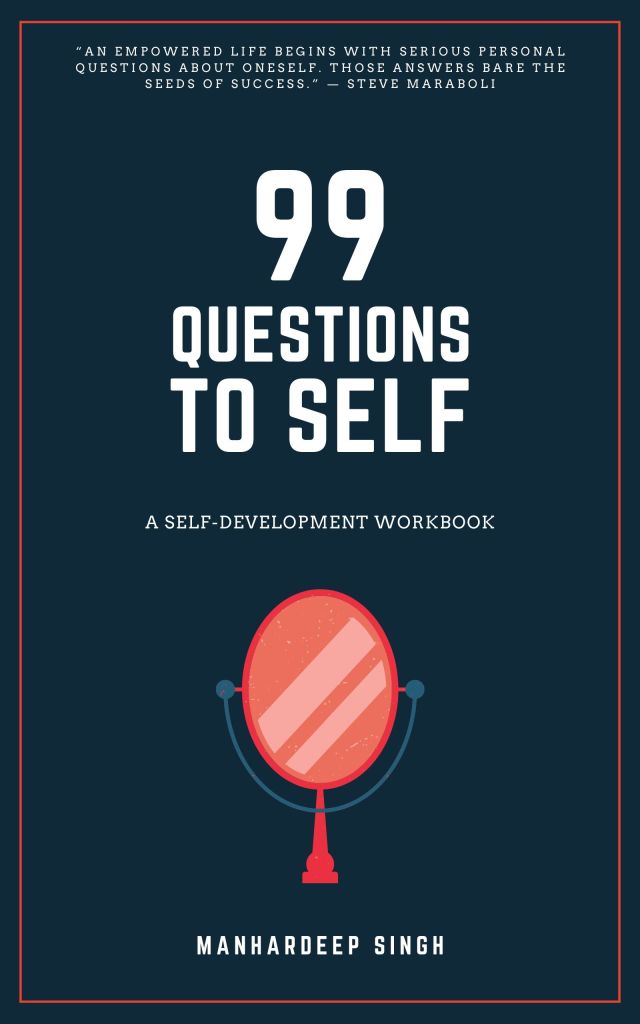
    Would you like to tap into your full potential? Discover the 99 questions that can help you realize the superhuman in you.

    This workbook will help you:

    • Discover your latent talents and hidden strengths
    • Learn how to create instant emotions of happiness and abundance
    • Improve every area of your life
    • Tap into unlimited source of power
    • Create a future you like

    99 Questions to Self is a comprehensive self-development workbook. If you like modern, practical, and interactive books, then you’ll love Manhardeep Singh’s self-help workbook.

    Buy 99 Questions to Self to start your journey of self-discovery today!

    Music is probably the easiest of the arts for us to accept as an aid toward our search for self-development. How often does a certain piece of music make us feel happy, relaxed, romantic, hopeful, fulfilled? You name it, music hits all the buttons. My favorite music is anything by Beethoven. His music makes me feel all of the aforementioned. He was a man who accepted nothing less than perfection. He sorts redemption through his music. Ultimately, he didn’t find it and he spent much of his life feeling alone. But his courage of conviction made his life, and countless others, a better thing. His last words were “Applaud, my friends, the comedy is over.”

    Perhaps our greatest inspiration comes from writers. They have helped me, and millions of others, to find the inner self. Life would be a much poorer experience without our great writers. I won’t name all the writers that have inspired me; there are too many. But if there was one thing I would urge you to do, it is to read. If you’re not sure who to read then go to a library and ask! Tell the librarian what it is that you want to experience, feel or learn when you read a book. They’ll help you; don’t let shyness defeat you. If you can’t get to a library then join a reading club on the internet. The one thing I have found is that people, who love to read, love to help others to read books.

    So, forget about buying into that testosterone, succeed-at-all-costs seminars, ebooks, and DVDs. Go and look at a painting; or lie on the sofa and listen to music, maybe dance wildly to it, cry with it, make love in time to it; or curl up and read a book that will take you where you never thought possible.

    You may not get to where you wished, but Art will accompany you every single step of the way.

  • Develop A Belief System That Works For You

    It is interesting to note that most of society is free. There is a percentage of the populous that is incarcerated for crimes against society. So too, are there people who live in political cultures that do not value the freedom of its’ people. Nevertheless, the majority of the people in the world live in relative freedom. They can choose whom they marry, what they do for a living, and where they live. Most societies allow their people to move around freely without restraint. As long as an individual is obeying the laws, that person has wide latitude in conduct.

    Advertisements

    The freedoms offered by governments are physical freedoms that all its’ law-abiding members enjoy. However, many operate in a “prison-like” atmosphere regardless of what they are given. This prison does not exist on the material plane. Rather, it is a creation of the mind. It is manufactured from an individual’s belief system. These beliefs become people’s jailers.

    Most will tell you that they can think for themselves. To suggest that they are incapable of creating their own ideas is met with an overwhelming attitude to the contrary. All their success, experiences, and intelligence give a sense of independence. They mistakenly believe that their belief systems are of their own making. Unfortunately for them, it is not.

    A fundamental concept to creating the life that you desire is to create a belief system that works for you. Contrary to what most think, our beliefs systems are shaped by the influences around us. Teachers, parents, friends, co-workers, and institutions all have input into the beliefs that we live by. Have you ever noticed how children’s ideas often reflect those of their parents? This is so common that political organizations poll school children during Presidential elections because they accurately reflect the sentiment of the adults.

    The governments of the world are masters at shaping the belief system of its’ people. Through the use of propaganda, public opinion is swayed based upon the desires of those in power. This is often done in the name of nationalism. A group of people is established as a threat to society. Events are shown to validate this viewpoint while creating the emotional dislike towards that group. Thus, the government is free to act as it sees fit with the full support of its people. Unfortunately, most people do not have firsthand experience to form a solid conclusion. Of course, they will defend their belief even though that is not certain where it came from.

    It is common for people and organizations to manipulate others’ beliefs for the sake of control. The government is one example. Some religions throughout history have acted in a similar manner. They used the threat of an angry Deity and eternal damnation to control the masses. There were numerous instances where the Church of England was the most powerful organization in Europe. With a following that is under control, it is much easier to maintain influence. Naturally, there are many denominations where this is not the case. So, too, are there many people whose lives are enhanced by their religious affiliation. Unfortunately, this is not true in all instances.

    The key to belief systems is creating one that works for you. As an adult, you have the freedom to believe anything that you desire. Spending time questioning where some of your beliefs came from is healthy. It is also effective to determine whether they still work for you. If they assist you in being happy, joyous, and free, then they are worthwhile. However, when they instill pain, perhaps it is time to rethink them.

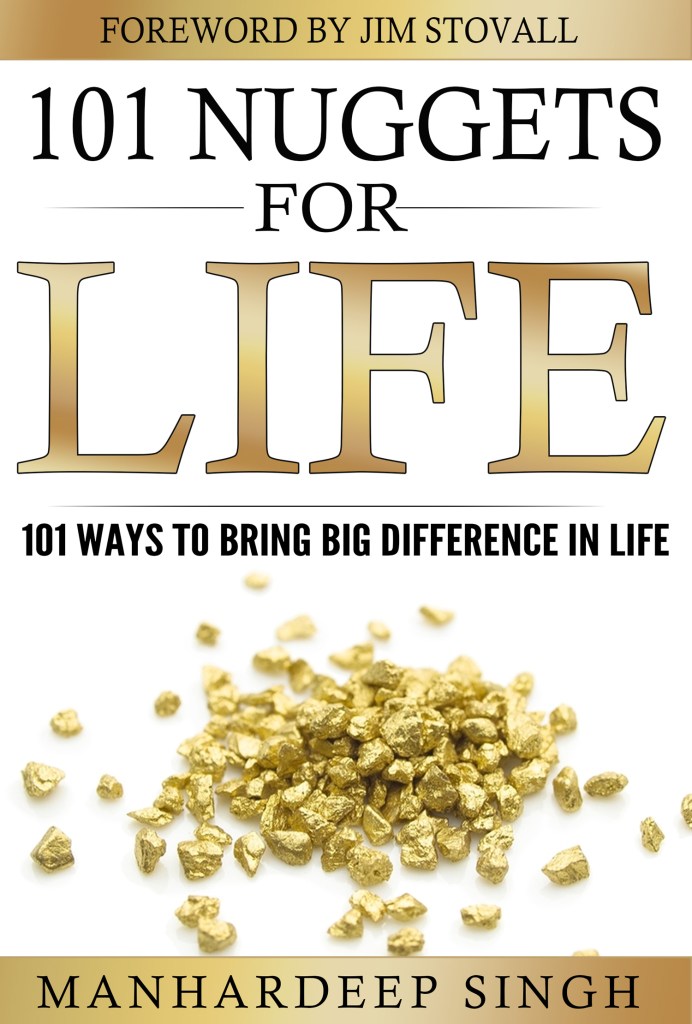
    Ready to take yourself to the next level? Find 101 ways that can work as a launchpad. These nuggets are delivered to you one page at a time. Implement it, see the result, repeat!

    These nuggets can help you:
    • Be goal-driven vs emotion-driven
    • Be strong in the face of criticism
    • Handle difficult situations smoothly
    • Increase likability among peers
    • Be irresistibly charismatic

    Buy 101 Nuggets for Life to take every area of your life to the next level today!

    Ironically, the beliefs that seem to cause the most chaos in people’s lives come from those who love us the most. Many individuals suffer from psychological disorders due to the influences of their parents. Things such as low self-esteem, abandonment, and sexual issues all come from our upbringing. Typically, one who suffers from any of these was made to feel guilty and shameful. Their worth was shown to be tied to their performance which never was good enough. Mistakes were not forgiven but something to be used as a weapon to make the other feel worse. All this was done as a form of control.

    Leap forward 20 years and you find that a person who grew up in this atmosphere often still carries these beliefs. Even though recent experiences will prove to the contrary, the individual still hears the words of the parent. It affects the relationships with friends, lovers, coworkers, and oneself. Without some help, the person is often incapable of healthy interaction with others. There is a degree of sickness in all that is done. Thus, the individual turns to other things to fill that void that exists whether it is drugs, alcohol, sex, or food. However, if the belief system was viewed as insane, the person might be apt to change it. Simply altering a few of the basic beliefs one holds regarding oneself miraculously changes life.

    The more that we can accept that it is likely that what we believe came from others, the better our chances are of attaining freedom. There are many things that were taught to us by others growing up which serve us well. This is especially true if we were raised in a loving home. However, society being as selfish as it is, there is much that stands in our way of happiness. Analyzing our belief system gets to the root of what motivates us. A system that contains a great deal of fear will cause one to often act out of that fear. The opposite is also true. To create ‘our’ life begins with creating ‘our’ own belief system.

  • Be Persuasive When You Sell

    When you are selling your products to clients, you don’t want to be pushy about it, you want to be persuasive.

    Have you ever been around a salesperson who seems to have everything going for him?

    He has no problem talking to people, people like him, he seems to meet all of his sales goals so effortlessly.

    Advertisements

    This is not because he is lucky, or he was born with a natural gift when it came to selling. It is because he took the time and effort to make sure he went into the field well trained with the appropriate sales skills and product knowledge to make his sales seem as though they come without any effort.

    This salesperson, through hard work and sales training, has given himself the power of persuasion because he has the ability to find out what it is that his customers need.

    When a salesperson is being pushy with their product, it is a turn-off to the customer. The last thing a customer wants is somebody they just met up in their face who won’t stop talking. Pushy salespeople come off rude, unprofessional, and unknowledgeable.

    From a customer’s point of view, a pushy salesperson comes off as someone who just arrived from a one-day sales training course on one particular product. Who is then sent out into the world to sell that product to anyone that will listen?

    Most consumers can see right through this.

    Persuasion takes subtlety. In fact, it is much easier to persuade someone to buy your product than to actually sell it.

    Persuasion involves getting your customer to “buy-in” to your product or to see things from your point of view.

    You must first get to know your customer. Take some time to ask a few personal questions. Such as where they live, what their occupation is, do they have any pets, etc.

    People love to talk about themselves, so ask questions.

    Are you tired of motivating people or staying motivated? Start seeing motivation like never before concept with a single shift in perspective.

    The Ultimate Book of Motivation will help you:
    • Take responsibility for your life
    • Be unstoppable on the face of failure
    • Turn self-defeating thoughts around
    • Change your outlook on life
    • Motivate anyone to do anything

    Buy The Ultimate Book of Motivation to start motivating today.

    Once you get to know your customer, find out what their needs are. You can then match up your products to their needs.

    Explain the benefits of your product, and give them a visual in their mind of themselves using your product. If you are selling baseball bats, give them the vision of using the bat to hit a home run in the bottom of the ninth to win the ball game.

    Don’t do all the talking, listen to your customer. Listening is perhaps one of the most important sales skills you can possess. You can find out so much about your customer just by listening.

    To persuade your customer to buy your product is to find a common ground with your customer. Smile, be courteous, answer their questions, learn what their needs are, listen to their concerns, and try to alleviate them.

    Advertisements

    Once you have established what their needs are, tell them about the products you have that could satisfy their needs. Remember, don’t sell the product, tell them about the product, and what it can do for them.

    Don’t think of it as selling, think of it as a normal conversation that you would have with one of your friends. Your sales will become more enjoyable, and they will also increase. Good luck.

  • The Culture of Excess

    We live in a society of gadgets and gizmos, toys and more toys, of things that evoke feelings of luxury, style, and class. This is available to almost everyone, not just a privileged few. This is the 21st century.

    Advertisements

    No other time of the year is it more prevalent, conspicuous and aggressively promoted than during the Christmas season.

    Thanks to advances in technology, the airwaves, the print, and electronic media are flooded with advertisements that appeal to society in general, to people from all walks of life.

    Open any newspaper or magazine and indulge yourself with an endless advertisement, appealing, titillating, and surely tempting. You can’t miss it, it’s almost on every page and glares you in the face.

    Turn on the computer and you can access more goods and services at the click of a mouse. Add to this endless ads and banners.

    The young generation is brought up in this era of consumerism. They are introduced to a high-maintenance lifestyle at a very young age. Gone are the days when shopping for children was fun. A time when it did not take much to make their young hearts happy. Life was simpler.

    Times have surely changed. The trappings of the good life are no longer the sole domain of the wealthy. Comfort, travel, wheels, homes, luxury, name it, it is within the reach of anyone who is willing to pay the price. It is no longer just a dream.

    This is just the beginning of the conspicuous consumption of our society. In the name of convenience, there are more and more gadgets for the home introduced faster than one can pay off existing debt. However, this is not a deterrent.

    It is no longer a matter of meeting a need, the “want” list gets longer and longer. Each member of a family has their own want list.

    Advertisements

    Technology is wonderful; it allows man to take great strides, faster and more accurately than our forbears. Technology makes it possible for a man to explore space, the depths of the ocean, the untrodden parts of this earth. Through technology, man has made incredible advances in science, communication, and the medical field. Technology is of great benefit to mankind.

    It is very much a part of our daily lives. There is a downside- man wants more of the convenience that comes with it. It fuels the imagination of both producers and consumers. It stimulates the need to want more. It encourages the desire to pamper oneself, and loved ones with more goods.

    Having more than what they need promotes a sense of living the good life. For every season, for every occasion, the market offers boundless ideas and an endless flow of material goods. Beware, quality is slipping down too fast, as production and advertisement are cranked up higher, some of the quality is compromised.

    The convenience that technology offers is hard to ignore. How did we manage before, when most of the chores were done manually? Imagine the time spent to get anything done?

    Are you tired of motivating people or staying motivated? Start seeing motivation like never before concept with a single shift in perspective.

    The Ultimate Book of Motivation will help you:
    • Take responsibility for your life
    • Be unstoppable on the face of failure
    • Turn self-defeating thoughts around
    • Change your outlook on life
    • Motivate anyone to do anything

    Buy The Ultimate Book of Motivation to start motivating today.

    Take a look around the house, push a button to get laundry or the dishes done. Press another button to start the car before you open the door. Set a timer for your coffeemaker, for your lights to come on at a desired time, your radio to wake you up. Wouldn’t you be lost without that remote control?

    What about the other gadgets and tools for the handyman? Look at the other things around the house to make living more convenient and definitely add to that feeling of comfort and luxury.

    There’s more. Communication is revolutionized. Each member of the family has to be wired. Watch the ads, imagine the convenience of having extra gadgets for each family member just for so much a month. Add to this the paraphernalia that goes with it, some of which are good to have but not a necessity. But does it matter? It becomes a must-have.

    The quest for material goods is at excessive proportions. It hits the very core of a person. Some can only measure success relative to their material possessions. Some identify their self-worth with material acquisitions. The words status and prestige are medals they wear proudly. Rightly so, if it makes them happy.

    How much of these goods are on credit? How many sleepless nights are spent doing endless calculations and adjustments? Is there room for a quiet time that comes at no cost? Or do they experience that feeling of emptiness amid comfortable surroundings?

    Do this culture of excess spell happiness and peace?

  • The Relationship Factor

    You may have heard of someone saying that they are completely happy on their own and all by themselves.

    Advertisements

    Although this isn’t what appeals to me, I can understand why some people would think this; the only relationship they have is with themselves and it’s hard to mess up a relationship with yourself. It’s hard to have much satisfaction from that kind of relationship too.

    Relationships with others are what make the world go around because it is a thermometer of how we “relate” to others. Friends can be just like us, or just the opposite of us, but it is how we relate to them that feeds our souls.

    We can choose to put effort into a relationship or choose to walk away, but each of us needs other people around us to make us feel a part of a bigger thing.

    The world is full of other people. We can decide to make friends with some of them and enhance our lives, or we can choose to remain silent in the elevator or not speak to the person at the next table at Starbucks.

    We can stay in our own little world, or we can expand it to include others, who might enrich us with their knowledge and personalities. I can open the door, or I can keep it closed.

    Ready to take yourself to the next level? Find 101 ways that can work as a launchpad. These nuggets are delivered to you one page at a time. Implement it, see the result, repeat!

    These nuggets can help you:
    • Be goal-driven vs emotion-driven
    • Be strong on the face of criticism
    • Handle difficult situations smoothly
    • Increase likability among peers
    • Be irresistibly charismatic

    Buy 101 Nuggets for Life to take every area of your life to the next level today!

    I can choose to take what my marriage is giving me or I can put more into it and reap the rewards. I can be lazy and think only about what this relationship means to me, or I can think about how much better it could
    be if I put more effort into making sure my spouse gets as much as s/he gives.

    You do get back more than you give to relationships and relationships will reward you for years in many, many ways. Nurture those relationships that you need to keep you happy!

  • The work-life balance

    Balance. It’s a nice word but the reality is hard to pin down. It may not even put us on the right track in our 21st-century quest for fulfillment and happiness. In this article we will talk about the integration of work and family life, beginning not with the workplace and the employer’s role in sorting things out, but with the person and her priorities.

    Advertisements

    Generally, when people talk about the work-life balance they mean the challenge of managing their family commitment when they’ve got children while juggling the demands of a career. That’s the traditional focus, but the concept has evolved quite a bit. There are now many younger people in the workforce, in their late 20s and early 30s, who may not even have a home or family but they want a sense of balance in their life.

    Often we are thinking of some sort of perfection, where nothing is out of place, there’s no stress, and this of course is unrealistic. It automatically means a trade-off between work and life. If I give more time to my family I won’t be able to do my job properly, or if I spend more time on the job my family will suffer. Yet I want to be able to have it all, to do it all, right now.

    Let’s think about integration, which means bringing the various pieces of our lives into a cohesive whole. We each have many roles, goals, responsibilities, and life plans. We have to get it together. The attractive idea of finding ways to bring life into unity will give us the harmony and happiness we seek.

    Experience shows what people who have very clear priorities and their own clear definition of success succeed best at balancing their lives. They know what’s most important in their lives. These are people who can say before it happens: If I have to make a choice, if work and family come head to head, I know what my biggest priority is. People who realize it may have slowed their career for a period of time, perhaps while a child is younger, and have a less demanding job so they can have more time at home. And they can be at peace with that because their definition of success is not necessarily the one that society tells them.

    Ready to take yourself to the next level? Find 101 ways that can work as a launchpad. These nuggets are delivered to you one page at a time. Implement it, see the result, repeat!

    These nuggets can help you:
    • Be goal-driven vs emotion-driven
    • Be strong on the face of criticism
    • Handle difficult situations smoothly
    • Increase likability among peers
    • Be irresistibly charismatic

    Buy 101 Nuggets for Life to take every area of your life to the next level today!

    Usually, we have to just go through life and let the new promotion or the new demands of the job dictate what we do, to feel we don’t have a choice. This is not a balanced life road. We need to stop and reflect, communicate more with your husband, your wife, your manager at work, and basically be more proactive.

    Today’s truth is that we have too much to do. Technology has changed things and made people accessible 24 hours a day, encroaching on the peaceful time people used to have. Yet some things don’t change. We still have 24 hours a day. We all have the same amount of time and how we use it comes down to a personal choice.

    The disorganization traits usually come from avoiding the choice and trying to do too much. Even a simple thing like, What are we going to have for dinner tonight? can become a huge job if we feel, Oh, I have a lot of work and will not be able to do grocery shopping. Obviously, if we have the knowledge and skills to make something simpler then we’re going to gain more time.

    For balanced life planning and other basic management skills have to be used at home as well as in the workplace. One of the reasons why many people prefer going out to work to working at home is that we’re very organized in the workplace, we use time management there, and then we come home and just ride the waves, consuming ourselves with the latest problem that has cropped up.

    However, there’s nothing wrong with wanting to go out to work. We do need multiple interests to enrich our lives and many times we have talents that we need to give to the workplace and to the world. But it is true that work on the job is often more attractive because it is more project-oriented and very linear, and at the end of that piece of work we get the praise and a sense of accomplishment, whereas at home every day it’s the same thing.

    Advertisements

    Human beings have certain basic needs that have to be taken care of every day, and although we can feel a sense of accomplishment that we have organized something at home, it’s soon going to be dirtied again, or another meal is going to have to be put on the table. And this means changing your sense of where you get your satisfaction – not just from accomplishing the task or from the process of doing it, but from the motive.

    We are all expecting a reward or praise for completed work. Lack of reward will kill our desire to work what leads to reduced productivity. This is why we prefer working for others than doing something for ourselves. Promise yourself a reward for completing each task or finishing the total job. For example, let yourself watch an interesting movie when you finish developing a page or new promotion plan.

  • Leadership – Do We Know What It Is?  4 Pointers To Start You On The Road To Becoming A Leader

    A great deal of work has been done by many authors and researchers in trying to identify and define “leadership”. The vast body of research has focused on leadership traits, habits, competencies, behaviors, styles, values, skills, and characteristics. Dave Ulrich (Ulrich, D et al, Results-Based Leadership, Harvard Business Press, Boston, 1999) categorized much of the research into:

    • Who leaders are – values, motives, personal traits
    • What leaders know – knowledge, skills and abilities
    • What leaders do – behaviours, habits, styles and competencies
    Advertisements

    However, when one looks at the vast body of research into leadership, it is mostly concerned with: – the inputs of leadership and leaders, – not the outputs – ie. what leaders achieve.

    Two significant factors have led to a great deal of confusion around the issue of “leadership” and the definition of leadership itself.

    Firstly, many authors erroneously use “leadership” and “management” interchangeably as if they were the same thing.

    Secondly, a great deal of the research into leadership has been with people who are informal organizational positions (e.g. supervisors, managers, senior executives) – the inference being that leadership is an integral part of the formal management role (Parry, K.W., Leadership Research: Themes, Implications, and a new Leadership Challenge, Leadership Research and Practice, Warriewood 1996).

    The experience in designing, developing, and implementing management and leadership development programs, processes and interventions over the last twenty years has led to the development of The Leadership Benchmark, a 360 developmental tool for leaders and aspiring leaders. Much of the initial research emanated from focus groups of key stakeholders (participants, peers, managers, staff, customers, suppliers, etc) conducted as part of these development initiatives and the subsequent follow-up interviews, coaching sessions, and evaluation processes and forums.

    In developing The Leadership Benchmark, it is clearly delineated that:

    • Leadership is different from and distinct to, management – it does NOT necessarily occur as part of a formal management position
    • Leadership is contextual and therefore has to do with outputs (what the leader achieves) as much as what the leader is or does (inputs)

    Are you tired of motivating people or staying motivated? Start seeing motivation like never before concept with a single shift in perspective.

    The Ultimate Book of Motivation will help you:
    • Take responsibility for your life
    • Be unstoppable on the face of failure
    • Turn self-defeating thoughts around
    • Change your outlook on life
    • Motivate anyone to do anything

    Buy The Ultimate Book of Motivation to start motivating today.

    1. Leadership vs Management

    Almost 100 years ago, Mary Parker Follett described a manager as “one who gets things done through people”. This description is still used by management educators and scholars today, but in my opinion should be changed to: “one who gets the things done that are described by the organization in the manager’s role or position description, through the people they have been assigned”. My contention is that, if you are a manager, then:

    • You become a manager when you sign on for the job
    • You only become a leader when your people say so

    So, you get given the title of “manager” from the organization and people will do things for you (either well or not so well depending on how well you manage them) because of WHAT you are not WHO you are. Only your people (your team, the people you manage) can give you the title of “leader”.

    In other words, the organization gives you your “corporate” manager’s hat that lets everyone in the organization know that you are officially a manager. Then, your people, when they believe in you, give you your leadership badge, your badge of honor!

    Dennis Pratt (Pratt, D., Aspiring to Greatness – Above and Beyond Total Quality Management, Business & Professional Publishing, Sydney 1994) gave the clear distinction between leadership and management that has assisted the research in developing The Leadership Benchmark. This distinction is described as:

    • Leading: Leadership occurs at all levels of the organization. The essence of leadership is concerned with creating the following conditions that encourage others to follow:

    • A shared understanding of the environment.
    • A shared vision of where we are going.
    • A shared set of organisational values.
    • A shared feeling of power.

    • Managing: While the leadership function is “big picture” the management function, on the other hand, has a narrower focus. Leavitt described leadership, as “pathfinding” while management was “path minding”. Management is situational and involves:

    • Getting things done (task focus)
    • Through people (relationship focus).
    1. Leadership is contextual and is concerned with outputs

    The Leadership Benchmark focuses purely on the following four outputs achieved in any particular organizational context by the leader:

    • A shared understanding of the environment.
    • A shared vision of where we are going.
    • A shared set of organisational values.
    • A shared feeling of power.

    Whereas many other (quite legitimate) management 360 tools focus on the management function. Managers who aspire to be leaders, therefore, need more than the feedback they might get from a normal 360 managerial profile.

    Advertisements
    1. If you are a manager, what does this mean for you?

    Anyone in the organization can become a “leader” irrespective of their formal organizational position. Just because you have a formal title of “manager” does not mean you are a leader. So for example when a fire breaks out in the building and the brand new young employee who has just completed induction training, and who instructs people to follow the evacuation procedures impeccably, shows as much leadership as the CEO who has just announced the new corporate strategy for everyone to follow.

    Here’s a quick test to gain some indication of your status as a leader. Once you have been in your current role for say, 9 to 12 months, ask yourself “Would my people do the things I now ask them to do even if I were not their manager?” If you can truthfully answer “Yes”, then you are well on the path to becoming a leader. I suspect, that many of you will probably answer this with a “Maybe” – try not to be concerned at this, as the road to leadership is a long one, but a truly rewarding one. If you are concerned that it seems to be taking you “forever” to develop as a leader, keep in mind the experience of one of the greatest leaders of our time, Nelson Mandela who spent 27 years in prison waiting to show how he could lead his country!

    1. How to develop yourself as a leader

    Our research indicates that leaders become leaders because they do four things (at least) for us:

    1. They help us understand and make sense of our environment. So for example, when things aren’t working out or are unclear for us, they are able to explain what is happening in practical terms that we can understand.
    2. They help give us a sense of direction. They are able to paint a picture of a brighter future and help us believe that we can achieve the things we want to achieve.
    3. They give us a belief in the values that are important to us. In doing so, they make us feel part of a team of people that share these values and have the same aims.
    4. They are able to make us feel powerful by allowing us the freedom to make decisions about our life, work and the future.

    If you are looking to develop yourself as a leader, then I would suggest working with your team to put in place some strategies to achieve the four leadership outputs we have described here.

  • JUST LAUNCHED – 12 Laws of the Universe

    Life throwing a curve ball? Embrace these 12 Laws of the Universe to handle life’s toughest situations.

    The book is written with a to-the-point language and tone with the intent to reach the reader in a clear way.

    12 Laws of the Universe will help you:

    • Understand your impact on whole world

    • Have awareness of how each one of us are connected

    • How to attract your way to success

    • Change what is not working for you

    • Understand how to get from here to there

    12 Laws of the Universe is an intriguing self-realization book. If you like self-improvement, therapeutic, life changing books, then you’ll love Manhardeep Singh’s indispensable book.

    Buy 12 Laws of the Universe to start changing the world around you today!

  • How To Achieve Any Goal, NOW!
    Advertisements

    1. Write down one goal that you want to achieve. Let’s not make this the grand goal of your life, something achievable in six months or so.

    2. Write down the feeling you will have when you achieve that goal…Ex. (alive, energetic, sexy, accomplished, powerful.)

    3. Write down when you will achieve the goal.

    I ask you, what is your goal? Did you say what you wrote from #1? Great, but NO, that is not your goal. #1 is never your goal, #1 is just a strategy to get #2. THAT IS YOUR GOAL, to feel a certain way.

    What we really want is the feeling that we experience (#2) when we accomplish that strategy (#1). The wonderful part about this is that you can choose to have that feeling anytime you want to have it! I don’t want to ask what you put for #3, because that tells me that you are putting feeling: alive, energetic, sexy, or whatever you said as #2, in the future. You are not allowing yourself to have it in the present moment. It’s funny because I will do this with my coaching clients and their perspective of thinking turns right around.

    QUESTIONS TO THINK ABOUT…

    What are we doing by denying our self this feeling?

    How does it affect us?

    How about allowing yourself to have that feeling of #2, and taking action on your goal right now? That will help accomplish what you are setting out to do. You now know that you can have that feeling anytime, it does not have to be attached to a strategy. What you hopefully have realized is what we do when we procrastinate or sit on an ambition. We are denying our-self the feeling that we want to feel because we think it is tied to a strategy. If you think about it, we give ourselves, very often, the feelings that we experience on a daily basis. We decide how we are going to feel, and then we live into it.

    Advertisements

    Write down a feeling or excuse associated with not working out? ___________ We have now DECIDED that we are too _ to workout and we live into it, rationalize it, and buy our own excuses!! What happens to your goals when YOU decide to live into the feeling of _ that you wrote above? They get put on hold and NOTHING HAPPENS.

    Imagine what would happen if EVERY morning you woke up and decided to feel what you wrote for #2? No more excuses in thinking about the strategy, let’s feel our goal every day so we can create action.

    If your goal is to feel SEXY because the strategy is to lose 20 lbs…it may be quite hard to really feel sexy when you don’t. I suggest however that the only reason you don’t feel sexy is that you BELIEVE you don’t. In order to own this feeling and make it real, we must practice feeling it every moment, every day to master it.

    Are you tired of motivating people or staying motivated? Start seeing motivation like never before concept with a single shift in perspective.

    The Ultimate Book of Motivation will help you:
    • Take responsibility for your life
    • Be unstoppable on the face of failure
    • Turn self-defeating thoughts around
    • Change your outlook on life
    • Motivate anyone to do anything

    Buy The Ultimate Book of Motivation to start motivating today.

    TAKE ACTION

    1. On a blank piece of paper, write in large letters the word “EXPERIENCE.” Below it write in large letters what you wrote for #2.

    2. Make copies and put it everywhere to remind yourself of the feeling you want on a regular basis. Bathroom mirror, bedside, refrigerator, car, office. We are setting our self up to win.

    3. Before you go to bed, starting tonight, ask yourself…What are the top 2 things I wish to do tomorrow, in order to Experience the feeling I wrote? You need paper and pen by your bed…DON’T go to sleep without doing this or I will haunt you all night!! Write down the two actions and WHEN you will do them. If you have a day planner, that is the best “piece of paper” to write them on. Remember, in order to make success a habit and own this feeling, we must practice every day so we master it.

    4. When you wake up, 1st thing, read your actions for the day and the Experience “_” poster you made…DECIDE to embrace this feeling TODAY. Because yesterday is gone, and tomorrow will never come… so all we have is what we feel NOW.

  • Anatomy of an Anxiety Attack

    Anxiety attacks are normal body reactions – coping mechanisms – against different stressors and distressing predicaments. In other words, these are chemical, physical and emotional reactions that are elicit by fear, apprehension, or shock. These reactions also cause a “fight or flight” response. Based on scientific studies, people automatically react to stress or stress-inducing activities by either making a confrontational stance or making a decision to avoid the stress.

    Advertisements

    Pressure can come from an emotional problem in a relationship at home, demanding tasks and deadlines at the office, the dread of a forthcoming test, or the clamor for a game-winning performance in a championship game. All these can produce constant anguish and even anxiety attacks if a person is not able to cope effectively with the stress. A person that is undergoing an anxiety attack often experiences a feeling of numbness or tingling, shortness of breath, dizziness, heightened palpitations, chronic sweating, chills, hot flushes, and nausea.

    Extreme levels of anxiety can produce serious ill effects on one’s physical and mental health. Anxieties can actually hinder or adversely affect a person’s day-to-day activities. Aside from the possibility of leaving a person emotionally depressed and physically weak, anxiety can also cause a person to lose the ability to make a rational decision. It is not uncommon to hear of cases of people with severe anxiety who have lost their jobs and failed in their relationships. For these people who have become victims of anxiety attacks, life has become a mere matter of survival — bereft of happiness, fulfillment, and health.

    Some people can cope with depression and anxiety. But for a significant number of people who do not have the ability to cope with stress and anxiety, the only means to regain their life is to undergo therapy and, if necessary, take anxiety medications. These anxiety medications, if accompanied by therapy conducted by professionals, offer relief and possibly permanent protection from the debilitating effects of stress and severe emotional distress.

    Anxiety medications often vary in dosage and desired effects. However, what is common among these anti-anxiety medications is the ability of these drugs to suppress unnecessary chemical and emotional surges. Controlling these chemical and emotional surges allow a person with anxiety to regain a sense of peace and tranquility. Anxiety medications, also known as anxiolytics, are prescribed to treat the different symptoms of anxiety. For example, Benzodiazepines are prescribed to treat the short-term and disabling effects of anxiety. These drugs take effect in a person’s central nervous system, which is the reason why a certain degree of sedation occurs in a patient using the medication.

    Non-benzodiazepines, however, are used to control the serotonin level in the body. Serotonin is essential to the body for regulating anger, temperature, mood, sleep, vomiting, sexuality, and appetite. Though they are proven to be less effective than benzodiazepines, the serotonin-regulating effect of this type of anti-anxiety drug also helps a person to achieve a relaxed state.

    While these medications offer relief, people must still practice a little caution before taking these anti-anxiety drugs. These drugs cannot totally remove all symptoms of anxiety. Of course, these medications cannot resolve an emotional or psychological problem that is actually the origin or source of a person’s anxiety attacks.