• Ways to crank up your Creativity

    Creativity is a quality that we all have buried inside of us, one way or the other. It involves the invention of something new or the re-invention of something already existing to make it useful of interesting.

    Advertisements

    Some people’s creative abilities are closer to the surface and one can easily see the manifestations of them. People say that their creativity is “inborn”. For others, expressing creativity takes more time and cultivation. The important thing to note is that we can all be creative. You just have to take steps to extract it from within you. Try the following:

    1. Change your perspective

    You might have heard the phrase ‘Think outside the box’. You should try looking at the situation from a different point of view. Change your perspective. Consider all factors that are affected by your problem or your concern. Try to breakdown the problem into several elements then shuffle them. Think of what would happen if an idea is replaced. This aspect is important in enhancing creativity because it helps you remove possible fixations that may hinder creativity.

    2. Mentally move away from your current location

    Imagine how another person would react if subjected in the same situation. Picture how different situations would continue when dealing with the same problem. Application in different settings can also be done; and then from there, adapt a solution to the current setting.

    3. Let your imagination run wild

    Exercise your imagination. Modification can trigger creativity because you see things in a different light. You can also try to exaggerate or think of the extremes, be it magnification or minimization of something. Thinking of the possible differences between these two situations could produce ideas. This is the ultimate brain exercise.

    4. Your comfort spot

    The environment has to be right. You should have somewhere you can focus without being unnecessarily disturbed so you can give a problem your full attention. This should extend to the people you are with. You tend to do better at something when you are with like-minded people. To put it simply, hang out with creative people to help enhance your creative abilities.

    Most of the time, people tend to be more creative when they are with people who are doing the same thing. It was also found that if you wish to be more creative, you should try hanging out with creative people.

    5. Time, time, time

    You can’t rush creativity. Hurrying does not help in the outflow of ideas. Your mind tends to go into a state of slight disarray when you are trying to force things. Studies show that results produced in this state are generally lacking. If you are low on time, then keep a list of activities like this one close to you. Go over each of the activities and exercise each one. Give it time.

    Advertisements

    6. Get help…communicate your ideas to others

    A different view of the problem could help. Better yet, many different views! Never be shy to ask. Diversity is very helpful in relation with creativity. Organize a brainstorming session. The spontaneous generation of new ideas helps in formulation of more ideas. The products of brainstorming can be the raw material in the construction of the idea.

    Remember that in brainstorming, 4 rules are followed for it to be successful:

    • There should be no criticisms. Criticism hinders the free flow of ideas. This can be postponed until the session has ended.
    • Combining and/or modifying ideas are encouraged.
    • Quantity is preferred over quality in brainstorming.
    • Weird or strange ideas are encouraged.

    These are just some ideas to get your creative juices going. They can be adapted to suit each individual. A large amount of it is down to you. How inventive can you be? How open are you? Remove the boundaries from your mind and you will find your creativity will increase.

    RECOMMENDED RESOURCE:

    Are you tired of motivating people or staying motivated? Start seeing motivation like never before concept with a single shift in perspective.

    The Ultimate Book of Motivation will help you:
    • Take responsibility for your life
    • Be unstoppable on the face of failure
    • Turn self-defeating thoughts around
    • Change your outlook on life
    • Motivate anyone to do anything

    Buy The Ultimate Book of Motivation to start motivating today.

  • The 7 Keys To Your Creative Genius

    Here are 7 ways you can instantly access your natural creativity and create anything you like.

    1. Think Like A Child. As adults we tend to think in a conditioned way aimed at showing how clever we are. Yet, as children, we were simply spontaneous and far more creative in our thinking. To re-capture your childhood curiosity, allow yourself to just wonder at things, to be completely present in the here and now, and to detach yourself from what you thought was real.

    Advertisements

    2. Make New Connections. To be innovative doesn’t require a university degree; it simply requires making a connection between existing ideas. For instance, did you know that ice cream was invented in 2000 BC yet it took another 3900 years for someone to come up with the idea of a cone? It’s when you take two seemingly unrelated items and use the spark of creativity that genius happens.

    3. Be A Little Illogical. It is a peculiarly Western trait to want to tie things up in neat bundles. We prefer solutions to problems, and answers to questions. To be creative, you need to be comfortable with things that don’t fit. The Eastern tradition is more in tune with incongruence. As in this Zen koan, or problem: what is the sound of one hand clapping?

    4. Laugh More. Tom Peters says that the creativity of a workplace can be measured by a laughometer, ie how much it laughs. Humour is one of the greatest creative devices. It jolts us out of our normal patterns and puts ideas together that shouldn’t go together. It has been found that after listening to comedy tapes, students’ ability to solve problems rises by 60%.

    5. Think Outside Your Limits. Many of the products we take for granted today are the result of people thinking outside their limits. John Lynn recalls attending a computer conference in the 1980’s at a hotel when someone joked that the next thing they’d be thinking of would be computerized doors. When he went back to the same hotel 20 years later, all the doors used computer-programmed key cards.

    6. Adopt and Adapt. To be creative doesn’t require blue-sky thinking. You can still be creative by adapting what works elsewhere. An American airline that wanted quicker turnarounds on their flights adopted the techniques of Formula One pit crews. Another source of ideas is nature. Georges de Mestral adapted the way certain seeds stick to clothing and invented Velcro.

    Advertisements

    7. Remember Your Dreams. Dreaming and day-dreaming can create a rich stream of ideas, because that’s when we relax and let the subconscious mind work by itself. The Roffey Park Management Institute calls this “washing-up creativity” because most flashes of inspiration come when we are walking the dog, sitting Archimedes-like in the bath, or doing the washing up.

    Apply these 7 creative thinking techniques and make them part of your daily thinking and I guarantee that new solutions to your problems will open up to you with ease and speed.

    RECOMMENDED RESOURCE:

    Are you tired of motivating people or staying motivated? Start seeing motivation like never before concept with a single shift in perspective.

    The Ultimate Book of Motivation will help you:
    • Take responsibility for your life
    • Be unstoppable on the face of failure
    • Turn self-defeating thoughts around
    • Change your outlook on life
    • Motivate anyone to do anything

    Buy The Ultimate Book of Motivation to start motivating today.

  • It’s all in the Voice

    Maybe one of the most common occurrences that happens in a public speaking situation is to see someone in the audience go to sleep on you. When you are the one going to sleep, you just hope the speaker doesn’t notice. But when you are the speaker, you know that you do notice and you wonder what you are doing wrong. You worked hard on your speech and you thought it was pretty interesting stuff. So why do they doze off?

    Advertisements

    Well you are in good company if you see that happen. For some reason this phenomenon happens routinely in churches all over the country every Sunday morning. And that preacher is a skilled public speaker who you would think could keep that crowd riveted. But in many public situations, even when the speaker has decades of experience, he may still not know how to keep that audience awake. That is because there is a public speaking technique that if you learn it early, you will become one of the rare public speakers that routinely is considered to be “great” no matter what the quality of your material.

    That technique is quite simply how you use your voice. The voice is a marvelous tool. It has the power to express emotions, complex ideas, humor or outrage. And yet for some reason, many public speakers when they stand up to do a formal presentation lose 90% of the expression in their voices. All of a sudden we all start to sound like a boring math teacher droning on in a monotone even if the subject we are talking about is very interesting, human or emotional. You could talk about the day you fell in love or how to skydive but if you say it in a monotone, you are going to put people to sleep.

    You have a lot of vocal tone available to you that you naturally use when you speak person to person and you are relaxed. What causes speakers to switch to a monotone or a reduced amount of vocal tones when speaking formally starts with nervousness. You are so focused on speaking clearly so you are understood that you end up sounding like you are reading the phone book. This is especially true if you have your entire speech written out and you are reading it. The strange thing is you would never read like that to children. It’s strange we fall back to that style of speaking when talking to a group of adults.

    Two great exercises can be used to help you get control over your vocal range as you speak. It really isn’t something you want to think a lot about when you are in front of people because then you will become self conscious. But listen to other speakers and think about how they can improve their range of vocal tones. That will help you process your own range of expression. But also practice your presentation focusing on the ideas themselves but also on how you say them. Don’t be afraid to express emotions while speaking. If the subject is exciting, be excited. If it’s troubling, be troubled. Be a human in front your audience will respond.

    In addition, you can add a lot of variety to your presentation varying the volume with which you speak and the speed. You don’t want to shout but when you speak softly at times and with more force at others, that sudden change of tone and volume can capture the ear of the audience and hold their attention. In a way your focal presentation takes on elements of music as you use your voice as an instrument to make sure not only that the information is given to the audience but that they stay awake long enough to hear it.

    RECOMMENDED RESOURCE:

    Fear of public speaking or glossophobia is the second top fear human beings have. Studies suggest that upto 75% of the population is affected by it. This means out of every 10 people, at least 7 has it.

    Phobias limit a person from doing something, imagine what fear of public speaking might be robbing the people from in their lives – addressing the team to achieve objective, getting the next promotion that can change the life, expressing freely in front of people.

    “Don’t Fear the Mic” enlists 101 tips that helps you discover how you can stand up in front of the crowd you always feared from, that made you shiver, and do not fear the mic anymore.

  • Just Launched – 99 for self mastery

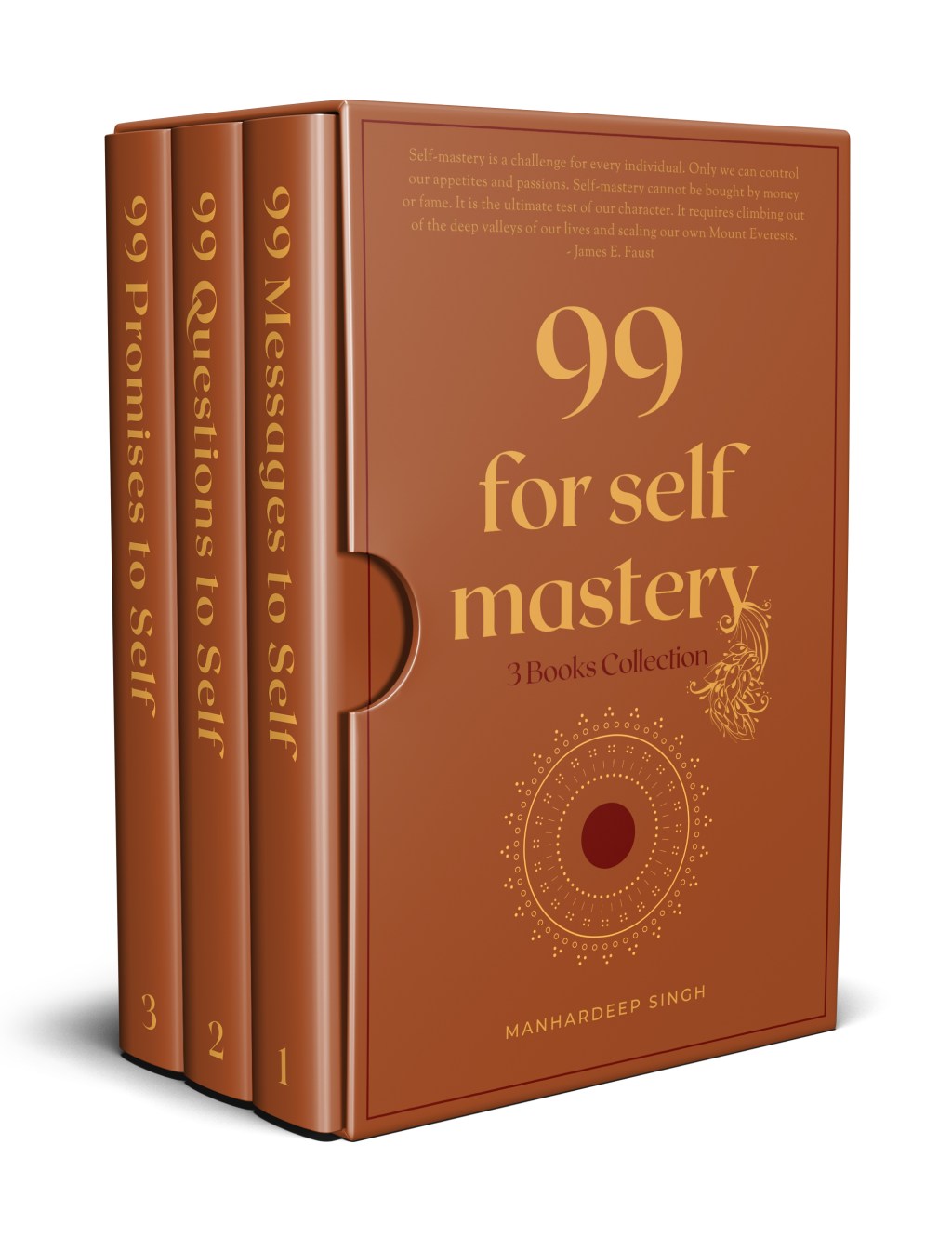
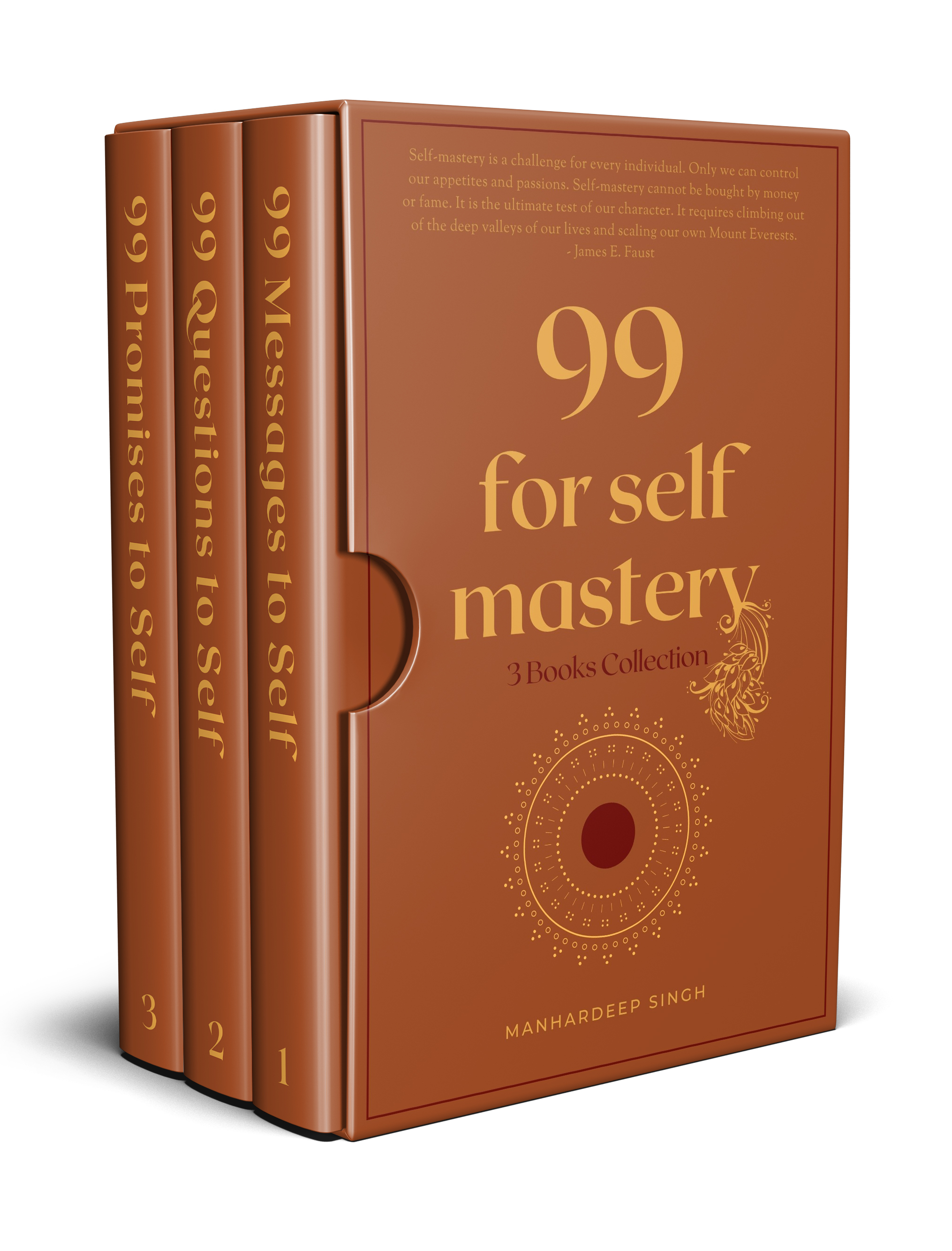
    Are you ready to take the journey of self-mastery? This 3 books collection takes on a guided voyage within.

    Book – 1: 99 Messages to Self

    Are you looking for messages meant for you? These 99 messages will enhance your life, and widen the horizons of your life.

    “Words are thought descriptors. They project thoughts from anonymity. They transfer thoughts into messages. Messages move the world.”― William E. Jefferson

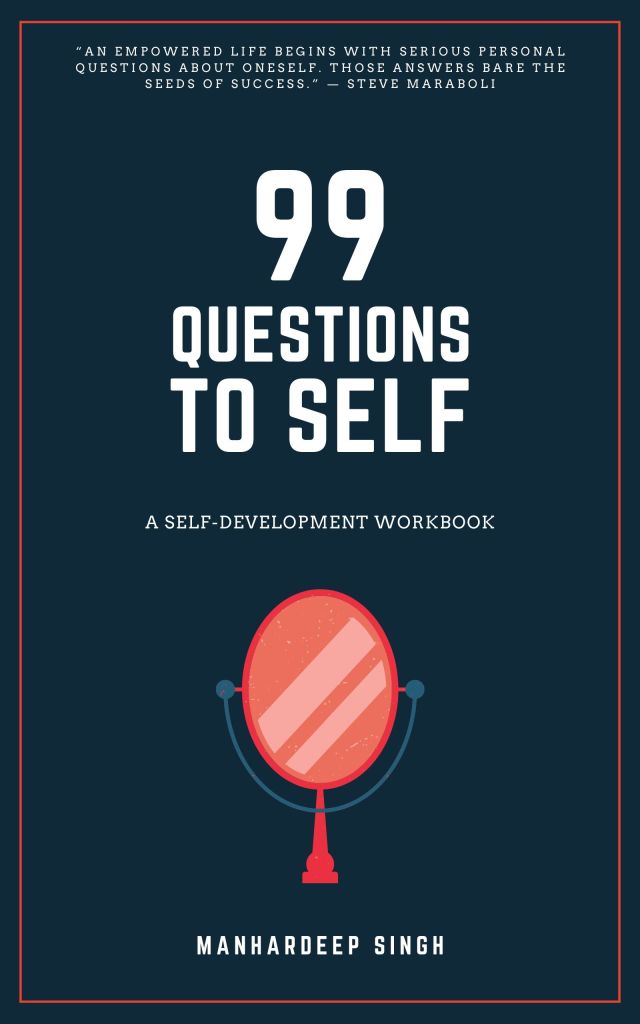
    Book – 2: 99 Questions to Self (workbook)

    Would you like to tap into your full potential? Discover the 99 questions that can help you realize the superhuman in you.

    “An empowered life begins with serious personal questions about oneself. Those answers bare the seeds of success.” ― Steve Maraboli

    Book – 3: 99 Promises to Self

    Would you like to create a solid foundation of self? These 99 promises are the infrastructure of a strong self.

    “Promises are the uniquely human way of ordering the future, making it predictable and reliable to the extent that this is humanly possible.” ― Hannah Arendtread

    Buy 99 for self-mastery and start your journey to master yourself today!

  • Becoming Larger Than Life

    To say that there is no ego in a person who does public speaking regularly or for a living would be clearly a false statement. But for those of us who only speak from time to time, when you see a speaker who can walk out in a room of 30 people or a auditorium of 3000 and literally “own the room”, it really is an amazing transformation. To imagine how you could ever be that much larger than life is mind boggling.

    Advertisements

    But in a lot of ways, when you step out to talk to a group of people, you do become larger than life. That is because you are doing the impossible. You are having a conversation with dozens of people all at once. Now, whether you feel like you are having that conversation or not isn’t important. If your talk is not interactive, you may not know the dialogue is happening. But in the minds of every single individual in that hall, they are interacting with you. What you are saying is getting down inside of them and they are reacting to it. But even more than what you are saying, how you are saying it is having an even bigger impact.

    So are there things you can do to “become” larger than life? Well there are some ways of behaving in front of a crowd that differ from daily life. We do have to accept that you will develop a “stage persona” that is different from your daily personality when you speak to a group. Does that make you a phony? No. Both of those personalities are you. It is just a different you when you relate to a group than to people one on one and it seems strange because that form of you only comes out on stage. But it isn’t a Dr. Jekyll, Mr. Hyde thing. Just as you speak to a child differently than you speak to an adult, you will develop a way to talking to a group that differs from speaking to an individual.

    Part of becoming larger than life is learning to what they call “own the room”. This sound egotistic and strange but it really does work when you are about to speak. Owning the room simply means that when you step out in front of that crowd, they are no longer some random group of people, they are YOUR people. They are there to listen to you and what you say is of value to them. If you had any ego problems before you stepped out in front of that audience, check that ego problem at the door.

    You must assume that you are adored when you speak to a group of people. This doesn’t mean you strut about like God’s gift to the world. But it does mean that you recognize that your value to this group is as a speaker and that your services are wanted and needed here. In fact, the only way you will be an effective public speaker is if you own the room. Treat that room like it was your home and these people came here just because being with you is just that great. If you step out there with that attitude, the audience will buy into your attitude and they will give you the room and be glad you took it over.

    It can be a bit strange if you watch yourself become larger than life. But you can be humble about it and just recognize it is part of the craft of becoming a great public speaker. And if being good at this art you are gifted to give to the world means owning rooms and becoming bigger for an hour or so, well then why deny the world that experience? Enjoy it and let others enjoy it too.

    RECOMMENDED RESOURCE:

    Fear of public speaking or glossophobia is the second top fear human beings have. Studies suggest that upto 75% of the population is affected by it. This means out of every 10 people, at least 7 has it.

    Phobias limit a person from doing something, imagine what fear of public speaking might be robbing the people from in their lives – addressing the team to achieve objective, getting the next promotion that can change the life, expressing freely in front of people.

    “Don’t Fear the Mic” enlists 101 tips that helps you discover how you can stand up in front of the crowd you always feared from, that made you shiver, and do not fear the mic anymore.

  • Faithful Emotions

    The sad clown attracts us and evokes a feeling of sadness and compassion. Have you ever noticed that the sadness and compassion really feels like it is for you? Often we live our suppressed emotional experiences through some other external situation, mainly entertainment. Once we’re in a safe environment, it’s okay to let it out. Except, you’ve buried so many emotions, you’re not sure what is left unexpressed. It can derail you at any time, upsetting your equilibrium, setting the waterworks at the drop of a hat, and blazing the rage with a tiny spark.

    Advertisements

    Consider a new way of being in this world; a way that allows the expression and understanding of your emotions. Imagine being present for others who are enmeshed in difficult times, barely coping to keep their emotions in check. What healing can occur! What strength will be gained! What friendship and loyalty will be developed! What team support will be developed! What courage will be found!

    • If we’re human, then what does it mean to be human?
    • If we’re spirit, then what does it mean to be spirit?
    • If we’re emotions, then what does it mean to be feelings?
    • If we’re the mind, then what does it mean to be thoughts?
    • If we’re soul, then what does it mean to be soulful?

    I believe we are spiritual beings having a physical, human experience. Within that context, we experience many things on many levels. Could it be that this is what it means to be a multi-dimensional being? I’m not interested in empirical evidence and succinct clarity; I’m interested in the experience of being and life. The complexity of existence and the human entity absolutely requires an element of faith and trust in an inner core that cannot be defined by science.

  • What is Happiness? Can it Be Defined?

    Happiness is one of the most commonly used words. We all say – the children look so happy. I am very happy today. You don’t look happy. Any reason? How to make a happy world? How to avoid sad feelings and feel happy? Which pill can help us? The discussion about happiness is endless. Does science give a common definition of happiness? General answers are available that say that happiness is a state when one feels good, elated, contented, good etc. Is happiness a life long gift or an emotion experienced for a short time.

    Advertisements

    If I win a lottery, I become happy. As I spend all the money, I become unhappy again. When you call me a good person, I feel happy and when you curse me, I feel very unhappy. If I look at the dead body of my old friend, I feel unhappy and when I look at laughing faces of children I feel happy. We have no control. Outside forces and events control our emotions. We are all toys. That has no free will. This is difficult to believe but true.

    Let us find out what is not happiness. Low self esteem, feelings of despondency, sadness, guilt, helplessness, frustration, low interest, uncertainty, and all such negative emotions are not happy emotions. They rather make us unhappy. Now let us talk of what is happiness? Feeling good, cheerful outlook, positive thoughts, winning attitudes, satisfied living, enjoyment, and all such emotions that make us feel good are happy feelings.

    Is happiness same for all of us? If I give a certain amount to few people, some may become very happy and some may become angry and some will not care either way. Am I making myself clear? So happiness is not something that we feel in equal measure. I may be very happy when I watch the star lit night, but you may enjoy only the bright sunshine. So each one of us has his/her own happiness.

    Some of us are happy when we get a large amount of money, some when they can do lot of creative work, some when they can make others feel good and so on. All of us have our unique set of values and desires. We ourselves many times do not know about them. It becomes difficult therefore to know how to keep others happy and this ignorance causes most of inter-personal problems. But these differences in our emotional reactions make us human beings; otherwise we are no different than animals.

    RECOMMENDED RESOURCE:

    Are you ready to take the journey of self-mastery? This 3 books collection takes on a guided voyage within.

    Book – 1: 99 Messages to Self

    Are you looking for messages meant for you? These 99 messages will enhance your life, and widen the horizons of your life.

    “Words are thought descriptors. They project thoughts from anonymity. They transfer thoughts into messages. Messages move the world.”― William E. Jefferson

    Book – 2: 99 Questions to Self (workbook)

    Would you like to tap into your full potential? Discover the 99 questions that can help you realize the superhuman in you.

    “An empowered life begins with serious personal questions about oneself. Those answers bare the seeds of success.” ― Steve Maraboli

    Book – 3: 99 Promises to Self

    Would you like to create a solid foundation of self? These 99 promises are the infrastructure of a strong self.

    “Promises are the uniquely human way of ordering the future, making it predictable and reliable to the extent that this is humanly possible.” ― Hannah Arendtread

    Buy 99 for self-mastery and start your journey to master yourself today!

  • 3 Simple Secrets to Manage Stress

    Stress can be caused by a number of situational factors, but if you find you have constant stress in your life on a regular basis, it could be due to your own personality traits. Fortunately, these traits can be changed with three simple strategies to manage stress.

    Advertisements

    First, consider whether or not you are prone to perfectionism. Overly critical parents or teachers during your youth may have caused you to strive for complete perfectionism, which is not necessarily a good thing. Most perfectionists are frustrated and have high stress levels. Many are procrastinators because of the overwhelming effort it takes to do something perfectly. Of course, some professions demand perfectionism, such as surgeons and rocket scientists, but for most of us, perfectionism is misdirected energy.

    Instead of demanding perfectionism from yourself and others, learn to focus your energy and leave well enough alone. Consider whether a task, job or action can be considered “good enough” without the need to be perfect. This strategy will remove a great deal of pressure off your shoulders and lower your overall stress level throughout your life.

    Next, practice letting go. Learning to let go is more of an art than a science, and it’s best practiced in small, manageable steps. Again, if you have a tendency towards perfectionism, don’t expect yourself to change (or be perfect and being not-perfect) overnight. Give yourself some space, and start with baby steps, gradually working your way towards being more relaxed.

    If you are a perfectionist in most areas of your life, take inventory of your life and see where you can afford not to be perfect. For example, maybe the laundry can be folded a little sloppier than usual, and maybe the garden doesn’t have to be completely free of weeds at all times. Recognize that certain tasks require more attention to detail than others, and use good judgment in determining what areas of your life can handle your “letting go.” The less you feel you need to control completely, the more stress you can remove from your life.

    Finally, get yourself centered. This doesn’t mean you have to take yoga five days per week or meditate for an hour a day, but it does mean you have take some time to unwind. Make a list of five ways you can relax on a weekly or daily basis and post the list somewhere you can see it regularly. Do whatever helps you unwind–grab a glass of wine after work with a few friends, read a book, take a bubble bath, go for a walk outside, etc.

    Advertisements

    If your life is supremely hectic, you may be able to unwind by simply getting five quiet minutes alone once a day. Whatever it takes for you to find a quiet place and unwind is necessary to relieve stress and return to a normal state. These three strategies can help you manage stress, focus your energy and get back on the path to success.

    RECOMMENDED RESOURCE:

    Have you ever found yourself stuck in a situation for too long? Is your career at a stagnant halt? Are you in a relationship turmoil? Worry no more.

    Handwriting Analysis surfaces your strengths and gives you insight into the areas you can improve.

    Handwriting analysis has helped people:

    • Be more self-aware
    • Have better control of their life
    • Eliminate weaknesses
    • Create better career opportunities
    • Improve relationships within and outside the family

    This is a MUST TRY service to take your life to the next level. Order Today and know what handwriting says about your personality.

    You get:
    • Handwriting Analysis
    • Signature Makeover (Modifying signature so that it attracts wealth and happiness)
    • Grapho-therapy Plan (Changing how you write specific letters to remove unnecessary traits from the personality)

    REVIEW

    Tacozebra051

    Rating: 4.5 out of 5.

    “Analysis was actually kind of frightening in its accuracy? A 15 minute results video and literally everything was correct. Definitely a lot deeper than anticipated, but amazing! Will definitely be recommending in the future. Thank you so much!”

  • It’s Not Your Fault

    Have you ever wondered what’s really holding you back from achieving all your dreams and making the money you really want to make?

    Well, worry no more. It’s not your fault. The latest research of the most advanced information on the human brain and its effects on our success uncovers truly revolutionary insight.

    Advertisements

    Here are just a few of the newest neuro-scientific discoveries that are blowing away scientists:

    1. It is now known that humans think on 6 different levels at once, yet only one sixth of it is at a conscious level.

    This means that 83% of the time you are acting automatically at a non-conscious level. This explains why just making a decision is nowhere nearly enough if you want to improve any of your results. You must re-train your brain if you want to achieve more. This is also why diets don’t work.

    2. Another great discovery is that non-conscious brain cells (neurons) can detect and pick up information up to 800 times faster than conscious neurons. The good news is that you can now train these faster brain cells to work for you, not against you. This is absolutely using your real power and not just 17% of your real abilities.

    3. A third great discovery has to do with your Amygdala. This part of the brain has been conditioned at a very young age by your parents, teachers and the events in your life.

    The Amygdala doesn’t like change and will release neuro-transmitters anytime you try to change something in your life. Any deviation from what is your norm right now sets this off and basically causes you to revert back to your old patterns of thoughts and behaviors. This explains why most people have a hard time leaving a job or relationship they aren’t totally happy with.

    It also explains why people stay at the same income bracket year after year. It may not be what they want, but it’s what they are accustomed to and conditioned to expect.

    So if you wondered what was holding you back from achieving all your dreams and making the money, don’t worry. It’s not your fault.

    RECOMMENDED RESOURCE:

    Would you like to tap into your full potential? Discover the 99 questions that can help you realize the superhuman in you.

    This workbook will help you:

    • Discover your latent talents and hidden strengths
    • Learn how to create instant emotions of happiness and abundance
    • Improve every area of your life
    • Tap into unlimited source of power
    • Create a future you like

    99 Questions to Self is a comprehensive self-development workbook. If you like modern, practical, and interactive books, then you’ll love Manhardeep Singh’s self-help workbook.

    Buy 99 Questions to Self to start your journey of self-discovery today!

  • Setting Effective Goals at Work

    It has been five years since you’ve set foot on your office workplace that was painted in yellow before, but now it is blue. For five years, you have been typing away your work on the same spot, but now on a different chair and computer. The young lady sitting next to your cubicle is now pregnant; you even had a crush on her before, but you just don’t have the courage to say how you feel for her.

    Advertisements

    Everything, for the last five years has changed. Even the way your boss smiles at you: before it was his trademark grin, now it is more of a grimace. The only thing left unchanged is your work position.

    It’s time to set realistic goals for yourself. If you want to be in your dream work position in a salary that you could actually boast of, set goals and try to achieve them within a particular frame of time. These goals must be realistic within your capabilities and resources.

    It won’t matter if you are a self-employed or a company employee, you must set goals on where you want to be in a year or five years from now. Aiming at a specific position and working towards that target would pave the way for a brighter future and a more fruitful life.

    1. Know your target position very well

    In setting work goals, know that there is no better way to be able to adjust better than to be aware of the underlining responsibilities of a target position. Ask your colleagues about the complaints or rewards of the target position so you can prepare yourself in the future.

    Remember to be discreet for they might be gunning for it too.

    2. The objectives should be realistic

    Setting work goals should be in line with your present work situation. It should be attainable and within reach in as much as short a time as possible.

    If you are eyeing for a managerial position when you are barely a year from work, think it over. Although it is possible, realistically speaking, it can’t be attained. Don’t brag about in your entire department that you could actually be the youngest employee to be a manager due to sheer “talent.” Your employer might sack you for daydreaming too much.

    3. Gauge your competency

    Know your strength and capabilities. As Socrates had put it, “Know thyself.” Only when you are sure of your strength and capabilities that you could actually gauge yourself with competitors.

    Advertisements

    4. Single-out and note non-bias opinions

    Positive or negative, opinions speak a lot about you. Feedback from outside sources is always worthy of your attention and is a sure key to your success.

    5. Stay on focus

    Once you have set your target, every minute and every effort that you make should be spent effectively towards reaching this target.

    6. Contentment is the key

    Remember that whenever you have succeeded in reaching a goal, you must be content with it and avoid the desire to make bigger targets outright when you have yet to prove yourself.

    Learn to control your ego and retract your moves. You have to rethink the next goal over carefully. Remember that a job environment is always fluid and therefore careful planning is very important.

    7. Refrain from envy

    This reminder is closely associated to the previous advice. If you teach yourself contentment, it should be heartfelt.

    Never look up at your colleague who might have gotten a higher position and say to yourself that you have failed.

    Remember that the present work goal that you have reached is just another step higher on the ladder. There would be more promising opportunities to come your way.

    8. Monitor your progress

    Monitor your progress. In setting work goals, take corrective measures to be sure that you are on the right track. If you have to retract your steps just to fix an impending problem, do it. You would be surprised of the rewards afterwards.

    RECOMMENDED RESOURCE:

    Are you tired of motivating people or staying motivated? Start seeing motivation like never before concept with a single shift in perspective.

    The Ultimate Book of Motivation will help you:
    • Take responsibility for your life
    • Be unstoppable on the face of failure
    • Turn self-defeating thoughts around
    • Change your outlook on life
    • Motivate anyone to do anything

    Buy The Ultimate Book of Motivation to start motivating today.