• 3 Questions To Empower You

    For most people in our society, life will hold little more than a dutiful slog in the 9-5 rat race for forty years before retiring. Many will look back on their lives and wished they’d had an opportunity to have done something different. Some may have even had opportunities to do so but didn’t take them. One thought is very common: “I wish I could’ve done something else but I never really knew what I wanted to do.”

    Advertisements

    Sounds familiar, yes?

    Relax. Because I can help you identify what it is you’d really like to do and I can show you how to begin. It all starts by asking yourself three very important questions and I believe these questions are the most important questions you can ask yourself. Here they are:

    1. What, EXACTLY, do I want to do?

    This question gets straight to the heart of the matter and it requires SPECIFIC answers. Also, your answer should be something you have a passion for and are genuinely interested in and not something you think others would be impressed with.

    It should be something you feel so strongly about that missing out on it will make you seriously unhappy. By this, I mean IT WILL HURT YOU DEEPLY if you don’t at least give it a shot. Take the time to think seriously about this question, at least 30 minutes a day as this is the first step towards getting what you want. Be thorough. Think about how you’d like to spend each day of your life, and think about what you don’t want to do and what you’d like to change about how you spend your days right now.

    2. What do I have to do to get it?

    This question requires answers about the practicalities required to achieve your goal. It will cover the necessary skills – what skills do you have now that you can use and what new skills will you need to develop? You’ll need to know about courses or training programs you’ll need to take and you’ll need to identify how much practice or study you’ll have to do.

    Other considerations will be things like location as you may have to move somewhere else, people you need to connect with, making contacts, networking, equipment anything you find that is a necessary part of achieving your goal.

    3. What am I prepared to give to ensure I succeed?

    When you’ve identified what you want to do and what this will entail, you then need to decide what you’re going to give to make your dream happen. Success demands a price. In particular, we have the 3 kings: Time, Money and Commitment. How much time are you prepared to give? Are you prepared to sacrifice other activities to free up more time?

    Time is the most precious resource you have and it is a non-renewable resource. It is important you give a significant portion of your free time to the pursuit of your goal.

    Advertisements

    Next comes money. You will have to be prepared to invest money in your project – IN YOURSELF – to make progress. This could mean purchasing equipment, attending seminars, courses, property, books, raw materials etc. and without such an investment, it is unlikely your project will get off the ground.

    Finally, how committed are you to making your dream happen? In my opinion, if you’re serious about getting the lifestyle and the success you truly want, you must be 100% committed to it. This will mean making sacrifices: friends, socializing, working long hours, working weekends in short, sacrificing many of the things you enjoy doing today so you can create a better tomorrow. If you love something and you want to achieve a high standard of success, you will have to devote lots and lots of time to it and place it above everything else. Are you prepared to do this?

    You now have three empowering questions to help you get started on creating a new life for yourself. Please make the time to think seriously about the answers you want to give to them and you’ll reap the rewards.

    USEFUL RESOURCE

    Have you ever found yourself stuck in a situation for too long? Is your career at a stagnant halt? Are you in a relationship turmoil? Worry no more.

    Handwriting Analysis surfaces your strengths and gives you insight into the areas you can improve.

    Handwriting analysis has helped people:

    • Be more self-aware
    • Have better control of their life
    • Eliminate weaknesses
    • Create better career opportunities
    • Improve relationships within and outside the family

    This is a MUST TRY service to take your life to the next level. Order Today and know what handwriting says about your personality.

  • Breaking Point

    The Factors Behind Insanity

  • Emotional Baggage

    We all carry emotional baggage. It has many faces. We carry them around us, We store them in the remotest part of our brain, in the deepest chambers of our hearts. We have them in our extensive database of memories. Some are so close to the heart, it brings out tears at the slightest provocation. Others may feel anger, very deep resentments and may exhibit anti-social or antagonistic behaviours.

    Advertisements

    Shadows follow and haunt many, in their dreams or waking hours, in unlikely places, unexpected and intimidating. Uncontrollable anger that can lead to violence can explode without warning.

    Others will live in denial and spend their lives disconnected with the real world. Some will find blame in everyone except themselves; it’s always the other person’s fault. What about victims and the victimizers?

    Many are lost searching for something, they can not identify. Something is missing. A mass of lonely faces line the crowded streets, sit in public places, in schools, agonize through the day in the workplace, gather at churches perhaps to seek solace. Everyday we see a vast sea of sad , depressed and unfriendly faces. Our roads are open avenues to lash out their frustrations, thus uncontollable road rage. Scary.

    Emotional excess baggage demands a high price at times. There are those who succumb to the weight of this burden, it gets too much to bear. They find no further reason to keep up the fight. Life loses its luster, they find the world cruel, their existence meaningless.

    There are many who go through life like a driftwood, let the current take them wherever, it does not matter anymore. Is our world this cruel?

    What causes these emotional suffering?

    Broken dreams, broken relationships, failed careers, lost hopes, betrayals, violations, childhood trauma, or other forms of trauma, add to this health issues. Social disgrace, financial disasters, poverty and addictions cast deep emotional scars to the most vulnerable members of the family and society.

    Is our fast-paced society to blame? Add to this the pursuit of material success, endless toys, gadgets and exponential advances in technology. Fragile relationships, weakening family ties, unreasonable expectations of self and of others add to the already overstuffed emotional baggage. Some carry them for a long, long time.

    Advertisements

    All is not lost, if we take a moment to listen to our deeper needs, beyond the physical. There is a flood of information, organizations, professionals and other resources most communities offer. Deep emotional suffering is a critical issue that can no longer be ignored, by society and by those who suffer. There is more to life.

    Wisdom of the ages from different cultures and beliefs are revived or revised to suit the present psyche of society. It offers a holistic approach , involving the whole person’s mind, body and spirit.

    The wonders of medical and scientific research are vast, although pill-popping is not always the best answer.

    Take stock of the weight of your emotional baggage.

  • Developing Intuition

    Developing intuition starts by realizing you have it already. If you’ve ever had a hunch about something, that was intuition. Intuition is just your mind using more than what you are consciously aware of. But can you trust your intuition? How do you improve it?

    Advertisements

    Developing Intuition In Three Steps

    1. Recognize it and encourage it.
    2. Study it to make it more trustworthy.
    3. Give it good information to work with.

    Gary Kasparov will admit that a computer can calculate chess positions many moves further ahead than he can. Yet he still beats the best computers out there because of his intuitive grasp of the game. His experience allows him to combine analysis with a “sense” of which move is best. Try to find areas in your own life where you intuitively operate.

    Of course, intuition is also a warning device. Once I felt I shouldn’t get on a bus. This is no psychic power. Crowded buses are prime locations for pickpockets. A drunk man was bumping into people repeatedly. I didn’t consciously pay attention, but these things registered in my mind, warning me. I felt “something isn’t right here.” When I ignored my intuition, I was robbed.

    Looking for and recognizing a thing trains your mind to find more of it. The same process will happen if you watch for your intuition – you’ll start to see more of it.

    Unfortunately, a strong hunch can be for irrelevant reasons too. If you were hit by a yellow taxi as a child, you might have “intuitive” hunches not to get into yellow taxis for the rest of your life. So even learning to recognize your intuition and encourage it may leave you wondering when to trust it.

    Study Your Intuition

    Start questioning your hunches. If I had asked why I felt bad about that bus, it may have occurred to me, “Oh yeah, crowded buses are a bad idea – I know that.” Study your strong feeling about that taxi, and you might say, “Oh, it’s just my fear of yellow taxis.” Get in the habit of paying attention to and studying your intuitive feelings.

    Advertisements

    Where does your intuition work best? If you’re always right about your intuitive stock picks, give a little credence to them. On the other hand, if your hunches about people are usually wrong, don’t follow them. Just pay more attention, and you’ll be developing intuition about your intuition.

    Give Your Intution Good Information

    Your skill, knowledge and experience determine the potential effectiveness of your intuition. No weak chess player will never intuitively beat that computer, like Kasparov can. Learn enough about a subject, before expecting good hunches about it – or before trusting the hunches. Work in the area you want more intuition in. When enough information is in your mind, it will go to work for you with or without your conscious participation, so feed it well.

    Recognize your intuition and you’ll have hunches and ideas more often. Study it and you’ll learn when to trust it. Give it good information and you’ll be repaid with good hunches and ideas. This is the simple formula for developing intuition.

    FEEDBACK FORM

    ← Back

    Thank you for your response. ✨

    Please rate our article(required)

  • A Career Built On Character

    “Personality can open doors, but only character can keep them open.”

    Elmer G. Letterman

    “The best job goes to the person who can get the job done without coming up with excuses or passing the buck”

    Napolean Hill

    What About Politics?

    Political Astuteness is something that you may not learn in school; however, it plays a significant role in success in business.

    “Man is by nature a political animal.”

    Aristotle

    Take Control
    It’s important to keep in mind that you are responsible for your own career. Don’t Expect the Human Resources Department to plan your career. In fact, don’t expect anyone else to be concerned about it either.

    There have been times in my career when someone has taken an interest in my promotion; however, it has always been in their own best interests to do so. Remember, companies are in business primarily to make money.

    Advertisements

    Dress for success
    There is a clear distinction between how a President, a Senior Vice-President, a Vice-President, and District Manager dress. You should dress just a cut above your current level.

    Above Everything, Have Integrity

    “If you have integrity, nothing else matters. If you don’t have integrity, nothing else matters.”

    Alan Simpson

    You will find that the concentration of integrity increases the higher you go in an organization.

    Remember Who You Work For

    Always Support the Company
    It’s true that where your treasure is, your heart will be also. There will be ample opportunities on a daily basis to bash your employer. Resist those opportunities. Keep in mind that (1) you chose this company, (2) they pay you, and (3) you can leave if you want. The leaders of the company will not be impressed by your ability to complain.

    Make Your Boss and Your Boss’s Boss Look Good
    As a practical matter, you are most likely working to take your boss’s job. Hopefully, your boss will be promoted, which will leave a vacancy. If your boss is not going anywhere, then the next level will have a major impact on your next position.

    Advertisements

    Who are the Leaders of the Company?
    Find out the background of the company executives. What career path did they take? Chances are, they will value those credentials above others. Take note of great people in the company and get connected to them. If possible, find a way to work for them. If not, establish a network with as many of them as possible. The best possibility is to ask one of them to be your mentor. You will be surprised how many people will be interested in helping in this regard.

    Learn the Rules

    “Whoever gossips to you will gossip about you.”

    Spanish Proverb

    Watch What You Write or Say. Assume that anything you write or say will be read or heard by everyone in the company. E-mail makes it easy to respond emotionally. Before you respond to an irritating e-mail, take a minute to calm down, then, write the e-mail. If you have a tendency to send harsh messages, save a draft and review it sometime later to ensure the tone is business appropriate.

    Advertisements

    A corollary to this principle is Happy Hour – don’t go! There is a huge risk of saying something you shouldn’t say, getting out of control, or just being in the wrong place at the wrong time. You should stay out of office politics. Don’t say anything bad about anyone, ever.

    Arrive Early and Leave Late, but Not Too Late. You want the reputation of a hard worker, but not one that can’t get their work done. This principle also applies to taking work home. Over the long-term, you want to have a life outside of work. Maintaining a work/life balance will keep you engaged in your job; therefore, more productive.

    Find Out What Your Boss Wants and Deliver. Regardless of your personality, relationships, or good looks, you must be productive. For your boss, it means doing what they want, no matter how silly it may seem to you. For example, I had a boss that wanted to know how many Dairy Queens between Dallas and Houston served a particular yogurt.

    Always say, “Yes!” to a request from leadership. For your boss, there are ways to provide better solutions without damaging the relationship.

    “Always do more than is required of you.”

    General Patton

    Give People Credit. Don’t take credit for yourself. This is important for a variety of reasons. First, you need people to help you get things done. Second, when people recognize people who work for you, you get the credit as well. Third, it’s the right thing to do.

    Advertisements

    Conclusion

    When It Comes to Your Career:

    1. You’re Responsible
    2. Remember Who You Work For
    3. Learn the Rules

    As Bill Karnes put it, “Eagles don’t flock; they fly alone. And eagles soar above the rest of their world. So, too, do people who start things, who lead groups or who otherwise set themselves apart from the crowd.”

    Would you like to share an experience from your workplace? Share it in the comments section below.

  • Achieving Success And Progress Through Creative Thinking

    Many people believe that the goal of any society is progress, however for most of us it is not easy to get used to something new. It takes more or less time for every person to adapt to new environment, even if it is only using a new tool, cooking a new dish or finding a new bus stop. That is the reason why many people cling to the way things are and it is much easier for them to do habitual things.

    Advertisements

    Any person’s every day of life consists of many repeated activities, such as driving car, dressing, eating. People do most of these activities automatically, without much thinking. Automatic operations help brains to avoid unnecessary efforts, but many people also use this natural capability of brain in a wrong way.

    They create “cliché” for many activities in their life, use same expressions, eat same food, and go to same supermarkets. People live with same world outlook their whole life. It is clear that in most cases laziness makes them live with “cliché” because it is much easier for people to make habitual things, say habitual phrases and do the same job everyday, than straining the brain, creating something new, and making progress in their life.

    However, there are still many activities, which demand creativity, ability to orientate us in new, unusual situations. Life brings us surprises every day, and sometimes it is impossible to be prepared for all circumstances. Economical and political situation of any country in the world transforms every month or year and leads to changes in many life aspects. Today people need to be creative to get ahead, because it is impossible to find favorable work or life conditions, without any changes and unexpected circumstances.

    There are not too many people, who think and act creatively. Most of those people are successful businessmen, artists or politicians, because they can effectively use the natural capability of brain to think creatively. Creative and imaginative people do not achieve success for themselves only; they also contribute to progress of the society. That is why it is important to train yourself to be creative and get rid of many “cliché” opinions in your mind.

    First step to think creatively is to comprehend which activities are indeed in need of “cliché” (such every day simple operations as driving car) and which activities demand creativity (such as work, business, education, upbringing of children).

    Advertisements

    Second, do your daily activities such as work or family creatively, enrich your knowledge about your business, and find new ways to improve it, do not be afraid to give work to your brain, because in daily life most people use only 4-5% of their brain ability to think.

    Last, but not least is to be aware that if you are creative and imaginative person you would not be disarmed by unexpected or unusual life circumstances and changes because you can always find a way to adjust and get ahead in your life.

  • 5 Reasons To Not Let Depression Control You Anymore!

    Family – It can be very vexing to loved one’s when you are depressed. On one hand they want nothing but the best for you, but on the other they sometimes get frustrated and wonder why you can’t simply snap out of it. It can be particularly hard on children of someone with depression as it may affect their outlook on life for many years to come. Having experienced this myself, I can say definitely this the number one reason to fight your depression.

    Advertisements

    Work – Work life generally suffers when in the throws of depression. It is more difficult to concentrate and not as easy to create and maintain good professional working relationships and partnerships. Furthermore, it makes being a “Self-starter” more unlikely. Rather than moving forward, maintaining the status-quo becomes more acceptable, even if only unconsciously.

    Love – The love life of a person with depression can suffer tremendously. Regardless of How much someone may profess their dedication to another person, if the other person can never see the bright side, it can wear on them. Life is short, right? Love conquers A WHOLE LOT, but it doesn’t conquer everything. Sometimes we must add internal fortitude to love to truly be invincible. Besides isn’t it better to fight, not just for you, but for this person that you love as well?

    Health – University studies have proven that people who are depressed are more likely to get sick, and more likely to die of an illness than those who are content. It is in your benefit, health wise, to fight your depression as well. A recent New York Times article, citing a University study, indicated that persons who have been diagnosed as depressed have more hospital visits, and a shorter lifespan.

    Prosperity – The depressed person sometimes lacks clarity of thought, and may miss golden opportunities to improve their lives if only they had been paying attention. This may be, perhaps, the most important point, since many people believe they would be happier if only this part of their life, or that part of their life, etc was different. Allowing good things to happen in your life might just give you the jump start needed to end the cycle of depression and self imposed-isolation.

    Fighting depression can help your life in many ways. In some ways, the fight in itself is also a reward. You become stronger, do better at work, have better relationships, and can focus on what is really important in life so that you can improve it, for yourself, your family, friends, and loved ones.

    ← Back

    Thank you for your response. ✨

    Please rate this article(required)

  • 10 Career Change Myths

    Career Myth #1: You can’t make a living doing something you really, truly love

    This is the grand-daddy of career myths, the belief that you can’t have a “practical” career doing something that you were passionate about. It has to be one or the other.

    This myth is rooted in fear. Fear that we have to sacrifice our happiness to make a living. Don’t buy the myth that you can’t earn a living by doing what you love.

    Advertisements

    When I first started coaching, I heard from plenty of people that it would be very difficult to make a living doing this work. I just decided to find coaches who were successful, and to learn from them (simple, eh?).

    If you find yourself buying into this myth, consider this question – As you look back on your life, what will you regret more? Following your passion or following your fears?

    Career Myth #2: It’s a tough job market/economy

    Even when the newspapers and other news sources say that unemployment numbers remain steady, that job growth is at a standstill, or that we’re experiencing slow economic recovery, not to mention downsizing and outsourcing, don’t believe it.

    It’s a myth because it doesn’t reflect the whole story, the fact that that it’s a different job market today. It’s a changing economy. How we transition from job-to-job is different. Hiring practices have shifted. So the job market has changed, but that doesn’t necessarily make it tougher. What makes it tougher is that we’ve been slower to change. We’ve held on to old practices and old behaviors. That’s not to say that old ways still don’t work, but they’re just not as effective.

    So I challenge you to just believe that it’s a perfect job market for you to find work. I’ve had my clients try this, just for a week, and, more times than not, several of them find job leads or make important connections during the week.

    Career Myth #3: Changing careers is risky

    What’s riskier than leaving what you know to pursue the unknown? Changing careers means leaving behind a piece of your identity – your “I’m a lawyer” response to the “what-do-you-do?” question. It might mean admitting to yourself that you made a mistake with an initial career choice. Or it might mean acknowledging that you’re unsure of what’s next. And smart people always know what’s next, right?

    Nope. Successful career changers often don’t have a plan. Nothing, absolutely nothing, is riskier than not changing careers if you’re longing to do so. Here’s why: The longing won’t go away. It will always be there, under the surface, waiting for you to do something about it.

    Career Myth #4: Always have a back-up plan

    Sometimes having a back-up plan is the smart and prudent course of action. Back-up plans are so grown-up and responsible. But what happens when you’re standing with one foot in and one foot out? In my experience, we usually close the door and retreat. We are reluctant to commit to ourselves, and we end up denying ourselves the satisfaction of playing full-out, getting dirty and sweaty. We end up with feelings of regret and the nagging “What if?” question.

    Back-up plans diffuse our energy. Diffused energy equals diffused results. Give all that you’ve got to your dream/passion/risk and you’ve got a better chance of being successful.

    Career Myth #5: There’s a perfect job out there for everyone

    How long have you been searching for yours? You just know, deep inside, that there’s an ideal job that’s perfect for you out there. It matches your personality, skills, and interests to a tee. And it pays well. If only you could figure it out. If only you knew what it was.

    Is there a perfect job out there for you? No. And here’s the good news – there are more jobs than you can imagine that would be “perfect” for you. Chances are you’ve even come very, very close to a few of those perfect jobs already. So what happened? And how do you recognize one of these so-called “perfect jobs”?

    Ever see the perfect gift for someone, but it was months till his or her birthday? Then when you go to find the item later, you can’t. Another lost opportunity and you, once again, berate yourself for not buying it when you first saw it.

    So maybe you’ve run into a perfect job in the past, but because of the timing, you passed by the opportunity. Or maybe you were so focused on something else, that you missed an obvious clue. Instead of dwelling on the past, which you can’t change, vow to keep your eyes open and to look beyond the obvious.

    Career Myth #6: Asking “What’s the best thing for me to do?” is the right question

    This is one of the most common questions asked when considering a career change or a career move. It seems like a logical analysis – weigh the pros and cons and evaluate the balance.

    Do not ask yourself this question. It rarely leads you to the answers you’re seeking. It will lead you to feeling overwhelmed with options (sound familiar?), or feeling like you have to choose what’s practical over what seems to be impractical.

    The question that will lead you to answers is simple (but not easy) It is “What do I really want to do?” This is a very different question than “what’s best?”

    Career Myth #7: If you don’t like your job, you’re probably in the wrong career

    Cause and effect, right? One way to tell if you’re in the right career is whether or not you like your job. If you’re dissatisfied with your job, it’s probably a sign that you need to re-examine your whole career choice. This is frequently what I hear from new clients who have decided to work with a career coach. They know something isn’t right because they don’t like their jobs. Their natural assumption is that their dissatisfaction is a symptom of a larger underlying issue – their career choice.

    This is an example of false logic. Not liking your job might be telling you you’re in the wrong job. It doesn’t necessarily mean you’re in the wrong career. It doesn’t even mean you’re in the wrong job. You could just be working for the wrong person or the wrong company. It takes a skillful approach to discern the source of discontent, and I think it’s very hard to do it on your own.

    Advertisements

    Career Myth #8: Everyone needs a mission statement

    Do you know what your mission is? Mission statements are supposed to guide us, keep us on track, and help us move forward. But what if you don’t have one? Does that mean you’re destined to never fulfill your potential career-wise?

    A client who was a successful professional contacted me because she was at a career crossroads. She felt that if only she could find her mission in life, she would know which career path to take.

    She had a clear goal for coaching – find her mission! Instead, the most amazing thing happened. She decided that she didn’t need a mission. She chose to trust that she was already fulfilling her mission statement, even though she didn’t know what it was. After the client shifted her focus from finding her mission to living her life, an amazing opportunity came her way and she pursued it.

    Here’s a little tip: If your mission statement is elusive, stop chasing it. Be still and let it find you. And in the meantime, keep living your life and see what happens.

    Career Myth #9: Expect a career epiphany

    When you see a link to “Find Your Dream Job,” do you immediately click on it to see what’s there? Do you look at every “Top Ten Career” list out there to see if anything catches your interest? Do you know your MBTI type? If you do, you might be falling prey to the career epiphany myth.

    I’d love, love, love it if most of my clients had a career epiphany that indicated to them, in crystal-clear terms, their next step. Instead, I see career “unfoldings” or a journey of discovery much more regularly. That is, being willing to not ignore the obvious, the pokes, the prods, and listen carefully to the whisper within. Yep, forget harp music and angels, for most of us, the career epiphany is a quiet whisper.

    Career Myth #10: Ignoring your career dissatisfaction will make it go away

    Oh, if only this worked in the long run. Granted, it does work at first. When you find yourself beginning to question your career, you’ll find it’s rather easy to push the thoughts aside and pretend they aren’t there. You know what I’m talking about: the “what ifs” and the list of regrets.

    Over time, the random thoughts become nagging thoughts. You spend more and more time daydreaming about options. You build your list of reasons to ignore your growing career dissatisfaction:

    • You’re too old.
    • You don’t want to take a pay cut.
    • You don’t want to go back to school.
    • You missed your opportunity 5, 10, 15 years ago.

    With clients in this situation, we work on identifying and challenging these fears. Sometimes the fear of change remains, but there becomes a greater commitment to living than to feeling the fear.

    Challenge

    So now that you know that one or all of these myths have been holding you back, what are you waiting for?

    Want to discover your secret whisper within?

    Have you ever found yourself stuck in a situation for too long? Is your career at a stagnant halt? Are you in a relationship turmoil? Worry no more.

    Handwriting Analysis surfaces your strengths and gives you insight into the areas you can improve.

    Handwriting analysis has helped people:

    • Be more self-aware
    • Have better control of their life
    • Eliminate weaknesses
    • Create better career opportunities
    • Improve relationships within and outside the family

    This is a MUST TRY service to take your life to the next level. Order Today and know what handwriting says about your personality.

  • Anxiety Check: Taking A Pause

    Exhausted from all the job-related tasks that you have to deal with everyday? Have the papers piled up so high that you can no longer see the person next to you? Do you now see your job as a drag? Just maybe, you may no longer be enjoying your work. You are now bored and somehow expect to be in the middle of a work performance catastrophe. In the back of your mind, you already know that your poor performance may lead you back to the unemployment line.

    Advertisements

    Stress and anxiety brought by everyday challenges at work can affect a person’s interest and skills in the office. Even if most people are aware of how much competition there is out in the market where only the best lands a job, the stress and anxiety can really take a toll on even the most promising professional. Stress and anxiety, no matter how one tries to avert it, is like a hovering vulture that persistently waits to feast on a “dead-tired” person.

    But nobody in his right mind would just give up. Even those who say they already hate their job try to revive all the passion they once had for their job or the company. So instead of just waiting to get axed, why don’t you try and consider the following tips on how to get back your drive for work:

    Check on your ego. This is the first thing that you must look into as you go along your self-check routine because one’s ego is the hardest thing to overcome. Aside from stress and anxiety at by work, being egocentric brings unnecessary worries and apprehensions. It is but natural to hear unsolicited comments or advice from some colleagues and superiors. While some comments may be harmful and unfounded, a little criticism taken in a positive way can actually help improve your performance.

    Check on what you know. Updating one’s knowledge is very essential to improving one’s craft. Competition in the workplace leaves no room for mediocrity. Those who do not try to improve themselves are actually more prone to stress and anxiety. Jealousy, intrigue, and unfair competition can hurt not only the employees but the company as well. A worker that strives to improve his performance will have lesser things to worry about since he lets his work and outputs do the talking.

    Managing stress and anxiety in the office can be done through many ways. It is the same way with improving one’s work performance. Getting ahead does not always mean being in a frenzy. Improving one’s work and reducing anxiety may actually entail the act of “slowing down.” This is best illustrated in the story of a young woodcutter who tried to impress his boss by always hitting trees in full force every time he swung his axe. On his first day on the job, the young woodcutter fell the most number of trees. He was trying to show his commitment to the job by never taking breaks. He just kept swinging at the trees with his axe. But after the third day, the Chief Woodcutter approached the young apprentice and asked, “How come you now cut less number of trees as you did during the first two days? Even if you did not take breaks, you still finished at the bottom in our team of woodcutters.”

    Finally, the Chief Woodcutter asked the young lad, “Did you sharpen your axe?”

    Are You ready to sharpen your axe?

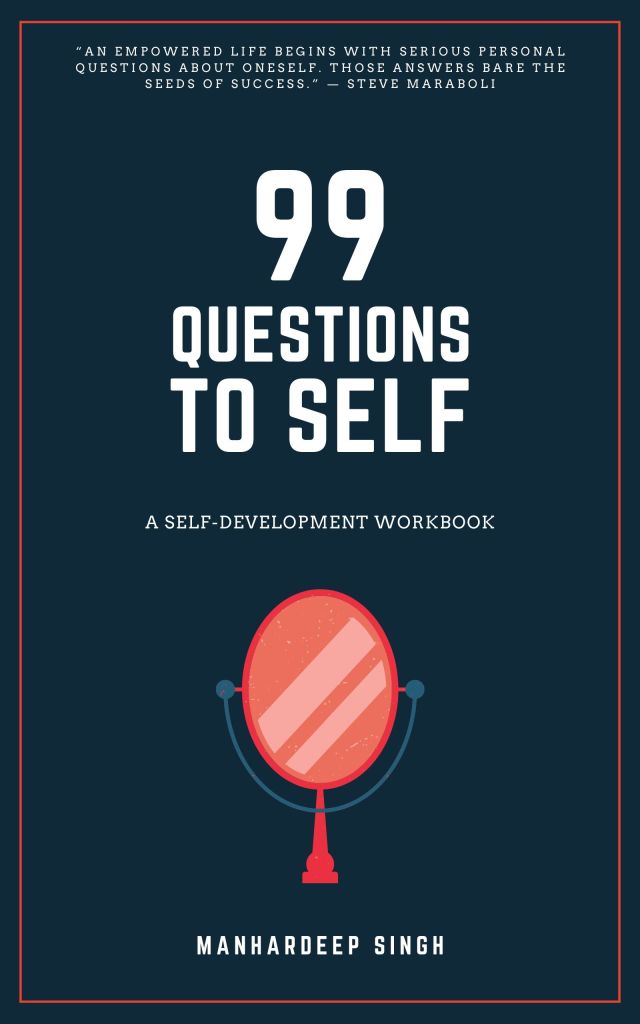
    Would you like to tap into your full potential? Discover the 99 questions that can help you realize the superhuman in you.

    This workbook will help you:

    • Discover your latent talents and hidden strengths
    • Learn how to create instant emotions of happiness and abundance
    • Improve every area of your life
    • Tap into unlimited source of power
    • Create a future you like

    99 Questions to Self is a comprehensive self-development workbook. If you like modern, practical, and interactive books, then you’ll love Manhardeep Singh’s self-help workbook.

    Buy 99 Questions to Self to start your journey of self-discovery today!

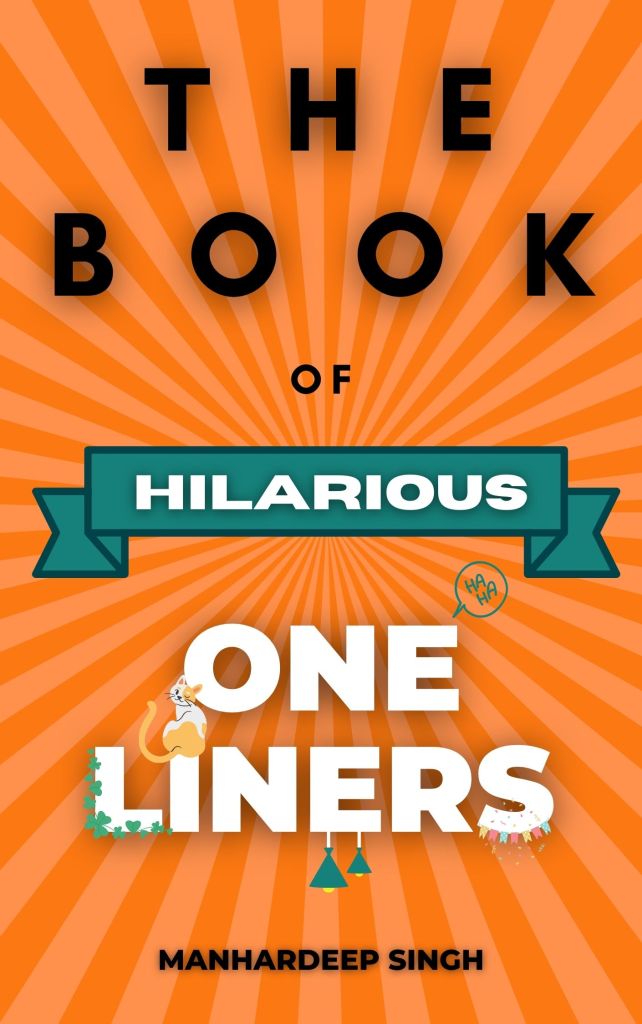
  • Would you like to have a hearty laugh?

    These 1000 comical one-liners will give you a gut-busting experience.

    The Book of Hilarious One-liners can:

    • Help you break the ice in any situation
    • Make you look the sharpest
    • Project you as the funniest
    • Attract people through your continuous one-liners
    • Give you a happy time reading them

    The Book of Hilarious One-liners is the p(h)unniest, wittiest, and the most hilarious compilation of one-liners that is sure to get your gut-busting.

    Buy The Book of Hilarious One-liners and have a hearty laugh!